
AOD-9604 Dosage Chart
AOD-9604 is dosed at 300 mcg–500 mcg daily via subcutaneous injection in educational protocols. A 2 mg vial reconstituted with bacteriostatic water yields about 0.667 mg/mL. This information is for research and educational use only.
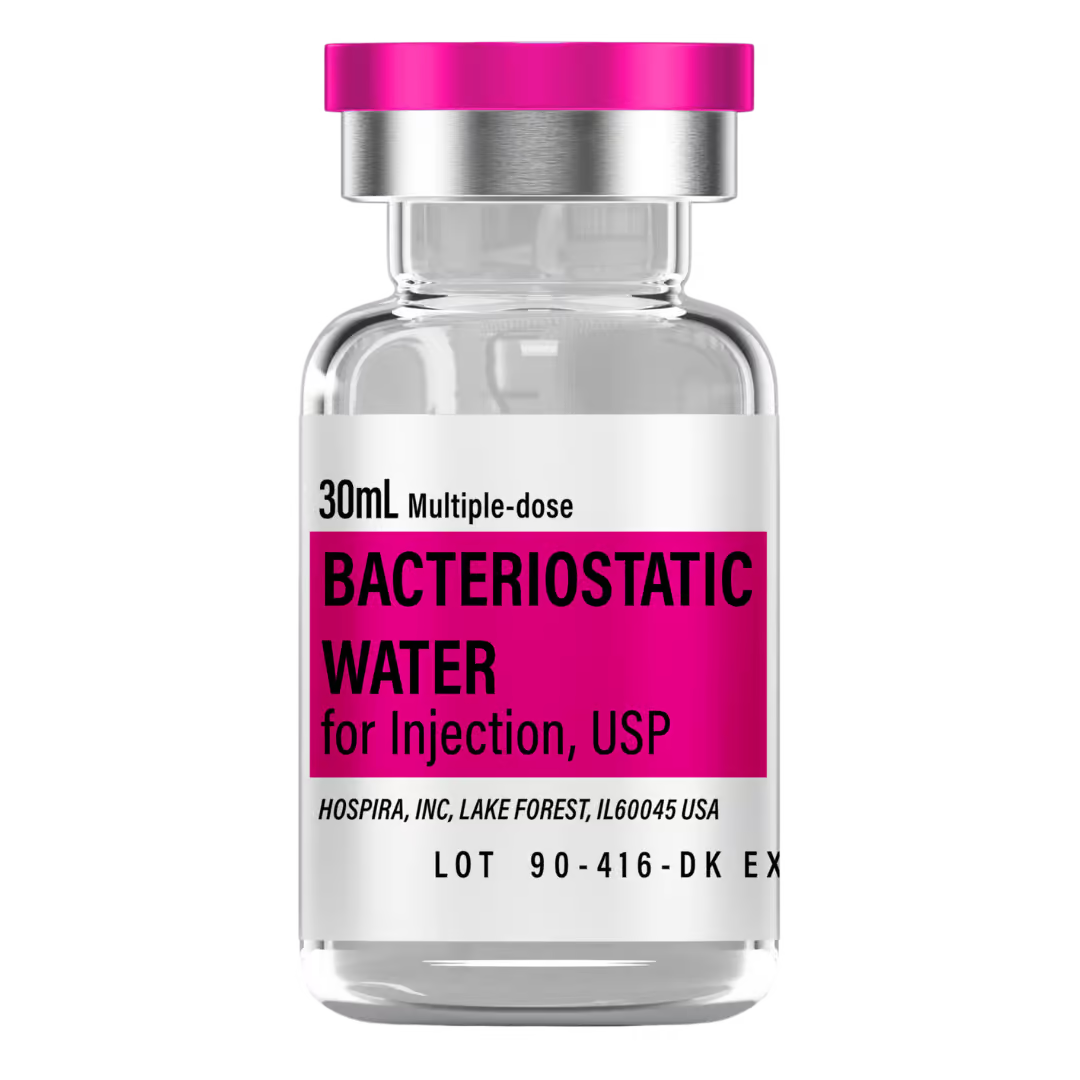
- Reconstitute: Add 3.0 mL bacteriostatic water → ~0.667 mg/mL (667 mcg/mL) concentration.
- Typical daily range: 300–500 mcg once daily (gradual titration).
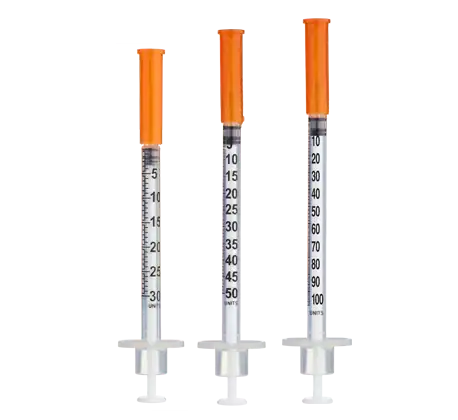
- Easy measuring: At 0.667 mg/mL, 1 unit = 0.01 mL ≈ 6.67 mcg on a U‑100 insulin syringe.
- Storage: Lyophilized: freeze at −20 °C (−4 °F); after reconstitution, refrigerate at 2–8 °C (35.6–46.4 °F); avoid freeze–thaw cycles.
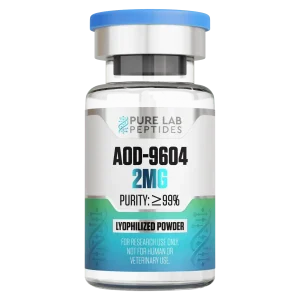
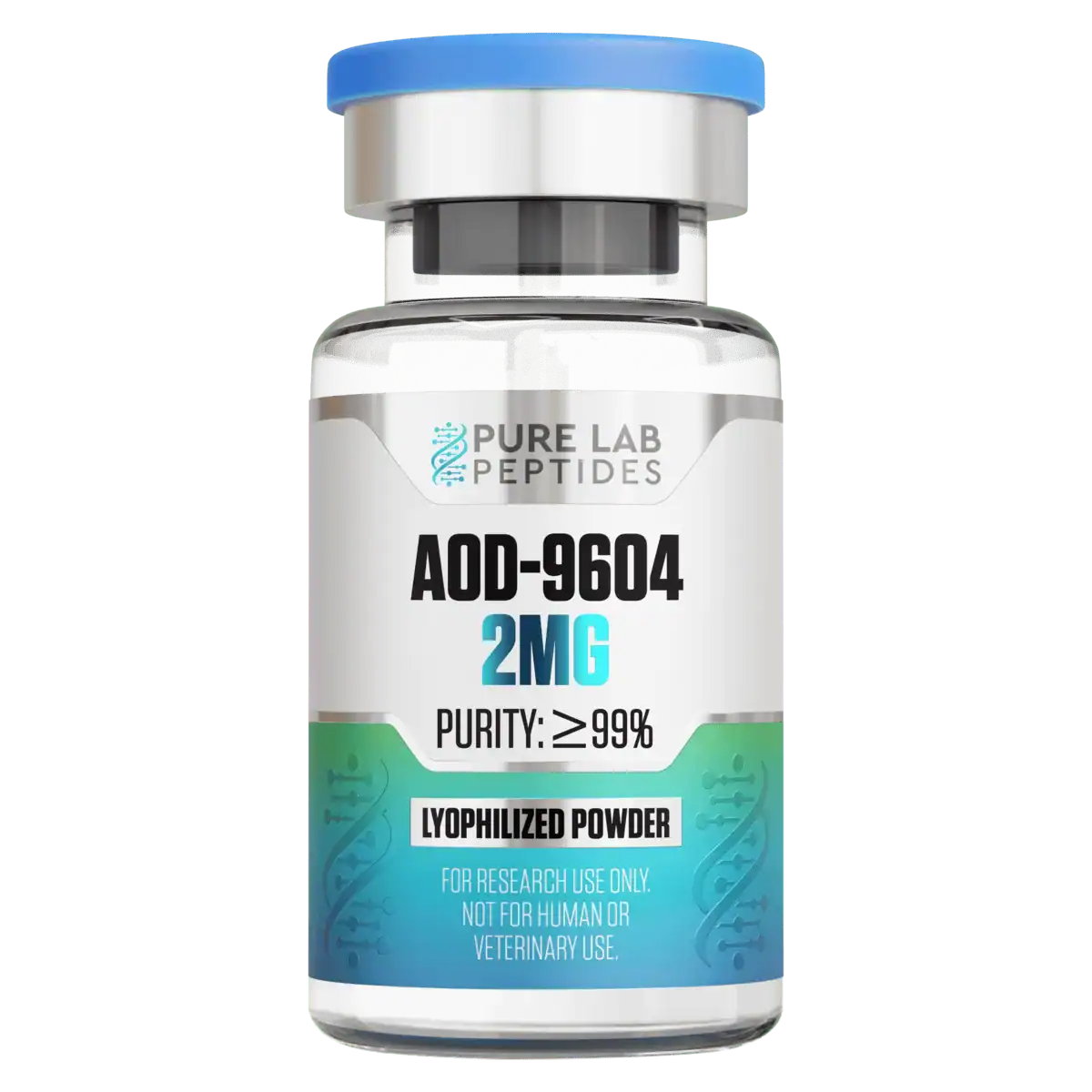
AOD-9604 dosage protocols leverage this synthetic 16‑amino‑acid fragment (Tyr‑hGH 177–191) to support lipolysis (fat breakdown) and inhibit lipogenesis (fat storage) without elevating IGF‑1 levels or causing insulin resistance[1][2]. Clinical trials have demonstrated that AOD‑9604 exhibits a placebo‑like safety profile in obese adults, making it a well‑tolerated option for metabolic support[3]. This educational protocol outlines a once‑daily subcutaneous approach using a practical dilution for clear insulin‑syringe measurements.
Dosing & Reconstitution Guide
Educational guide for reconstitution and daily dosing
Standard / Gradual Approach (3 mL = ~0.667 mg/mL)
| Week | Daily Dose (mcg) | Units (per injection) (mL) |
|---|---|---|
| Weeks 1–4 | 300 mcg | 45 units (0.45 mL) |
| Weeks 5–12 | 500 mcg | 75 units (0.75 mL) |
Frequency: Inject once daily subcutaneously (typically in the morning on an empty stomach). This schedule uses the largest practical dilution (3.0 mL) to keep per‑injection units ≥10 for better accuracy. Rotate injection sites (abdomen, thighs, upper arms) to minimize local irritation.
Reconstitution Steps
- Draw 3.0 mL bacteriostatic water with a sterile syringe.
- Inject slowly down the vial wall; avoid foaming.
- Gently swirl/roll until dissolved (do not shake).
- Label and refrigerate at 2–8 °C (35.6–46.4 °F), protected from light.
Plan based on an 8–12 week daily protocol with gradual titration (300 mcg Weeks 1–4, 500 mcg Weeks 5+).
- Peptide Vials (AOD-9604, 2 mg each):
- 8 weeks ≈ 12 vials
- 12 weeks ≈ 19 vials
- 16 weeks ≈ 26 vials
- Insulin Syringes (U‑100):
- Per week: 7 syringes (1/day)
- 8 weeks: 56 syringes
- 12 weeks: 84 syringes
- 16 weeks: 112 syringes
- Bacteriostatic Water (10 mL bottles): Use 3.0 mL per vial for reconstitution.
- 8 weeks (12 vials): 36 mL → 4 × 10 mL bottles
- 12 weeks (19 vials): 57 mL → 6 × 10 mL bottles
- 16 weeks (26 vials): 78 mL → 8 × 10 mL bottles
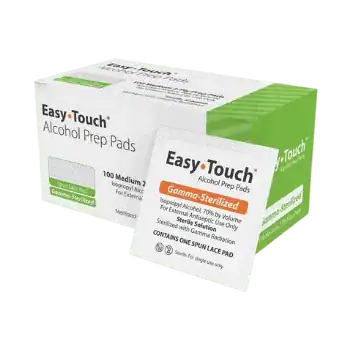
- Alcohol Swabs: One for the vial stopper + one for the injection site each day.
- Per week: 14 swabs (2/day)
- 8 weeks: 112 swabs → recommend 2 × 100‑count boxes
- 12 weeks: 168 swabs → recommend 2 × 100‑count boxes
- 16 weeks: 224 swabs → recommend 3 × 100‑count boxes
Protocol Overview
Concise summary of the once‑daily regimen.
- Goal: Support reduction of fat mass and enhance fat oxidation over time[1][4].
- Schedule: Daily subcutaneous injections for 8–12 weeks (extend to 16 weeks if desired).
- Dose Range: 300–500 mcg daily with gradual titration.
- Reconstitution: 3.0 mL per 2 mg vial (~0.667 mg/mL) for accurate unit measurements.
- Storage: Lyophilized frozen; reconstituted refrigerated; avoid repeated freeze–thaw.
Dosing Protocol
Suggested daily titration approach.
- Start: 300 mcg daily for Weeks 1–4; increase to 500 mcg for Weeks 5–12 as tolerated.
- Target: 500 mcg daily by Week 5 and maintain through cycle completion.
- Frequency: Once per day (subcutaneous).
- Cycle Length: 8–12 weeks; optional extension to 16 weeks.
- Timing: Morning administration (fasted) is common; rotate injection sites.
Storage Instructions
Proper storage preserves peptide quality.
Practical considerations for consistency and safety.
- Use new sterile insulin syringes (U‑100, 29–31 gauge); dispose in a sharps container[7].
- Rotate injection sites (abdomen, thighs, upper arms) to reduce local irritation and prevent lipohypertrophy[8].
- Inject slowly; wait a few seconds before withdrawing the needle.
- Each 2 mg vial provides approximately 4 days of dosing at 500 mcg/day or 6–7 days at 300 mcg/day.
AOD‑9604 is a modified C‑terminal fragment of human growth hormone that retains the lipolytic (fat‑reducing) domain without the growth‑promoting effects[1]. It binds to adipose tissue and triggers breakdown of stored fat while blocking new fat storage (re‑esterification) in adipocytes[4]. At the molecular level, chronic AOD‑9604 administration upregulates β3‑adrenergic receptors in fat tissue, reversing obesity‑related suppression of these fat‑burning receptors[9]. Unlike full‑length hGH, AOD‑9604 does not meaningfully elevate IGF‑1 levels or worsen glucose tolerance, making its tolerability indistinguishable from placebo in human trials[2][3].
Observations from preclinical and clinical literature.
- Supports reductions in fat mass and increases in fat oxidation over time; clinical trials showed modest but statistically significant weight loss (approximately 2.6 kg vs. 0.8 kg placebo over 12 weeks at 1 mg/day)[10].
- Preferential loss of abdominal fat observed, resembling the pattern seen with low‑dose hGH therapy[10].
- Does not meaningfully raise IGF‑1 and shows a placebo‑like safety profile in human studies; no anti‑AOD9604 antibodies detected[2][3].
- Emerging regenerative potential: preclinical studies suggest possible cartilage repair and bone health benefits[11][12].
- Generally well tolerated; occasional mild injection‑site reactions (redness/itch) may occur with subcutaneous administration.
Complementary strategies for best outcomes.
- Pair with a hypocaloric, protein‑forward diet tailored to energy needs; AOD‑9604 is best viewed as a supportive aid to fat loss rather than a stand‑alone solution[10].
- Combine resistance training and aerobic activity to reinforce metabolic adaptations.
- Prioritize sleep and stress management to support adherence and recovery.
General subcutaneous guidance from clinical best‑practice resources[7].
- Clean the vial stopper and skin with alcohol; allow to dry completely[8].
- Pinch a skinfold; insert the needle at 90° (or 45° if very little subcutaneous fat) into subcutaneous tissue[7].
- Do not aspirate for subcutaneous injections; inject slowly and steadily[13].
- Rotate sites systematically (abdomen at least 2 inches from navel, thighs, upper arms) to avoid lipohypertrophy[8].
Recommended Source
We recommend Pure Lab Peptides for high‑purity AOD‑9604 (2 mg).
Why Pure Lab Peptides?
- High‑purity, third‑party‑tested lots with batch COAs.
- Consistent, ISO‑aligned handling and documentation.
- Reliable fulfillment to maintain cold‑chain integrity.
Important Note
This content is intended for therapeutic educational purposes only and does not constitute medical advice, diagnosis, or treatment.
References
-
Journal of Endocrinology and Metabolism (2014)— Safety and metabolism of AOD9604 as a nutraceutical ingredient; mechanism of action and metabolic studies
-
Journal of Endocrinology and Metabolism (2013)— Safety and tolerability of AOD9604 in humans; no IGF‑1 increase; placebo‑like safety profile
-
FDA Pharmacy Compounding Advisory Committee (2024)— AOD‑9604 bulk drug substance meeting memorandum; regulatory and safety overview
-
Endocrinology (OUP)— Effects of hGH and AOD9604 on lipid metabolism in obese mice; β‑adrenergic pathway mechanisms
-
Bachem Peptide Guide— Handling and storage guidelines for peptides; lyophilized stability recommendations
-
Creative Peptides— Peptide stability and shelf life; reconstituted solution storage guidelines
-
MedlinePlus Medical Encyclopedia (NIH)— Subcutaneous injection patient instructions; technique and site guidance
-
Olympia Pharmacy— How to administer a subcutaneous injection; site rotation and hygiene
-
Endocrinology (OUP)— Chronic AOD9604 treatment in obese and β3‑AR knockout mice; receptor upregulation
-
Gastroenterology— Drug treatment of the overweight patient; AOD‑9604 RCT summary and clinical efficacy
-
Annals of Clinical and Laboratory Science (PubMed)— Effect of intra‑articular AOD9604 with hyaluronic acid in rabbit osteoarthritis model
-
DrugBank— AOD9604 drug summary; mechanism of action, bone and metabolic effects
-
CDC— Vaccine administration: subcutaneous route; no aspiration required
-
Pure Lab Peptides— AOD‑9604 (2 mg) product page; quality and batch documentation