
Vilon Dosage Chart
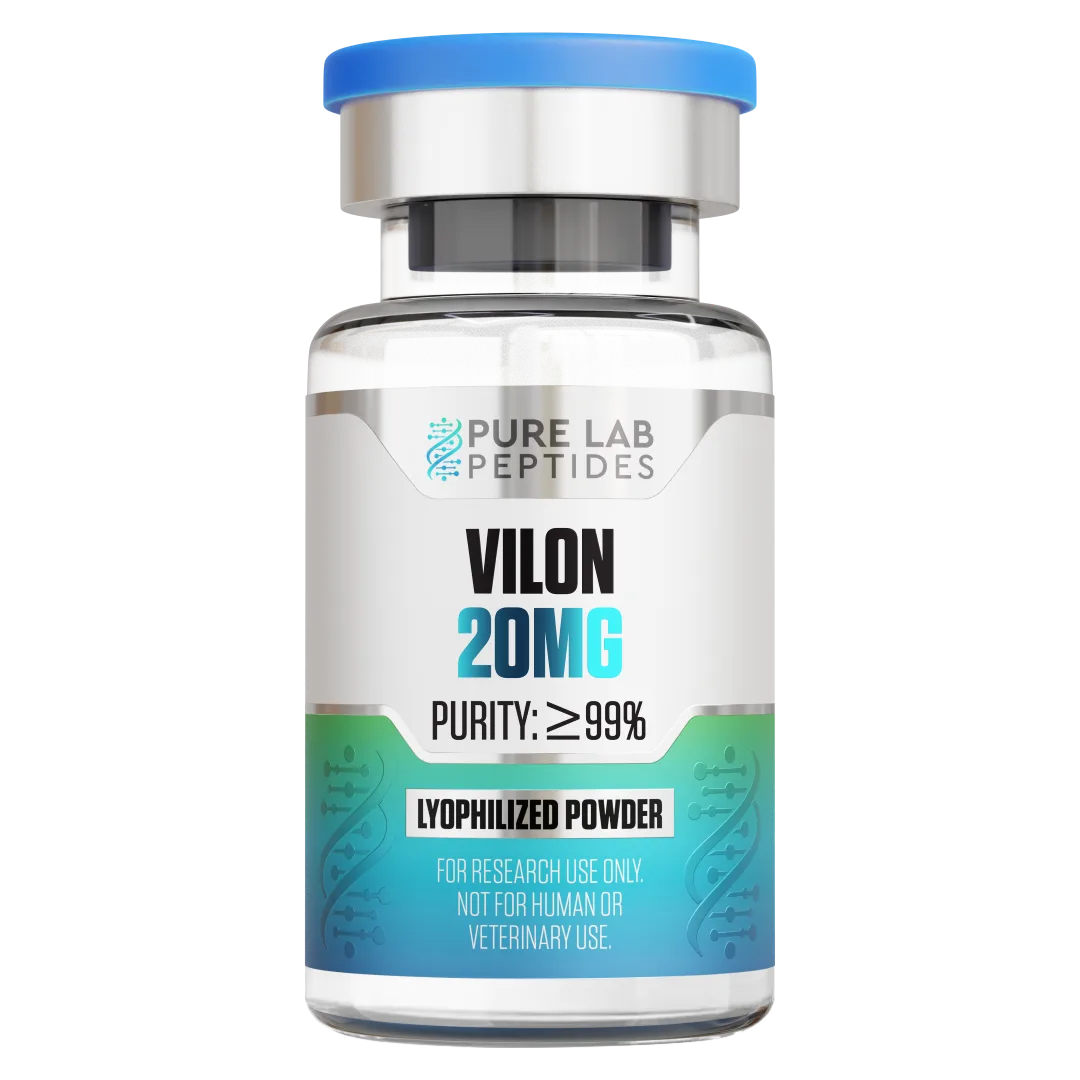
Vilon is dosed at 67 mcg–667 mcg daily via subcutaneous injection in educational protocols. A 20 mg vial reconstituted with bacteriostatic water yields about 6.67 mg/mL. This information is for research and educational use only.
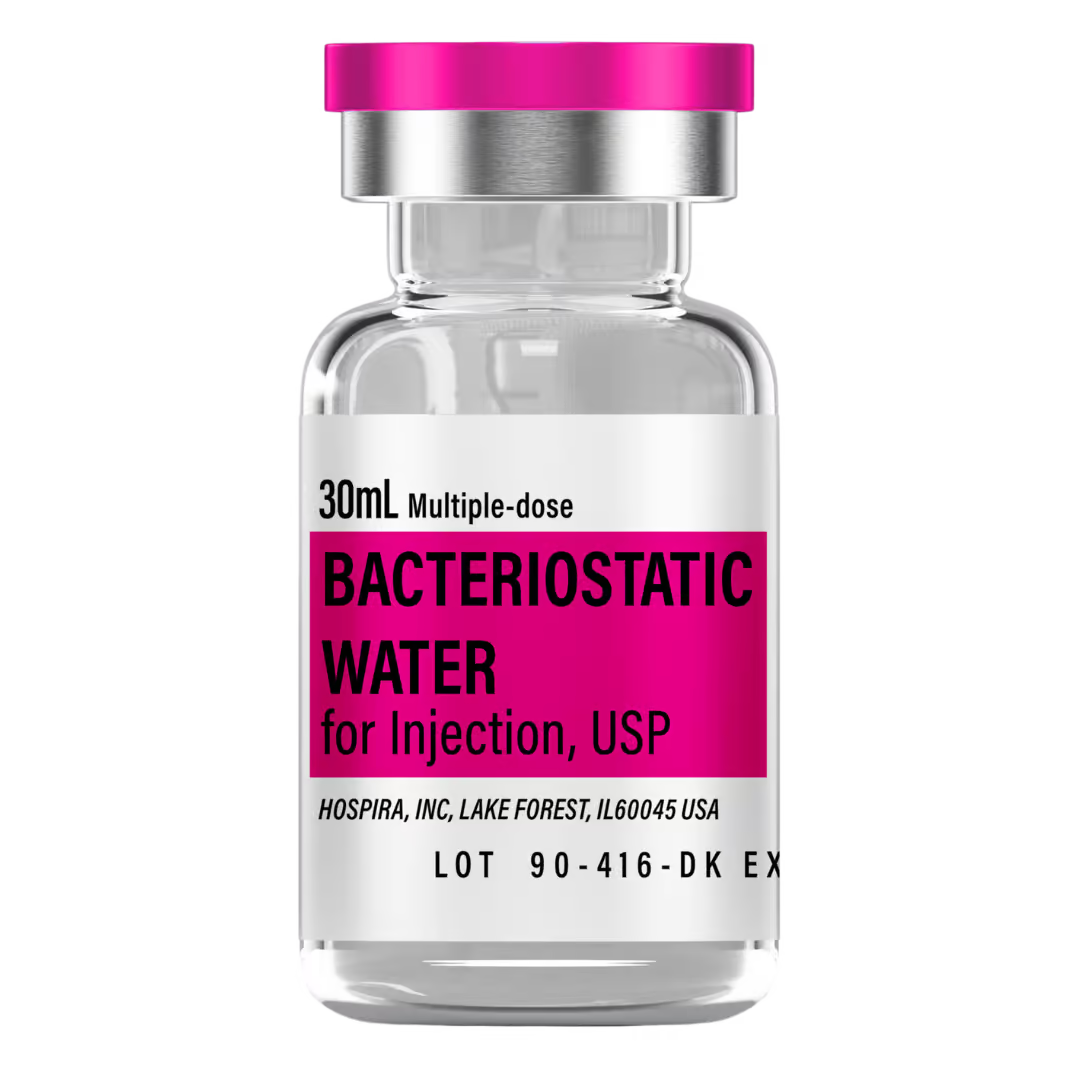
- Reconstitute: Add 3.0 mL bacteriostatic water → ~6.67 mg/mL concentration.
- Typical range: 67–670 mcg once daily for 5 consecutive days per cycle.
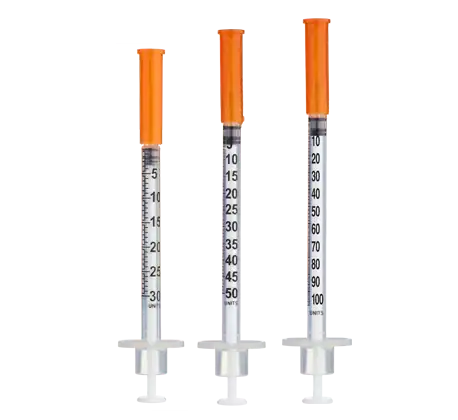
- Easy measuring: At 6.67 mg/mL, 1 unit = 0.01 mL ≈ 66.7 mcg on a U‑100 insulin syringe.
- Storage: Lyophilized: freeze at −20 °C (−4 °F); after reconstitution, refrigerate at 2–8 °C (35.6–46.4 °F); use within 1 week or aliquot and freeze.
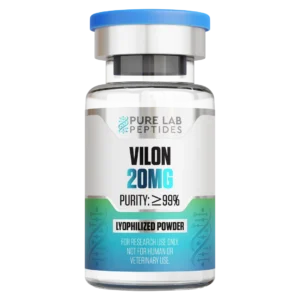
Vilon (Lys‑Glu) is a synthetic immunoregulatory dipeptide consisting of lysine and glutamic acid residues[1]. Preclinical research indicates it may enhance immune markers including CD5+ lymphocytes and interleukin‑2 expression in thymic and splenic cell cultures[2][3]. This educational protocol presents a pulsed subcutaneous approach (5 consecutive days per 4‑week cycle) using a practical dilution for clear insulin‑syringe measurements.
Dosing & Reconstitution Guide
Educational guide for reconstitution and pulsed dosing
Standard / Gradual Approach (3 mL = ~6.67 mg/mL)
| Phase / Cycle | Daily Dose (mcg) | Units (per injection) (mL) |
|---|---|---|
| Cycle 1, Day 1 | 67 mcg (0.067 mg) | 1 unit (0.01 mL) |
| Cycle 1, Day 2 | 133 mcg (0.133 mg) | 2 units (0.02 mL) |
| Cycle 1, Day 3 | 200 mcg (0.20 mg) | 3 units (0.03 mL) |
| Cycle 1, Day 4 | 267 mcg (0.267 mg) | 4 units (0.04 mL) |
| Cycle 1, Day 5 | 333 mcg (0.33 mg) | 5 units (0.05 mL) |
| Cycle 2+ (Days 1–5) | 333–667 mcg (0.33–0.67 mg) | 5–10 units (0.05–0.10 mL) |
Schedule: Inject once daily subcutaneously for 5 consecutive days, then rest for the remainder of a 4‑week cycle. Repeat monthly[4][5].
For ≤10‑unit (≤0.10 mL) administrations, consider 30‑ or 50‑unit insulin syringes for improved readability.
Reconstitution Steps
- Draw 3.0 mL bacteriostatic water with a sterile syringe.
- Inject slowly down the vial wall; avoid foaming.
- Gently swirl/roll until dissolved (do not shake).
- Label and refrigerate at 2–8 °C (35.6–46.4 °F), protected from light; use within ~1 week or aliquot and freeze[10].
Plan based on an 8–16 week pulsed protocol (5 injection days per 4‑week cycle).
- Peptide Vials (Vilon, 20 mg each):
- 8 weeks (2 cycles, 10 injections) ≈ 1 vial
- 12 weeks (3 cycles, 15 injections) ≈ 1 vial
- 16 weeks (4 cycles, 20 injections) ≈ 1 vial
- Insulin Syringes (U‑100, 30‑ or 50‑unit preferred):
- Per cycle: 5 syringes (1/day × 5 days)
- 8 weeks: 10 syringes
- 12 weeks: 15 syringes
- 16 weeks: 20 syringes
- Bacteriostatic Water (10 mL bottles): Use 3.0 mL per vial for reconstitution.
- 8–16 weeks (1 vial): 3 mL → 1 × 10 mL bottle
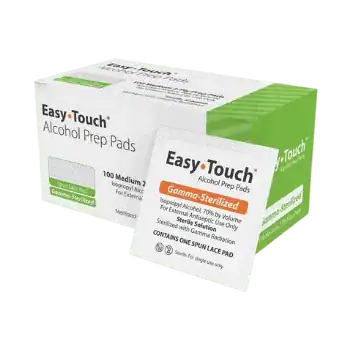
- Alcohol Swabs: One for the vial stopper + one for the injection site each day.
- Per cycle: 10 swabs (2/day × 5 days)
- 8 weeks: 20 swabs
- 12 weeks: 30 swabs
- 16 weeks: 40 swabs → recommend 1 × 100‑count box
Protocol Overview
Concise summary of the pulsed regimen.
- Goal: Support immune modulation and thymic function markers based on preclinical observations[1][2].
- Schedule: 5 consecutive days of subcutaneous injections per 4‑week cycle; repeat for 2–4 cycles.
- Dose Range: 67–667 mcg daily with gradual titration during the first cycle.
- Reconstitution: 3.0 mL per 20 mg vial (~6.67 mg/mL) for accurate low‑volume measurements.
- Storage: Lyophilized frozen; reconstituted refrigerated; avoid repeated freeze–thaw.
Dosing Protocol
Suggested pulsed titration approach.
- Start: 67 mcg (1 unit) on Day 1; increase by ~67 mcg (1 unit) each day during first cycle.
- Target: 333–667 mcg (5–10 units) daily by Cycle 2 onward.
- Frequency: Once per day (subcutaneous) for 5 consecutive days per cycle[5].
- Cycle Length: 5 days on, ~23 days off (4‑week cycle); run 2–4 cycles.
- Timing: Any consistent time; rotate injection sites.
Storage Instructions
Proper storage preserves peptide quality.
- Lyophilized: Store at −20 °C (−4 °F) short‑term or −80 °C (−112 °F) long‑term in dry, dark conditions; minimize moisture exposure[10].
- Reconstituted: Refrigerate at 2–8 °C (35.6–46.4 °F); use within ~1 week or prepare aliquots and freeze to extend stability.
- Allow vials to reach room temperature before opening to reduce condensation uptake.
Practical considerations for consistency and safety.
- Use new sterile insulin syringes (30‑ or 50‑unit recommended for low‑volume accuracy); dispose in a sharps container.
- Rotate injection sites (abdomen, thighs, upper arms) to reduce local irritation[9].
- Inject slowly; wait a few seconds before withdrawing the needle.
- Document daily dose and site rotation to maintain consistency across cycles.
Vilon belongs to a class of short bioregulatory peptides developed through Russian gerontology research[4]. In vitro studies demonstrate that the Lys‑Glu dipeptide can modulate lymphocyte populations and cytokine gene expression. Specifically, Vilon has been observed to increase CD5+ cell counts in thymus cell cultures[1] and upregulate interleukin‑2 (IL‑2) mRNA expression in splenocyte preparations[2]. Additional preclinical work suggests effects on TGF‑β1 and vascular permeability in renal models[3]. The pulsed 5‑day monthly regimen is analogized from related short peptide protocols such as Epitalon[5].
Observations from preclinical literature.
- Supports immune cell marker expression (CD5+ lymphocytes) and IL‑2 gene activity in cell culture models[1][2].
- May modulate inflammatory cytokines such as TGF‑β1 under experimental renal stress conditions[3].
- Early mouse studies suggest potential effects on tumor growth inhibition and lifespan extension, though human data remain limited[6].
- Generally well tolerated in preclinical settings; occasional mild injection‑site reactions (redness/itch) may occur with subcutaneous administration.
Complementary strategies for best outcomes.
- Pair with a nutrient‑dense diet rich in antioxidants and adequate protein to support immune function.
- Incorporate regular moderate exercise to reinforce immune and metabolic health.
- Prioritize sleep (7–9 hours) and stress management to optimize endogenous immune regulation.
General subcutaneous guidance from clinical best‑practice resources[9].
Recommended Source
We recommend Pure Lab Peptides for high‑purity Vilon (20 mg).
Why Pure Lab Peptides?
- High‑purity, third‑party‑tested lots with batch COAs.
- Consistent, ISO‑aligned handling and documentation.
- Reliable fulfillment to maintain cold‑chain integrity.
Important Note
This content is intended for therapeutic educational purposes only and does not constitute medical advice, diagnosis, or treatment.
References
-
Sevostianova NN et al. (2013)— Immunomodulating effects of Vilon and its analogue in the culture of human and animal thymus cells
-
Kazakova TB et al. (2002)— In vitro effect of short peptides on expression of interleukin‑2 gene in splenocytes
-
Gavrisheva NA et al. (2005)— Effect of Vilon peptide on TGF‑β1 and vascular permeability in chronic renal failure
-
Kniaz’kin IA et al. (2002)— Effect of a peptide Vilon on immune aging (Adv Gerontol)
-
Araj SK et al. (2025)— Overview of Epitalon—highly bioactive pineal tetrapeptide with promising properties (Int J Mol Sci)
-
Chernyak EY et al. (2000)— Synthetic dipeptide Vilon inhibits tumor growth and prolongs life in mice (Dokl Biol Sci)
-
Avolio F et al. (2022)— Peptides regulating proliferative activity and inflammatory pathways in THP‑1 macrophages (Int J Mol Sci)
-
Wong AKC et al. (2024)— Injection techniques to reduce subcutaneous heparin complications (J Adv Nurs)
-
MedlinePlus (NIH)— Subcutaneous (SQ) injections: patient information
-
Merck KGaA (Millipore Sigma)— Handling and storage guidelines for peptides and proteins
-
CDC— Vaccine administration: subcutaneous route (angle/site; no aspiration)
-
NCBI Bookshelf— Best practices for injection (asepsis, preparation, and administration)
-
Pure Lab Peptides— Vilon (20 mg) product page (quality and batch documentation)