
MGF Dosage Chart
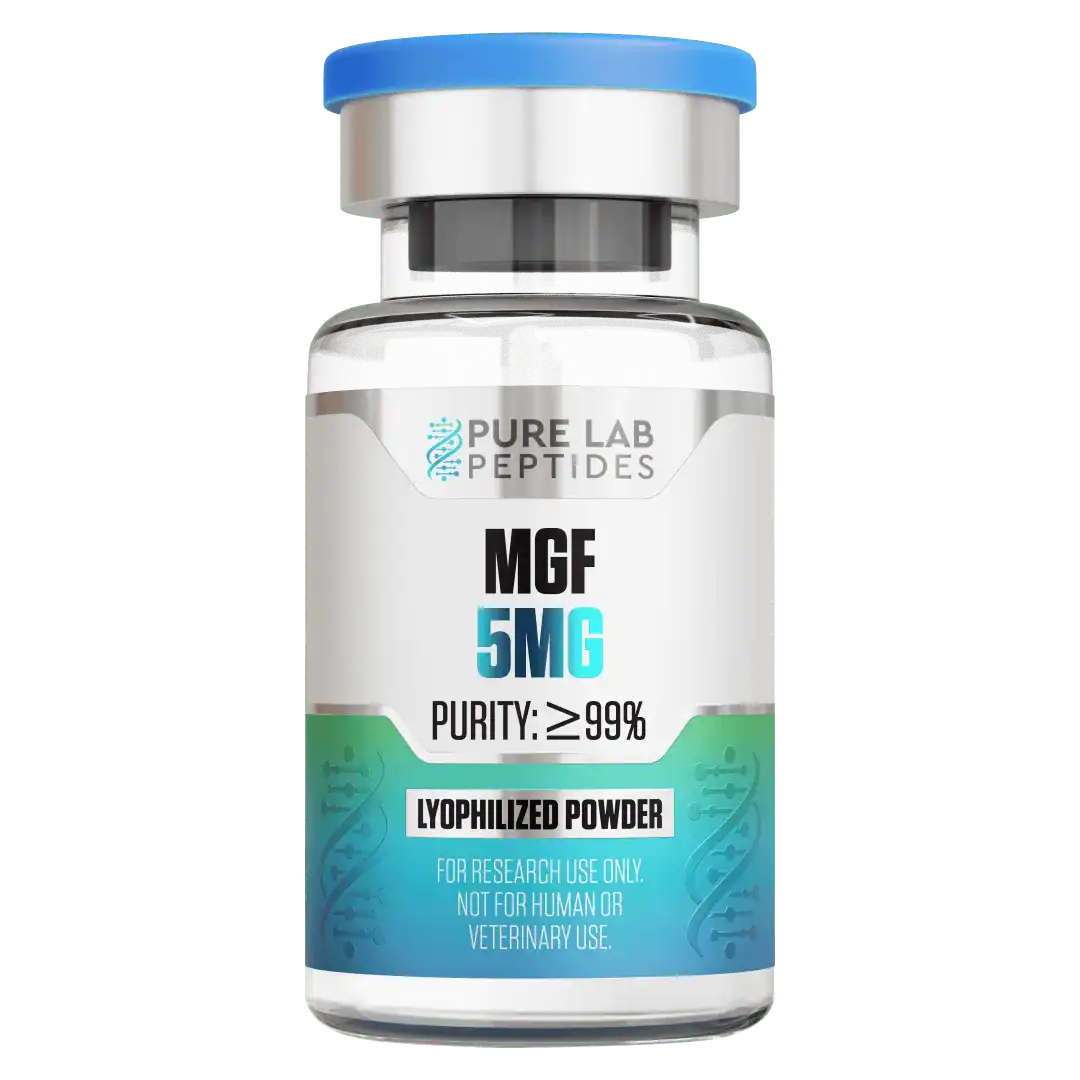
MGF is dosed at 100 mcg–300 mcg daily via subcutaneous injection in educational protocols. A 5 mg vial reconstituted with bacteriostatic water yields about 1.67 mg/mL. This information is for research and educational use only.
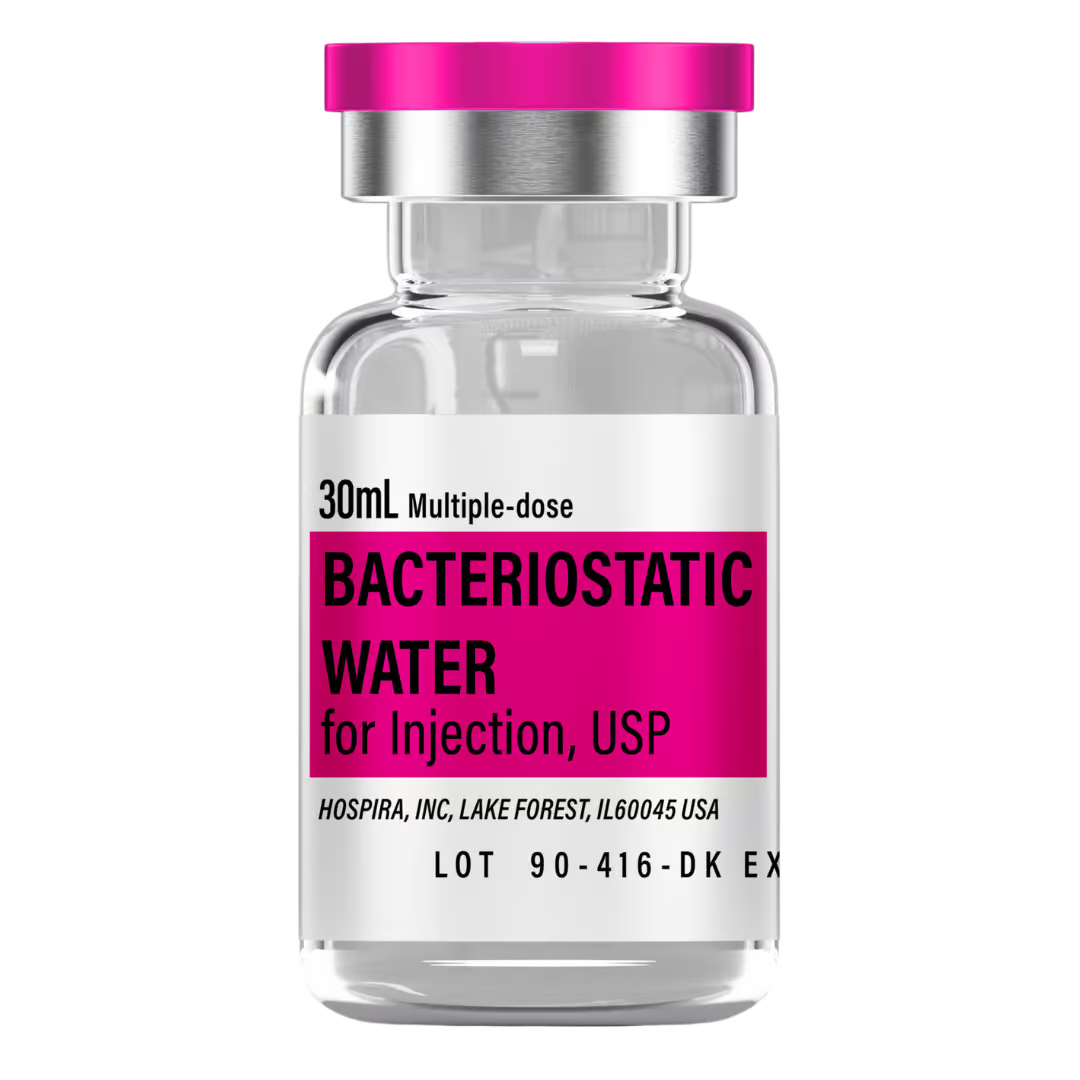
- Reconstitute: Add 3.0 mL bacteriostatic water → ~1.67 mg/mL concentration.
- Typical daily range: 100–300 mcg once daily (gradual titration).
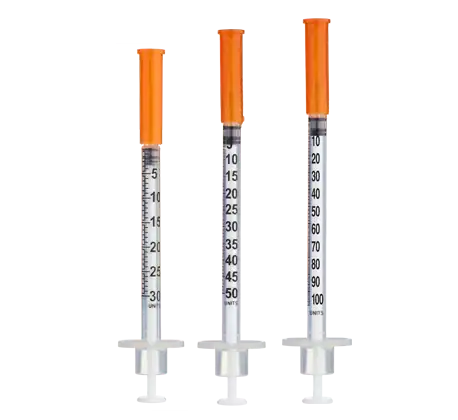
- Easy measuring: At 1.67 mg/mL, 1 unit = 0.01 mL ≈ 16.7 mcg on a U‑100 insulin syringe.
- Storage: Lyophilized: freeze at −20 °C (−4 °F); after reconstitution, refrigerate at 2–8 °C (35.6–46.4 °F); use within ~30 days.
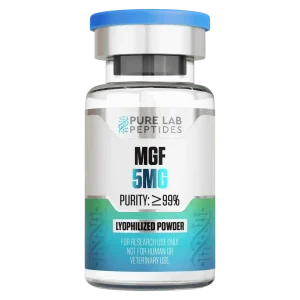
Mechano Growth Factor (MGF) is a splice variant of IGF‑1 (IGF‑1Ec in humans) produced in response to mechanical stress and tissue damage[1][2]. Research indicates MGF plays a role in muscle repair, satellite cell activation, and bone regeneration[3][4]. This educational protocol presents a once‑daily subcutaneous approach using a practical dilution for clear insulin‑syringe measurements.
Dosing & Reconstitution Guide
Educational guide for reconstitution and daily dosing
Standard / Gradual Approach (3 mL = ~1.67 mg/mL)
| Week | Daily Dose (mcg) | Units (per injection) (mL) |
|---|---|---|
| Week 1 | 100 mcg (0.1 mg) | 6 units (0.06 mL) |
| Week 2 | 150 mcg (0.15 mg) | 9 units (0.09 mL) |
| Week 3 | 200 mcg (0.2 mg) | 12 units (0.12 mL) |
| Week 4 | 250 mcg (0.25 mg) | 15 units (0.15 mL) |
| Weeks 5–8 | 300 mcg (0.3 mg) | 18 units (0.18 mL) |
Frequency: Inject once daily subcutaneously. This schedule uses the largest practical dilution (3.0 mL) to keep per‑injection units manageable for accuracy. For ≤10‑unit (≤0.10 mL) administrations during early titration, consider 30‑ or 50‑unit insulin syringes for improved readability.
Reconstitution Steps
- Draw 3.0 mL bacteriostatic water with a sterile syringe.
- Inject slowly down the vial wall; avoid foaming.
- Gently swirl/roll until dissolved (do not shake).
- Label and refrigerate at 2–8 °C (35.6–46.4 °F), protected from light; use within approximately 30 days[5].
Plan based on an 8–16 week daily protocol with gradual titration.
- Peptide Vials (MGF, 5 mg each):
- 8 weeks ≈ 3 vials
- 12 weeks ≈ 5 vials
- 16 weeks ≈ 8 vials
- Insulin Syringes (U‑100):
- Per week: 7 syringes (1/day)
- 8 weeks: 56 syringes
- 12 weeks: 84 syringes
- 16 weeks: 112 syringes
- Bacteriostatic Water (10 mL bottles): Use ~3.0 mL per vial for reconstitution.
- 8 weeks (3 vials): 9 mL → 1 × 10 mL bottle
- 12 weeks (5 vials): 15 mL → 2 × 10 mL bottles
- 16 weeks (8 vials): 24 mL → 3 × 10 mL bottles
- Alcohol Swabs: One for the vial stopper + one for the injection site each day.
- Per week: 14 swabs (2/day)
- 8 weeks: 112 swabs → recommend 2 × 100‑count boxes
- 12 weeks: 168 swabs → recommend 2 × 100‑count boxes
- 16 weeks: 224 swabs → recommend 3 × 100‑count boxes

Protocol Overview
Concise summary of the once‑daily regimen.
- Goal: Support tissue repair and regenerative processes through localized growth factor signaling[3][4].
- Schedule: Daily subcutaneous injections for 8–12 weeks (extend to 16 weeks if desired).
- Dose Range: 100–300 mcg daily with gradual titration.
- Reconstitution: 3.0 mL per 5 mg vial (~1.67 mg/mL) for accurate unit measurements.
- Storage: Lyophilized frozen; reconstituted refrigerated; avoid repeated freeze–thaw.
Dosing Protocol
Suggested daily titration approach.
- Start: 100 mcg daily; increase by ~50 mcg weekly as tolerated.
- Target: 250–300 mcg daily by Weeks 4–8.
- Frequency: Once per day (subcutaneous).
- Cycle Length: 8–12 weeks; optional extension to 16 weeks.
- Timing: Any consistent time; rotate injection sites.
Storage Instructions
Proper storage preserves peptide quality[5][6].
- Lyophilized: Store at −20 °C (−4 °F) or colder for long‑term; refrigerate at 4 °C (39.2 °F) for short‑term.
- Reconstituted: Refrigerate at 2–8 °C (35.6–46.4 °F); use within approximately 30 days; avoid freeze–thaw cycles.
- Allow vials to reach room temperature before opening to reduce condensation uptake.
Practical considerations for consistency and safety.
- Use new sterile insulin syringes; dispose in a sharps container.
- Rotate injection sites (abdomen, thighs, upper arms) to reduce local irritation[7].
- Inject slowly; wait a few seconds before withdrawing the needle.
- Document daily dose and site rotation to maintain consistency.
- MGF has a short half‑life; PEGylated forms (PEG‑MGF) offer extended duration but follow different protocols[2].
MGF is generated through alternative splicing of the IGF‑1 gene in response to mechanical loading or tissue injury[1][2]. The resulting peptide contains a unique C‑terminal E domain that distinguishes it from systemic IGF‑1. Preclinical research demonstrates MGF activates satellite cells (muscle stem cells), promotes osteoblast proliferation, and supports neurogenesis[3][4][8]. These effects appear to be localized and transient, suggesting MGF acts primarily as a tissue‑specific repair signal rather than a systemic growth factor.
Observations from preclinical literature (no formal human clinical trials have been completed).
- Promotes satellite cell activation and myoblast proliferation in muscle tissue[1][9].
- Supports bone defect healing and osteoblast activity in animal models[3].
- May promote neurogenesis and neuroprotection in aging brain tissue[8].
- Generally well tolerated in preclinical settings; occasional mild injection‑site reactions may occur with subcutaneous administration.
- Long‑term safety data in humans is limited; preclinical models suggest localized rather than systemic effects.
Complementary strategies for best outcomes.
- Pair with resistance training to provide the mechanical stimulus that naturally upregulates MGF expression[1].
- Ensure adequate protein intake (1.6–2.2 g/kg) to support tissue repair processes.
- Prioritize sleep and recovery; growth factor activity is enhanced during rest periods.
- Manage inflammation through balanced nutrition to optimize the repair environment.
General subcutaneous guidance from clinical best‑practice resources[10].
- Clean the vial stopper and skin with alcohol; allow to dry.
- Pinch a skinfold; insert the needle at 45–90° into subcutaneous tissue[7][11].
- Do not aspirate for subcutaneous injections; inject slowly and steadily[7].
- Rotate sites systematically (abdomen, thighs, upper arms) by at least 1–1.5 inches from prior sites to avoid irritation[11].
- Use 23–25 gauge, 5/8‑inch needles for subcutaneous administration[7].
Recommended Source
We recommend Pure Lab Peptides for high‑purity MGF (5 mg).
Why Pure Lab Peptides?
- High‑purity, third‑party‑tested lots with batch COAs.
- Consistent, ISO‑aligned handling and documentation.
- Reliable fulfillment to maintain cold‑chain integrity.
Important Note
This content is for educational purposes only and is not medical advice.
References
-
PLOS ONE (2013)— Insulin‑like growth factor I (IGF‑1) Ec/Mechano Growth Factor: splice variant characterization within the growth plate
-
Journal of Molecular Endocrinology (2003)— Expression of IGF‑I splice variants and structural genes in repair of rabbit tendon
-
International Orthopaedics (2011)— Mechano growth factor E peptide promotes osteoblast proliferation and bone‑defect healing in rabbits
-
Journal of Physiology (2003)— Mechano growth factor and other IGF‑I splice variants: expression and possible functions
-
Sigma‑Aldrich— Storage and handling of synthetic peptides (stability and reconstitution guidelines)
-
R&D Systems— Recombinant human LR3 IGF‑I protein datasheet (storage and stability recommendations)
-
CDC (Subcut Injection PDF)— Vaccine administration: subcutaneous injection technique and site guidance
-
Molecular Brain (2017)— Mechano growth factor promotes neurogenesis in the aging mouse brain
-
Experimental Cell Research (2008)— MGF E‑peptide activates human muscle satellite cells
-
Subcutaneous Drug Injection Review (PMC)— Pharmacologic considerations of the subcutaneous route
-
Johns Hopkins Arthritis Center— How to give a subcutaneous injection (site rotation and technique)
-
Pure Lab Peptides— MGF (5 mg) product page (quality and batch documentation)