CJC-1295 DAC peptide is a synthetic, long-acting growth hormone-releasing hormone analog studied for its effects on growth hormone and insulin-like growth factor 1 signaling in adults 1, 2. This educational guide explains the mechanism, potential benefits, studied uses, safety profile, dosage information from published studies or approved related labels, and regulatory status without giving personal medical advice. Because CJC-1295 DAC is not an FDA-approved drug and the available human evidence is limited, claims about muscle growth, fat loss, recovery, or anti-aging should be interpreted cautiously 8, 10.
At a glance:
- CJC-1295 DAC is a modified growth hormone-releasing hormone analog designed to extend exposure through a drug affinity complex that can bind albumin [2], [10].
- The peptide is studied because it may stimulate the pituitary gland to release growth hormone, which can raise downstream IGF-1 levels [1], 6.
- Human research mainly shows biomarker changes in healthy adults, not proven treatment outcomes for growth hormone deficiencies, muscle growth, fat loss, or longevity [1], 3, [10].
- Dosage information should be read only as published-study context; CJC-1295 DAC has no FDA-approved label dosage [8], [10].
- Reported or regulator-reviewed safety concerns include injection-site reactions, flushing, headache, diarrhea, systemic vasodilatory reactions, heart-rate changes, immunogenicity concerns, and limited long-term safety data [8], [10].
- Related approved growth hormone-releasing factor therapy exists, such as tesamorelin for a specific HIV-associated lipodystrophy indication, but tesamorelin dosing and labeling should not be treated as CJC-1295 DAC instructions 12, 13.
- Athletes should be aware that growth hormone releasing factors, including CJC-1295, appear under anti-doping restrictions 15.
Fast Answer
CJC-1295 DAC peptide is a long-acting synthetic analog of growth hormone-releasing hormone that has been studied for stimulating pituitary growth hormone release and downstream IGF-1 signaling [1], [2], [6]. People often search for it because of claims about body composition, muscle growth, recovery, and anti-aging, but the strongest human data are early biomarker studies rather than proven clinical outcomes [1], [3], [10]. It is not FDA-approved, and safety, quality, compounding, and anti-doping concerns require careful interpretation [8], [15].
What Is the CJC-1295 DAC Peptide?
CJC-1295 DAC peptide is a synthetic growth hormone-releasing hormone analog. In simpler terms, it is a lab-made peptide designed to act on the same general endocrine pathway as natural GHRH, a hypothalamic hormone that helps regulate growth hormone secretion from the anterior pituitary gland [2], [6].
The “DAC” part refers to a drug affinity complex. This feature was designed to allow longer circulation by binding to albumin, a major blood protein, which is one reason CJC-1295 DAC is discussed differently from shorter-acting GHRH fragments [2], [10].
CJC-1295, DAC, and Drug Affinity Complex Explained
Early laboratory research described CJC-1295 as an hGRF 1-29 analog modified to improve stability and prolong activity, including through albumin bioconjugation [2]. FDA review documents describe CJC-1295 DAC as a form conjugated with a drug affinity complex, while also noting that CJC-1295-related substances have naming and active-moiety inconsistencies that can complicate interpretation [10].
That distinction matters because “CJC-1295 with DAC” and “CJC-1295 without DAC” are not simply interchangeable SEO phrases. They may refer to chemically different substances with different pharmacokinetics, exposure patterns, and safety uncertainties [10].
Identification of CJC-1295 and Related Forms
FDA’s compounding review grouped several CJC-1295-related bulk drug substances together, including CJC-1295 free base, CJC-1295 acetate, CJC-1295 DAC free base, CJC-1295 DAC acetate, and CJC-1295 DAC trifluoroacetate [10]. The same review noted that CJC-1295-related nomenclature has been inconsistent across records, which is important when comparing research papers, clinical claims, and compounded-drug discussions [10].
For readers, the safest interpretation is to separate the scientific compound, the specific DAC version, the salt form, and any commercial or online naming. Different names should not be assumed to mean the same drug product, dose, purity, or safety profile [10].
Why Is This Peptide Discussed in Therapeutic Contexts?
CJC-1295 is discussed in therapeutic contexts because it acts on the growth hormone axis, a pathway relevant to growth hormone deficiency diagnosis, pituitary function, body composition research, metabolism, and IGF-1 biology [1], [6], 7. That relevance does not mean CJC-1295 DAC is an approved therapy for those purposes.
FDA review documents identified no clinical effectiveness data establishing CJC-1295-related substances as treatment for growth hormone deficiency, and FDA-approved alternatives already exist for certain growth hormone-related indications [10]. This is the central tension: the mechanism is biologically plausible, but clinical use claims need much stronger evidence.
How Does CJC-1295 DAC Peptide Work?
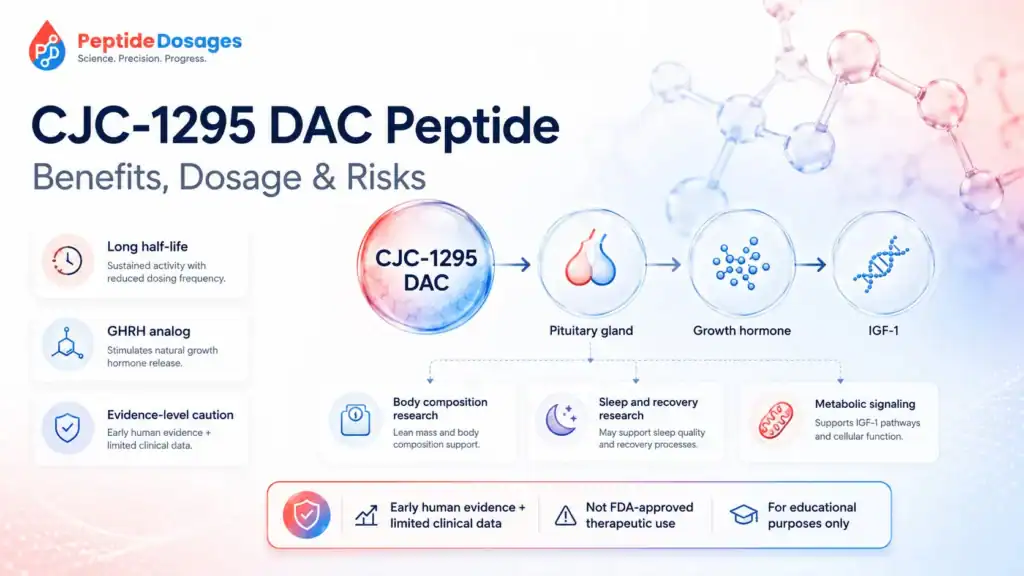
CJC-1295 DAC is proposed to work by mimicking GHRH signaling. GHRH normally stimulates the pituitary gland to release growth hormone, and growth hormone can then stimulate IGF-1 production, especially in the liver [6].
The DAC version is designed for prolonged exposure. In one healthy-adult study, CJC-1295 increased mean plasma growth hormone for at least six days and IGF-1 for nine to eleven days after a single injection, with a reported half-life of about 5.8 to 8.1 days [1].
Growth Hormone-Releasing Hormone and the Pituitary Gland
The hypothalamus and pituitary gland regulate growth hormone in a feedback system involving GHRH, somatostatin, ghrelin, growth hormone, and IGF-1 [6]. GHRH stimulates the anterior pituitary, while somatostatin inhibits growth hormone release; IGF-1 also participates in feedback regulation [6].
This system is naturally pulsatile. Growth hormone release varies by time of day, sleep, sex, age, nutrition, stress, and metabolic status, which is why single biomarker changes do not automatically predict broad health outcomes [6].
How Does CJC-1295 Mimic GHRH Signaling?
CJC-1295 mimics GHRH by activating the GHRH receptor pathway in pituitary-related models [2]. In rat anterior pituitary cell and animal work, albumin-binding hGRF analogs were developed to extend activity while preserving receptor activation [2].
In healthy adult human studies, CJC-1295 increased growth hormone and IGF-1 biomarkers, supporting pharmacodynamic activity in humans [1], [3]. Those studies do not show that the peptide is effective for treating growth hormone deficiency, improving athletic performance, or reversing age-related changes.
Why Does Mechanism Not Equal Proven Clinical Benefit?
A mechanism can explain why researchers study a peptide, but it cannot prove a therapeutic result. Growth hormone and IGF-1 influence many tissues, yet benefit and risk depend on diagnosis, dose, exposure pattern, baseline hormone status, age, comorbidities, and monitoring [6], [7].
This is especially important for online claims about anti-aging, muscle growth, fat loss, and recovery. CJC-1295 DAC has biomarker evidence, but it lacks the kind of large, long-term clinical outcome trials needed to support those broad claims [1], [10].
CJC-1295 With DAC vs Without DAC
“CJC-1295 with DAC” usually refers to the long-acting drug affinity complex version. “CJC-1295 without DAC” is often used online to describe a shorter-acting modified GRF 1-29-type peptide, but FDA documents warn that CJC-related naming is inconsistent and that related substances should not be treated as interchangeable [10].
The practical research distinction is exposure. DAC is intended to extend half-life, while shorter-acting GHRH analogs are often discussed in relation to more transient signaling [2], [3], [10].
What Does the DAC Version Change About Half-Life?
The DAC version was designed to covalently bind albumin and stay in circulation longer than native GHRH fragments [2]. In healthy adults, CJC-1295 had a reported half-life of 5.8 to 8.1 days, with growth hormone and IGF-1 increases lasting several days after dosing [1].
That long half-life is one reason safety interpretation matters. Longer exposure may mean longer pharmacologic effects, and repeated exposure to CJC-1295 DAC has not been characterized in large long-term trials [10].
CJC-1295 Without DAC and Modified GRF 1-29
Modified GRF 1-29 is generally discussed as a shorter-acting GHRH analog. FDA’s CJC-1295 review describes CJC-1295-related substances as distinct active-moiety or salt forms and notes that the active moiety used in some clinical studies was unclear [10].
Readers should avoid assuming that data from one form can be transferred directly to another. A paper, label, compounded preparation, or online claim may not be referring to the same chemical entity [10].
Choosing Between CJC-1295 With DAC and Without DAC in Research Context
Choosing between CJC-1295 with DAC and without DAC is a research-design question, not a personal-use recommendation. A researcher may care about whether the model needs prolonged stimulation, shorter pulses, albumin binding, or a specific pharmacokinetic profile [2], [3].
For a patient or reader, the more important question is whether a licensed clinician has identified a medically valid indication, whether approved options exist, and whether the compound has adequate evidence and regulatory oversight [7], [10], 16.
Science Behind CJC-1295 DAC: Growth Hormone and IGF-1
The science behind CJC-1295 centers on growth hormone and IGF-1. Growth hormone can act directly on tissues and can also increase insulin-like growth factor 1, which mediates some growth and metabolic effects [6].
Published CJC-1295 human studies mainly measured endocrine biomarkers. That is valuable for pharmacology, but it is not the same as showing improved symptoms, disease outcomes, body composition, injury recovery, or longevity [1], [3], [10].
Growth Hormone Release, Hormone Release, and IGF-1 Signaling
In a randomized, placebo-controlled healthy-adult study, single CJC-1295 administration increased mean plasma growth hormone and IGF-1 over multiple days [1]. A separate study reported that pulsatile secretion of growth hormone persisted during continuous stimulation by CJC-1295, with increases in trough growth hormone and IGF-1 [3].
These findings support biological activity in the GH/IGF-1 axis. They do not establish that increasing growth hormone levels is beneficial or safe for people without a diagnosed medical need [7], [16].
Continuous Stimulation by CJC-1295 and Pulsatile Secretion
Pulsatile growth hormone release is physiologically important because the endocrine system is regulated by rhythm and feedback [6]. In healthy men, CJC-1295 increased basal and mean growth hormone while preserving pulsatility in the study conditions [3].
This finding is often cited online, but it should be read carefully. The study was small, short-term, and focused on endocrine patterns rather than long-term clinical outcomes [3], [10].
What Is CJC-1295 Peptide Used For in Research?
CJC-1295 peptide has been used in research to study growth hormone release, IGF-1 changes, albumin-linked peptide pharmacology, and the GH axis [1], [2], [3]. FDA also reviewed CJC-1295-related substances in the context of compounding nominations for growth hormone deficiency, but it found no established clinical effectiveness for that use [10].
A registered HIV lipodystrophy-related trial has also been discussed in FDA materials, but the agency’s review describes limited publicly available data and an unpublished trial context [10]. That means the research landscape is real, but it is not strong enough for broad treatment claims.
Growth Hormone Deficiencies and Study Rationale
Growth hormone deficiency is a specific medical diagnosis that generally requires clinical suspicion and validated testing, not symptom self-assessment [7]. Endocrine testing is complex because growth hormone secretion is pulsatile and influenced by multiple physiologic factors [6], [7].
CJC-1295-related substances have been proposed in this research lane because they stimulate endogenous growth hormone release. However, FDA’s review states that it did not identify clinical effectiveness data supporting CJC-1295-related substances for treating growth hormone deficiency [10].
Body Composition, Fat Metabolism, and Lean Mass Endpoints
Growth hormone biology is related to lean mass, adipose tissue, lipolysis, and metabolism, which helps explain online interest in body composition [6]. But CJC-1295 DAC itself has not been proven in high-quality clinical trials to improve body composition in general readers, athletes, or older adults [10].
Approved tesamorelin is a useful comparison because it is a growth hormone-releasing factor analog with a specific FDA-approved indication for reducing excess abdominal fat in HIV-infected adults with lipodystrophy [12], [13]. That approved indication should not be generalized to CJC-1295 DAC or to ordinary weight loss [12], [13].
Potential Benefits of CJC-1295 DAC Peptide
Potential benefits of CJC-1295 DAC peptide should be separated by evidence level. The strongest direct human evidence supports endocrine biomarker effects, including increased growth hormone and IGF-1, not confirmed patient-centered benefits [1], [3], [10].
Claims about sleep, energy, recovery, muscle gain, skin, bone, fat loss, and anti-aging appear frequently online. For CJC-1295 DAC, those claims are best treated as unproven unless tied to specific human outcome data [10], [16].
What Does Research Suggest About Growth Hormone Levels?
Human research suggests that CJC-1295 can increase growth hormone and IGF-1 levels in healthy adults under study conditions [1], [3]. A serum-protein study also examined downstream protein profile changes after GH/IGF-1 axis activation by CJC-1295 in normal adult subjects 5.
The key limitation is that biomarker changes are not the same as clinical benefits. Higher growth hormone or IGF-1 is not automatically desirable and may raise safety concerns in some contexts [10], [13].
Evidence for Muscle Growth and Muscle Gain Claims
Muscle growth and muscle gain claims are common, but CJC-1295 DAC has not been established as a muscle-building therapy in well-designed clinical outcome trials [10]. Growth hormone affects protein, fat, and carbohydrate metabolism, but translating that biology into safe, meaningful muscle outcomes requires direct evidence [6].
This distinction matters for athletes and performance-focused readers. CJC-1295 appears under anti-doping restrictions, and performance-enhancing use raises regulatory, health, and ethical concerns beyond ordinary clinical evidence questions [15].
CJC-1295 and Ipamorelin: What Is Known?
CJC-1295 and ipamorelin are often discussed together because they influence growth hormone release through different receptor systems. CJC-1295 is a GHRH analog, while ipamorelin is described by the National Cancer Institute as a ghrelin mimetic that binds the growth hormone secretagogue receptor and stimulates growth hormone release 14.
That mechanistic pairing does not prove synergistic benefits in muscle growth, fat loss, anti-aging, or recovery. Combination use increases uncertainty because safety and long-term outcomes may differ from either compound studied alone [8], [10].
Why Are CJC-1295 and Ipamorelin Often Paired?
The pairing is often proposed because GHRH analogs and growth hormone secretagogues can act through different parts of the growth hormone regulatory system [6], [14]. The hypothesis is that two pathways may produce a larger growth hormone response than one.
However, a plausible hypothesis is not a proven clinical strategy. Published CJC-1295 DAC data should not be converted into a “stack,” “cycle,” or personal peptide therapy protocol [1], [3], [10].
What Safety Concerns Apply When Combining Growth Hormone Secretagogues?
Combining growth hormone secretagogues may increase uncertainty around IGF-1 elevation, glucose effects, fluid retention, cardiovascular symptoms, and adverse reactions [10], [13]. FDA has separately flagged both CJC-1295-related and ipamorelin acetate compounded drugs as substances that may pose significant safety risks in certain compounding contexts [8].
Any combination claim should therefore be evidence-graded. Without high-quality clinical studies of the exact combination, dose, formulation, and population, benefit and risk remain uncertain [8], [10].
What Does Human Research Show About CJC-1295 DAC?
Human research shows that CJC-1295 can produce measurable growth hormone and IGF-1 changes in healthy adults [1], [3]. It does not show that CJC-1295 DAC is an approved or proven treatment for growth hormone deficiency, age-related hormone decline, athletic performance, or body composition goals [10].
| Evidence Area | What Has Been Studied | Evidence Level | What It Can and Cannot Show |
|---|---|---|---|
| GH and IGF-1 biomarkers | Healthy adults receiving CJC-1295 in controlled studies showed increases in growth hormone and IGF-1 [1], [3] | Early human evidence | Shows pharmacodynamic activity; does not prove clinical benefit |
| GH pulsatility | Healthy men had preserved pulsatile GH secretion during CJC-1295 exposure [3] | Early human evidence | Supports endocrine-pattern research; does not establish long-term safety |
| Albumin-linked pharmacology | Rat and cell models evaluated albumin-binding GHRH analog design [2] | Preclinical evidence | Explains mechanism and half-life concept; does not prove human outcomes |
| Growth deficiency models | GHRH knockout mice were used to study growth and body composition effects 4 | Preclinical evidence | Supports biologic plausibility; may not translate to human treatment |
| Clinical treatment claims | FDA review found no established effectiveness data for CJC-1295-related substances for growth hormone deficiency [10] | Evidence limitation | Counters broad therapeutic claims and supports caution |
Healthy Adult Trials and Pharmacokinetics of CJC-1295 DAC
The main healthy-adult trial was randomized, double-blind, and placebo-controlled, with ascending single doses and repeated dosing arms [1]. It found prolonged increases in growth hormone and IGF-1 and reported a half-life of 5.8 to 8.1 days [1].
FDA’s later review emphasized that these clinical data came from healthy adults, that sample sizes were small, and that the active moiety or salt form was not always clear across available data [10]. That limits how confidently the results can be generalized.
What Effects on Growth Hormone and IGF-1 Were Reported?
Teichman and colleagues reported that CJC-1295 increased mean plasma growth hormone two- to ten-fold for at least six days and IGF-1 about 1.5- to three-fold for nine to eleven days after a single administration [1]. Repeated dosing also maintained IGF-1 above baseline for extended periods in the study setting [1].
Ionescu and Frohman reported that CJC-1295 increased trough and mean growth hormone and IGF-1 while preserving pulsatility in healthy men [3]. These are endocrine endpoints, not direct measures of healing, muscle performance, longevity, or disease improvement.
What Preclinical Evidence Exists for CJC-1295 DAC?
Preclinical evidence supports the concept that albumin-binding GHRH analogs can activate the GHRH receptor pathway and extend biological activity [2]. Animal studies also explored growth and body composition effects in GHRH knockout mice [4].
Preclinical studies are useful for mechanism and hypothesis generation. They cannot establish that CJC-1295 DAC is safe or effective for general human use [2], [4], [10].
What Do Animal Models Suggest About Growth Hormone Production?
In GHRH knockout mice, once-daily CJC-1295 administration normalized several growth-related parameters, including body weight, body length, and some body-composition measures under the study conditions [4]. The study also reported changes consistent with increased pituitary GH-related activity [4].
That model is not the same as adult human peptide therapy. A mouse with a genetic GHRH deficiency model is not equivalent to a person seeking body composition, recovery, or anti-aging effects [4], [10].
Albumin Binding, Pharmacodynamics, and Translational Limits
Albumin binding is central to the pharmacodynamics of the DAC version. Preclinical work selected CJC-1295 as a longer-lasting GRF analog based on receptor activation, DPP-IV stability, and circulation beyond shorter-acting analog expectations [2].
The translational limit is that longer action is not automatically safer or more effective. Longer exposure may also extend adverse pharmacologic effects, and long-term clinical safety data remain limited [10].
Where Is the Evidence for CJC-1295 Still Limited?
The evidence for CJC-1295 is limited in several ways: small human studies, healthy-volunteer populations, biomarker-centered endpoints, inconsistent substance nomenclature, uncertain generalizability, and limited long-term safety data [1], [3], [10]. These limitations are especially important for claims about disease treatment or performance enhancement.
Evidence is strongest for the statement that CJC-1295 can affect GH and IGF-1 biomarkers. Evidence is much weaker for claims that it produces meaningful clinical benefits in broad populations [1], [3], [10].
Why Do Online Anti-Aging and Longevity Claims Need Caution?
Growth hormone declines with age, but age-related decline does not automatically mean growth hormone stimulation is beneficial or safe [6]. Reviews and expert commentary have cautioned that growth hormone should be used only for approved indications and that diagnostic context matters [16].
For CJC-1295 DAC, anti-aging and longevity claims are not supported by large clinical trials showing improved lifespan, disease outcomes, or durable functional benefit [10], [16]. These claims should be treated as anecdotal or unsupported unless tied to high-quality human evidence.
Source Quality and Clinical Outcome Gaps in Peptide Therapy Claims
A reliable CJC-1295 DAC review should prioritize FDA documents, peer-reviewed trials, ClinicalTrials.gov records, and endocrine references over peptide vendor pages or marketing claims. FDA review materials specifically highlight limited clinical data, naming complexity, and safety uncertainty for CJC-1295-related substances [8], [10].
The main gap is clinical outcomes. A peptide can raise a biomarker and still fail to show that it improves how people feel, function, recover, or live [1], [10].
Side Effects of CJC-1295 DAC Peptide
Side effects of CJC-1295 DAC peptide have been reported in human studies and reviewed in FDA compounding materials. The safety profile is not equivalent to an FDA-approved label because CJC-1295 DAC itself is not FDA-approved [8], [10].
FDA’s review described adverse events including injection-site reactions, headache, diarrhea, flushing, systemic vasodilatory reactions, increased heart rate, and other symptoms in available clinical-study summaries [10]. The agency also identified immunogenicity and peptide impurity or API-characterization concerns for compounded CJC-1295-related drugs [8].
What Side Effects Have Been Reported?
In the main healthy-adult study, no serious adverse reactions were reported, but FDA’s review of available clinical data described high rates of injection-site reactions and other adverse events in CJC-1295-exposed participants [1], [10]. Reported symptoms across reviewed studies included headache, diarrhea, flushing, nausea or abdominal pain, dizziness, hypotension, and transient local redness or tenderness [10].
A short study with no serious adverse events does not prove long-term safety. Safety data are limited by small sample sizes, short follow-up, and healthy-volunteer populations [1], [3], [10].
When Do Potential Side Effects Require Medical Evaluation?
Symptoms involving chest discomfort, fainting, severe allergic reaction, significant swelling, severe headache, vision changes, persistent rapid heart rate, or marked glucose changes would be clinically important in any GH-axis intervention context [10], [13]. This article does not diagnose those symptoms or provide self-management instructions.
FDA’s review discussed one unpublished HIV lipodystrophy study in which a participant died after a myocardial infarction; the physician reportedly attributed the event to asymptomatic coronary artery disease and plaque rupture, but the trial context remained limited and unpublished [10]. That episode underscores why cardiovascular risk, age, comorbidities, and monitoring matter.
Safety Risks, Contraindications, and Drug Interactions
Because CJC-1295 DAC has no FDA-approved prescribing information, there is no official CJC-1295 DAC label listing formal contraindications or drug interactions [8], [10]. Clinicians may instead consider the broader GH/IGF-1 pathway, related approved labels, and individual risk factors.
For related GHRF therapy, tesamorelin labeling includes contraindications such as pregnancy, active malignancy, disruption of the hypothalamic-pituitary axis, and hypersensitivity to the product or excipients [13]. Those contraindications should not be copied as a CJC-1295 label, but they are relevant clinician-discussion points for GH-axis drugs [13].
Who Should Discuss Contraindications With a Clinician?
People with a history of cancer, pituitary or hypothalamic disease, diabetes or impaired glucose tolerance, cardiovascular disease, pregnancy or breastfeeding, unexplained edema, severe headache syndromes, or active endocrine disorders should not interpret CJC-1295 information without clinician input [7], [10], [13]. Pediatric use is especially concerning because growth plates, endocrine diagnosis, and long-term safety require specialist evaluation [13].
Adult growth hormone deficiency assessment usually requires appropriate testing and clinical context, not online symptom matching [7]. This is one reason unsupervised peptide therapy is medically risky.
Which Drug Interactions and Conditions Raise Concern?
For approved tesamorelin, labeling notes that growth hormone may affect clearance of drugs metabolized by CYP450 enzymes and may interact with glucocorticoid replacement needs [12]. The label also highlights glucose intolerance or diabetes risk and elevated IGF-1 monitoring concerns [12], [13].
These label issues are not direct CJC-1295 instructions. They show why medication review, endocrine history, glucose status, cancer history, and monitoring plans are relevant when discussing GH-axis compounds with a clinician [12], [13].
What Dosage and Administration Information Exists?
Dosage information for CJC-1295 DAC should be limited to published-study context and regulator-reviewed summaries. Study doses should not be interpreted as personal dosing advice.
In human research, CJC-1295 was administered in controlled study settings using subcutaneous routes and defined study protocols [1], [3], [10]. FDA’s review described study exposure ranges and emphasized that CJC-1295-related substances have no approved drug component status and no established approved dosing label [10].
Study Dose Ranges Versus Proper Dosage Advice
Published studies evaluated specific CJC-1295 dose ranges in healthy volunteers, including single and repeated subcutaneous administrations under research supervision [1], [3], [10]. FDA’s review summarized healthy-adult exposure up to four subcutaneous injections and dose ranges reported in micrograms per kilogram, but those values are not recommendations for readers [10].
The medically responsible takeaway is that study dose ranges answer a research question. They do not define a “proper dosage,” beginner dose, cycle, stack, or self-treatment plan [10].
What Approved Label Dosage Is Available?
There is no FDA-approved label dosage for CJC-1295 DAC peptide because it is not FDA-approved [8], [10]. Approved-label dosage exists for other drugs in the growth hormone-releasing factor lane, such as tesamorelin products for specific HIV-associated lipodystrophy indications [12], [13].
For example, EGRIFTA WR labeling describes tesamorelin 1.28 mg administered subcutaneously once daily, and EGRIFTA SV labeling describes 1.4 mg once daily, but those products and labels are not substitutable with CJC-1295 DAC [12], [13]. Label information for one approved drug should not be converted into instructions for an unapproved peptide.
Which Administration Routes Are Discussed Without Step-by-Step Instructions?
CJC-1295 human studies and FDA compounding review materials discuss subcutaneous administration as a study or proposed compounded-use route [1], [3], [10]. This article intentionally does not provide injection technique, mixing, reconstitution, storage, syringe, or self-administration steps.
Route of administration affects pharmacokinetics, safety, and interpretation of study findings. It should not be turned into at-home procedural guidance [10], [12].
Is CJC-1295 DAC Peptide FDA-Approved?
CJC-1295 DAC peptide is not FDA-approved. FDA materials state that CJC-1295-related bulk drug substances are not components of FDA-approved drugs, and FDA has identified significant safety concerns for compounded CJC-1295-related drugs [8], [10].
Regulatory status matters because approved products are reviewed for indication-specific evidence, labeling, manufacturing quality, dosing, contraindications, warnings, and adverse reactions. Unapproved or compounded peptide products do not have the same review status as FDA-approved medicines [8], 9.
Regulatory, Legal, and Anti-Doping Status of CJC-1295
FDA’s 2024 Pharmacy Compounding Advisory Committee materials proposed that CJC-1295-related bulk drug substances not be included on the 503A bulks list, and a 2026 FDA safety-risk page lists CJC-1295 among substances that may present significant safety risks in compounding contexts [8], 11. FDA also found no authorized CJC-1295 products in several reviewed jurisdictions, including the United States and the European Union, according to its review document [10].
For sport, WADA’s prohibited list includes growth hormone releasing factors and related substances, including CJC-1295 [15]. Athletes should treat this as a compliance and health concern, not as a performance shortcut.
Why Do Compounded or Unapproved Peptides Raise Quality Concerns?
Compounded or unapproved peptides raise quality concerns because manufacturing, purity, identity, sterility, stability, and impurity characterization may differ from approved drug standards [8], [9]. FDA’s compounding framework requires specific conditions for bulk drug substances, including monograph, approved-drug-component, or 503A list status requirements [9].
FDA’s CJC-1295 safety page also notes peptide-related concerns such as immunogenicity risk, impurity characterization, and limited clinical data [8]. These concerns are separate from whether a molecule has a plausible mechanism.
CJC-1295 Compared With Related Peptide Therapies
CJC-1295 is best understood alongside related GH-axis therapies, not as a stand-alone “best peptide.” Comparison should focus on mechanism, evidence level, approval status, studied population, and safety information.
Tesamorelin is an FDA-approved GHRF analog for reducing excess abdominal fat in HIV-infected adults with lipodystrophy, with labeled limitations and warnings [12], [13]. Ipamorelin is a ghrelin mimetic growth hormone secretagogue described in the NCI Drug Dictionary, but it is not the same mechanism as a GHRH analog [14].
Sermorelin, Tesamorelin, Ipamorelin, and Synthetic Growth Hormone
Sermorelin and CJC-1295 are both discussed in the GHRH analog lane, while ipamorelin acts through the growth hormone secretagogue receptor pathway [6], [14]. Tesamorelin is different because it has FDA-approved labeling for a specific HIV-associated lipodystrophy indication, with clear warnings, contraindications, and dosing instructions [12], [13].
Synthetic growth hormone is also a different category because it supplies exogenous GH rather than stimulating endogenous release. Expert commentary has emphasized that growth hormone should be used only for approved indications, reflecting the importance of diagnosis, monitoring, and safety [16].
Key Clinician Discussion Points Before Considering Peptide Therapy
A practical clinician discussion can focus on questions, not self-directed actions:
- Is there a diagnosed endocrine condition that warrants evaluation or treatment? [7]
- Are FDA-approved therapies more appropriate than an unapproved peptide? [10], [16]
- What are the person’s IGF-1 level, glucose status, cardiovascular risk, cancer history, and pituitary history? [7], [13]
- Could current medications create interaction concerns, such as CYP450 substrate drugs or glucocorticoid replacement therapy? [12]
- What is known and unknown about adverse events, immunogenicity, product quality, and long-term safety? [8], [10]
- Does anti-doping status apply because of sport or competition rules? [15]
- Are claims based on human outcomes, biomarkers, preclinical models, or unsupported marketing? [1], [3], [10]
The safest way to interpret CJC-1295 DAC peptide is through evidence quality, regulatory status, safety data, and clinician-guided decision-making. The strongest conclusions come from controlled biomarker studies and regulator-reviewed safety documents; weaker claims about anti-aging, muscle growth, fat loss, and recovery should be treated cautiously.
REFERENCES
- Teichman SL, Neale A, Lawrence B, Gagnon C, Castaigne JP, Frohman LA. Prolonged Stimulation of Growth Hormone and Insulin-Like Growth Factor I Secretion by CJC-1295 in Healthy Adults. The Journal of Clinical Endocrinology & Metabolism. 2006;91(3):799-805. DOI: 10.1210/jc.2005-1536.
- Jetté L, Léger R, Thibaudeau K, et al. Human Growth Hormone-Releasing Factor 1-29 Albumin Bioconjugates Activate the GRF Receptor on the Anterior Pituitary in Rats: Identification of CJC-1295 as a Long-Lasting GRF Analog. Endocrinology. 2005;146(7):3052-3058. DOI: 10.1210/en.2004-1286.
- Ionescu M, Frohman LA. Pulsatile Secretion of Growth Hormone Persists During Continuous Stimulation by CJC-1295. The Journal of Clinical Endocrinology & Metabolism. 2006;91(12):4792-4797. DOI: 10.1210/jc.2006-1702.
- Alba M, Fintini D, Sagazio A, Lawrence B, Castaigne JP, Frohman LA, Salvatori R. Once-Daily Administration of CJC-1295 Normalizes Growth in the GHRH Knockout Mouse. American Journal of Physiology-Endocrinology and Metabolism. 2006;291(6):E1290-E1294. DOI: 10.1152/ajpendo.00201.2006.
- Sackmann-Sala L, Ding J, Frohman LA, Kopchick JJ. Activation of the GH/IGF-1 Axis by CJC-1295, a Long-Acting GHRH Analog, Results in Serum Protein Profile Changes in Normal Adult Subjects. Growth Hormone & IGF Research. 2009;19(6):471-477. DOI: 10.1016/j.ghir.2009.03.001. PMID: 19386527.
- Olarescu NC, Berryman DE, Householder LA, et al. Normal Physiology of Growth Hormone in Adults. Endotext. NCBI Bookshelf. Updated 2025.
- Yuen KCJ, Biller BMK, Radovick S, Carmichael JD. Growth Hormone Stimulation Tests in Assessing Adult Growth Hormone Deficiency. Endotext. NCBI Bookshelf. 2023.
- U.S. Food and Drug Administration. Certain Bulk Drug Substances for Use in Compounding that May Present Significant Safety Risks. FDA. Updated 2026.
- U.S. Food and Drug Administration. Bulk Drug Substances Used in Compounding Under Section 503A of the FD&C Act. FDA. Updated 2026.
- U.S. Food and Drug Administration. CJC-1295-Related Bulk Drug Substances: FDA Evaluation. FDA Pharmacy Compounding Advisory Committee materials. 2024.
- U.S. Food and Drug Administration. December 4, 2024 Pharmacy Compounding Advisory Committee Briefing Document. FDA. 2024.
- U.S. Food and Drug Administration. EGRIFTA WR Prescribing Information. FDA label for tesamorelin for injection. 2025.
- U.S. Food and Drug Administration. EGRIFTA SV Prescribing Information. FDA label for tesamorelin for injection. 2024.
- National Cancer Institute. Ipamorelin. NCI Drug Dictionary. National Cancer Institute.
- World Anti-Doping Agency. The 2026 Prohibited List. WADA. 2025.
- Clemmons DR, Molitch M, Hoffman AR, et al. Growth Hormone Should Be Used Only for Approved Indications. The Journal of Clinical Endocrinology & Metabolism. 2014;99(2):409-411. DOI: 10.1210/jc.2013-4187. PMID: 24423315.
Contributing Authors
The following authors are recognized for published research that helped shape the scientific and clinical context discussed in this article.
Lawrence A. Frohman
Author profile: ResearchGate
Lawrence A. Frohman’s publications are central to the CJC-1295 evidence base because they include controlled human work on growth hormone and IGF-1 responses and endocrine-pattern research during continuous CJC-1295 exposure. His studies help frame the article’s distinction between early human biomarker data and broader clinical evidence for CJC-1295 DAC peptide. The work also supports a cautious mechanism of action discussion: CJC-1295 can affect the GHRH receptor pathway and growth hormone axis, but those pharmacologic findings do not establish outcomes such as body-composition changes, anti-aging effects, or routine therapeutic use.
Selected publications:
- Prolonged Stimulation of Growth Hormone and Insulin-Like Growth Factor I Secretion by CJC-1295 in Healthy Adults — The Journal of Clinical Endocrinology & Metabolism, 2006. DOI: 10.1210/jc.2005-1536.
- Pulsatile Secretion of Growth Hormone Persists During Continuous Stimulation by CJC-1295 — The Journal of Clinical Endocrinology & Metabolism, 2006. DOI: 10.1210/jc.2006-1702.
Roberto Salvatori
Author profile: Johns Hopkins University Profile
Roberto Salvatori’s publications are relevant to the preclinical and endocrine context for CJC-1295 DAC peptide. His work on GHRH knockout mice provides model-specific background for interpreting how GHRH analogs interact with growth hormone biology, while his coauthored position piece on approved indications for growth hormone helps frame evidence limitations and medical decision-making. This makes his published literature useful for distinguishing pathway plausibility from clinical use claims. The publications below are most relevant to the article’s discussion of preclinical research, growth hormone deficiency models, and safety-aware interpretation of GH-axis interventions without converting animal findings into personal treatment guidance.
Selected publications:
- Once-Daily Administration of CJC-1295 Normalizes Growth in the GHRH Knockout Mouse — American Journal of Physiology-Endocrinology and Metabolism, 2006. DOI: 10.1152/ajpendo.00201.2006.
- Growth Hormone Should Be Used Only for Approved Indications — The Journal of Clinical Endocrinology & Metabolism, 2014. DOI: 10.1210/jc.2013-4187.