
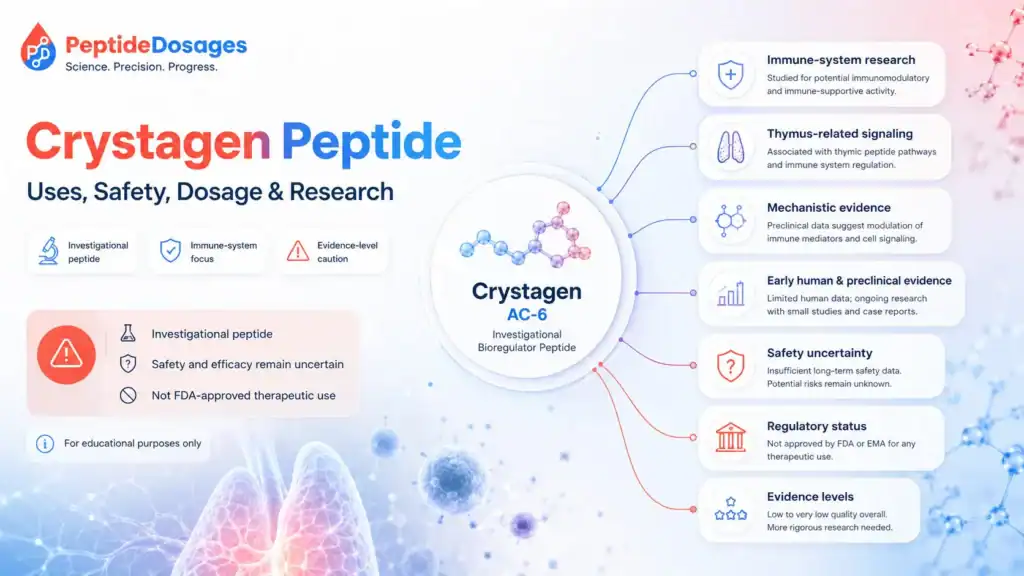
Crystagen peptide is a short investigational peptide bioregulator discussed mainly in immune-system, thymus, and aging-related research contexts. The name is commonly linked to the tripeptide sequence H-Glu-Asp-Pro-OH, also described as glutamyl-aspartyl-proline, in patent literature rather than in an FDA-approved prescribing label 1. This article is educational and reviews the evidence, safety questions, dosage context, and regulatory status without giving personalized medical advice.
- Crystagen is generally described as a short peptide or peptide complex associated with immune-system bioregulation, not as an established FDA-approved drug product 1, 11.
- The strongest Crystagen-specific evidence appears to come from patent documents, mechanistic literature, and limited preclinical or regional research, not large randomized human trials [1], 2.
- Crystagen is often discussed alongside thymic peptide bioregulators because thymus biology is central to T-cell development and immune function 7, 8.
- Proposed benefits include immune-function normalization, immune-cell regulation, and aging-related immune support, but those claims remain evidence-sensitive and should not be treated as proven clinical outcomes [2], 3.
- Dosage information for Crystagen comes from patent or product-literature contexts rather than an approved label, so it should be interpreted as research context, not a personal dosing recommendation [1], [11].
- Safety, side effects, contraindications, and drug interactions are not well characterized in modern regulatory labeling, which makes clinician-guided interpretation especially important [11], 12.
- Regulatory status matters because approved drugs, dietary supplements, compounded preparations, and research-use products are evaluated under different standards [12], 14, 16.
Fast Answer
Crystagen peptide is an investigational short peptide bioregulator most often discussed for immune-system and thymus-related research. Published and patent literature describe Crystagen as glutamyl-aspartyl-proline, but the evidence base is much thinner than for approved peptide drugs 1. Interest comes from proposed immune-normalizing, aging, and cellular-regulation effects, yet available evidence is mainly mechanistic, preclinical, or limited regional research 2, 3. Safety, dosing, and legal status should be evaluated through reliable medical and regulatory sources.
Evidence basis note: This page prioritizes official regulatory sources, clinical-trial registries, PubMed-indexed studies, peer-reviewed reviews, and patent documents only when clearly labeled as patent evidence. Claims without strong human evidence are identified as preliminary, investigational, preclinical, or unverified.
What Is the Crystagen Peptide?
Crystagen peptide is a short immune-system peptide bioregulator described in patent and bioregulation literature, but it should not be interpreted as an approved therapeutic peptide drug unless a regulator has specifically approved a product and indication 1, 11.
Crystagen as an Immune System Peptide Bioregulator
Crystagen is usually positioned in the “peptide bioregulator” category, a term used in some Eastern European and Russian bioregulation literature for short peptides studied for tissue-specific or gene-regulatory effects 18, 19. In Crystagen’s case, the main therapeutic lane is immune-system function, especially thymus-related immune regulation [1], [3].
The phrase “immune system peptide” should be read carefully. It describes the research theme around Crystagen, not proof that Crystagen treats immune disease in humans.
AC-6, Crystagen Lingual, and Naming Variants
Crystagen has been associated with naming variants such as Crystagen®, Crystagen lingual, AC-6, peptide complex AC-6, and glutamyl-aspartyl-proline [1]. Patent literature describes the active sequence as H-Glu-Asp-Pro-OH and gives the chemical name glutamyl-aspartyl-proline [1].
These names are not interchangeable with regulatory approval. A named peptide complex, capsule, or lingual product can exist in literature or product materials without having an FDA-approved drug label.
Why the Thymus Is Central to Crystagen Discussions
The thymus is central to Crystagen discussions because thymus biology is closely tied to T-cell development and immune-system function 7. The National Cancer Institute describes the thymus as a lymphatic-system organ where T lymphocytes grow and multiply [7].
Thymus research also matters because the thymus is sensitive to aging, infection, chemotherapy, radiation, and physiologic stress 8. That background helps explain why thymus-related peptides are discussed in immune decline, but it does not prove that Crystagen reverses immune aging.
How Is Crystagen Proposed to Work?
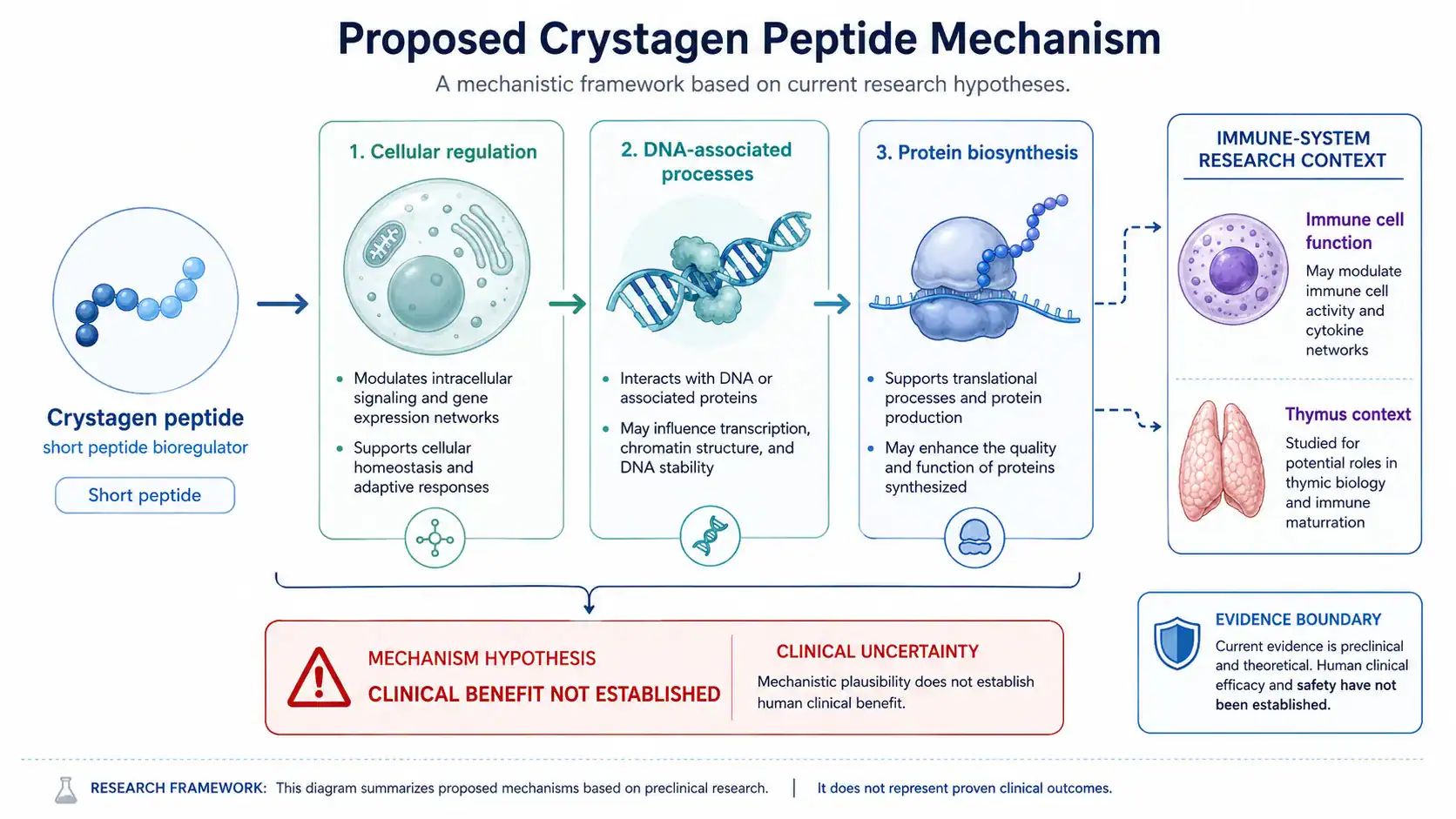
Crystagen is proposed to work through short-peptide effects on cellular regulation, DNA-associated processes, and protein biosynthesis, but these mechanisms remain largely hypothesis-generating rather than clinically established for broad therapeutic use 1, 5.
Short Peptides, DNA, and Protein Biosynthesis Claims
Some peptide bioregulation literature proposes that ultrashort peptides may influence gene expression by interacting with DNA or chromatin-associated processes [5]. A systematic review of peptide regulation of gene expression describes short peptides as regulators of gene-expression patterns across several biological systems, including immune-related contexts [5].
For Crystagen, this proposed mechanism should be read as a molecular hypothesis. Gene-expression activity in laboratory or review literature does not automatically establish a clinical benefit in patients.
Proposed Effects on Cellular Immune Function
Crystagen-specific research has examined immune-related cell populations in aging-associated models. A PubMed-indexed study on peptides in spleen aging reported that Vilon, Timogen, Crystagen, and R-1 had immunoprotective effects, with Crystagen described as activating B cells without causing spleen cell renewal in aging 2.
That distinction matters. A measurable cellular effect is not the same as a proven clinical outcome such as fewer infections, better immune recovery, or improved survival.
Why Mechanism Does Not Prove Clinical Benefit
Crystagen’s proposed mechanism is biologically plausible within the peptide-bioregulator framework, but clinical benefit requires human outcomes data. The gap between mechanism and patient benefit is especially important for immune-system claims, because immune activation, immune suppression, and immune “normalization” can mean different things depending on disease context.
Related peptide literature shows why caution is needed. A Cochrane review of thymic peptides in cancer patients included 26 trials and 2,736 participants, but found no clear overall survival, disease-free survival, or tumor-response benefit for the thymic preparations studied, although severe infectious complications appeared lower in preliminary evidence 10. That review does not evaluate Crystagen directly, but it shows that immune-peptide mechanisms do not guarantee clinical efficacy.
Crystagen Peptide Structure and Sequence Context
Crystagen peptide structure is most clearly described in patent literature as a short synthetic peptide sequence, but a patent description is not the same as independent clinical validation or approved labeling 1.
Peptide Complex AC-6 and Amino Acid Sequence Claims
Patent literature identifies the peptide substance associated with Crystagen as H-Glu-Asp-Pro-OH, or glutamyl-aspartyl-proline [1]. The same patent describes the substance as having immunogeroprotective activity and provides structural and formula-related information for the peptide [1].
Because sequence claims are technical identity claims, they can be useful for source matching. They should not be used to imply that all products marketed under similar names have the same composition, purity, bioavailability, or clinical effects.
Synthetic Peptide Versus Natural Peptide Complex Language
Crystagen is often discussed with both “synthetic peptide” and “natural peptide complex” language. Patent literature describes production by classical peptide synthesis, which supports synthetic peptide terminology for the claimed sequence [1].
The broader peptide-bioregulator field also includes natural tissue-derived preparations and synthetic analogs. A PubMed-indexed review of natural and synthetic thymic peptides discussed differences between thymus-derived preparations such as Thymalin and synthetic thymic peptides such as Thymogen 9. For Crystagen, the safest editorial approach is to specify which source describes which form.
What Is Crystagen Peptide Used For or Studied For?
Crystagen peptide is studied or discussed mainly for immune-function regulation, aging-associated immune decline, and stress-related immune vulnerability, but these uses are investigational rather than established approved indications 1, 2, 3.
Immune Function and Immune System Normalization
Crystagen is commonly framed around “normalization” of immune-system function. In scientific writing, that word needs context: it may refer to measured immune markers, cell populations, or model-specific immune responses rather than a guaranteed improvement in health outcomes.
Crystagen-specific evidence includes immune-cell observations in aging-related spleen research [2]. Broader peptide-bioregulator literature describes thymus-related peptides as immunomodulatory, but those findings cannot be automatically generalized to Crystagen as a treatment [3], [9].
Aging-Related Immune Decline
Crystagen is often linked to immune decline in the elderly because thymus activity and T-cell production change with age 8. The broader peptide-bioregulator literature includes geroprotective claims and aging-related studies, including reviews of peptide bioregulation of aging 18, 19.
The key limitation is that aging biology is not the same as a clinical anti-aging indication. Crystagen should not be described as proven to reverse immune aging unless supported by well-designed human trials.
Stress, Infection, Radiation, and Chemotherapy Recovery Contexts
Crystagen and related thymus peptides are discussed in contexts where immune function may be disrupted, including infection, radiation, chemotherapy, and stress [3], [8]. The thymus is known to be vulnerable to infection, chemotherapy, and radiation injury, which supports why thymus-related immune recovery is a research area [8].
However, “studied in a context” is not the same as “approved to treat that context.” For example, thymic peptides have been investigated in cancer-supportive settings, but a Cochrane review found limited and mixed clinical support for major cancer outcomes [10].
Potential Benefits of Crystagen Peptide
Potential benefits of Crystagen peptide center on immune regulation, immune-cell activity, and cellular resilience, but those benefits are preliminary and should be separated from unsupported therapeutic claims 2, 3.
Immune Cell Development and Immune Response Balance
Crystagen is discussed for immune-cell regulation because thymus biology controls T-cell development and immune repertoire formation 7, 8. The Crystagen-specific PubMed-indexed aging-spleen study reported B-cell activation rather than broad spleen-cell renewal [2].
That finding supports a narrow mechanistic discussion. It does not prove that Crystagen improves immune defense, prevents infection, or treats immune deficiency in patients.
Cellular Resilience Under Adverse Factors
Some bioregulator literature discusses Crystagen or related short peptides in adverse-factor contexts, including irradiation and stress-related models [3]. The proposed rationale is that short peptides may affect gene expression, cell proliferation, or immune-cell behavior [5], 6.
A useful interpretation is to classify these claims as mechanistic or preclinical unless a human study measures a clinically meaningful endpoint. Cellular resilience in a model is not the same as clinical recovery in a person.
Which Benefit Claims Remain Unproven?
Claims that Crystagen “normalizes immunity,” prevents infectious disease, reverses immune aging, improves chemotherapy recovery, or protects against radiation should be treated as unproven unless tied to specific human evidence. Patent claims, mechanistic reviews, and preclinical findings can justify research interest, but they do not establish general medical efficacy [1], [2], [3].
The strongest responsible statement is narrower: Crystagen is a short peptide bioregulator studied for immune-system and thymus-related mechanisms, with limited human evidence and substantial uncertainty around clinical benefit.
What Does Human Research Say About Crystagen?
Human research on Crystagen appears limited, regionally concentrated, and difficult to compare with the evidence standards used for approved peptide drugs, so clinical claims should remain conservative 2, 11.
Early Human Evidence and Regional Clinical Claims
Some reviews of peptide bioregulators discuss clinical applications of thymus-related peptides and related short peptides, but these sources often combine several compounds, study designs, and clinical contexts 18, 19. Crystagen-specific human evidence is not as easy to isolate as evidence for a single approved drug with a modern prescribing label.
For publication, the safest approach is to cite only the exact compound, population, route, and outcome being discussed. If a study evaluates a related thymic peptide rather than Crystagen, the article should say so.
Study Design Limits and Outcome Interpretation
Crystagen evidence should be evaluated by study type, sample size, comparator, endpoints, and independence of replication. Patent examples, observational reports, mechanistic studies, and reviews can support background context, but randomized controlled trials provide stronger evidence for therapeutic claims.
This is especially important for immune outcomes. A laboratory marker may change while patient-centered outcomes such as infection rate, hospitalization, quality of life, or survival remain unproven.
Why Patient Outcomes Need Stronger Evidence
Crystagen patient outcomes need stronger evidence because immune-related interventions can have different effects across older adults, immunocompromised patients, autoimmune conditions, cancer treatment, and infection recovery. A peptide that appears immunomodulatory in one model could be irrelevant, ineffective, or unsafe in another context.
For comparison, thymic peptide trials in cancer patients have been reviewed systematically, and even that broader thymic-peptide evidence did not demonstrate major cancer efficacy outcomes in the Cochrane review 10. Crystagen-specific claims should therefore be held to a high evidentiary standard.
Preclinical and Mechanistic Research on Crystagen
Preclinical and mechanistic research provides the main scientific rationale for Crystagen, but these findings are best viewed as hypothesis-generating until replicated in well-controlled human studies 2, 5.
Animal and Cellular Models of Immune Function
The Crystagen-specific PubMed-indexed study on aging spleen tissue reported immunoprotective effects among several peptides, with Crystagen associated with B-cell activation [2]. Patent literature also describes immunogeroprotective effects and experimental uses for the claimed peptide substance 1.
Animal and cell findings are valuable for mechanism discovery. They cannot determine whether Crystagen improves immune outcomes, dosing safety, or long-term risk in humans.
Thymic Peptide and Peptide Bioregulation Research
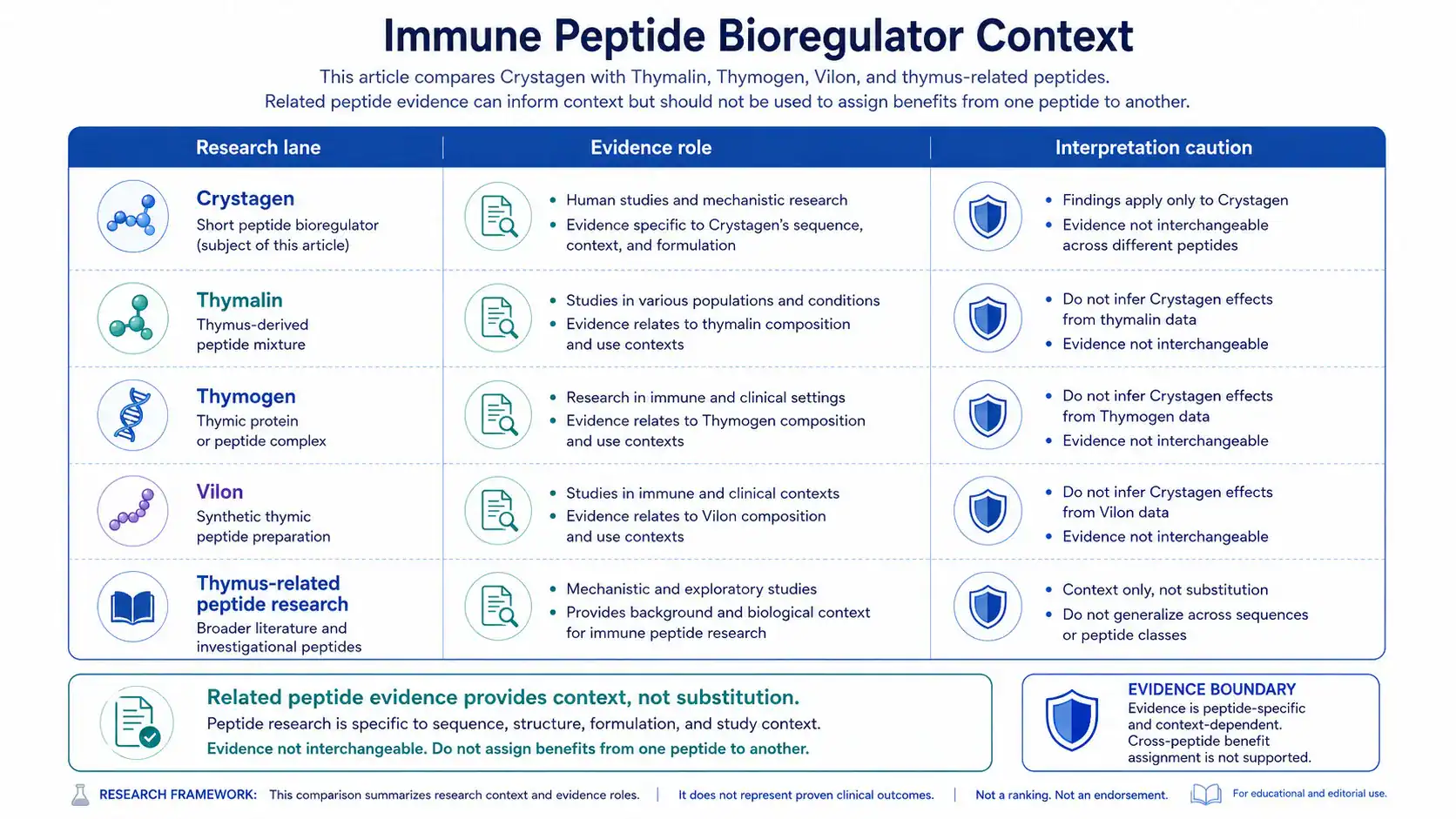
Crystagen belongs in the same topical lane as thymic peptide bioregulation research. Thymalin, Thymogen, Vilon, and related short peptides have been discussed for immune dysfunction, inflammatory processes, and tissue-specific effects in the peptide-bioregulator literature 9, 20.
This comparison is useful for understanding the field. It should not be used to borrow benefits from one peptide and assign them to another.
Translational Limits From Laboratory Findings
Crystagen’s translational limits include uncertain absorption, unclear pharmacokinetics, limited independent replication, and incomplete safety characterization. A 2022 paper on ultrashort peptide transport includes Crystagen as EDP and discusses peptide transport through POT and LAT carrier systems, but transport plausibility is not equivalent to proven therapeutic efficacy 4.
The question is not whether a proposed mechanism exists. The question is whether the mechanism produces reliable, clinically meaningful outcomes in humans.
Evidence Quality and Claim Strength Framework
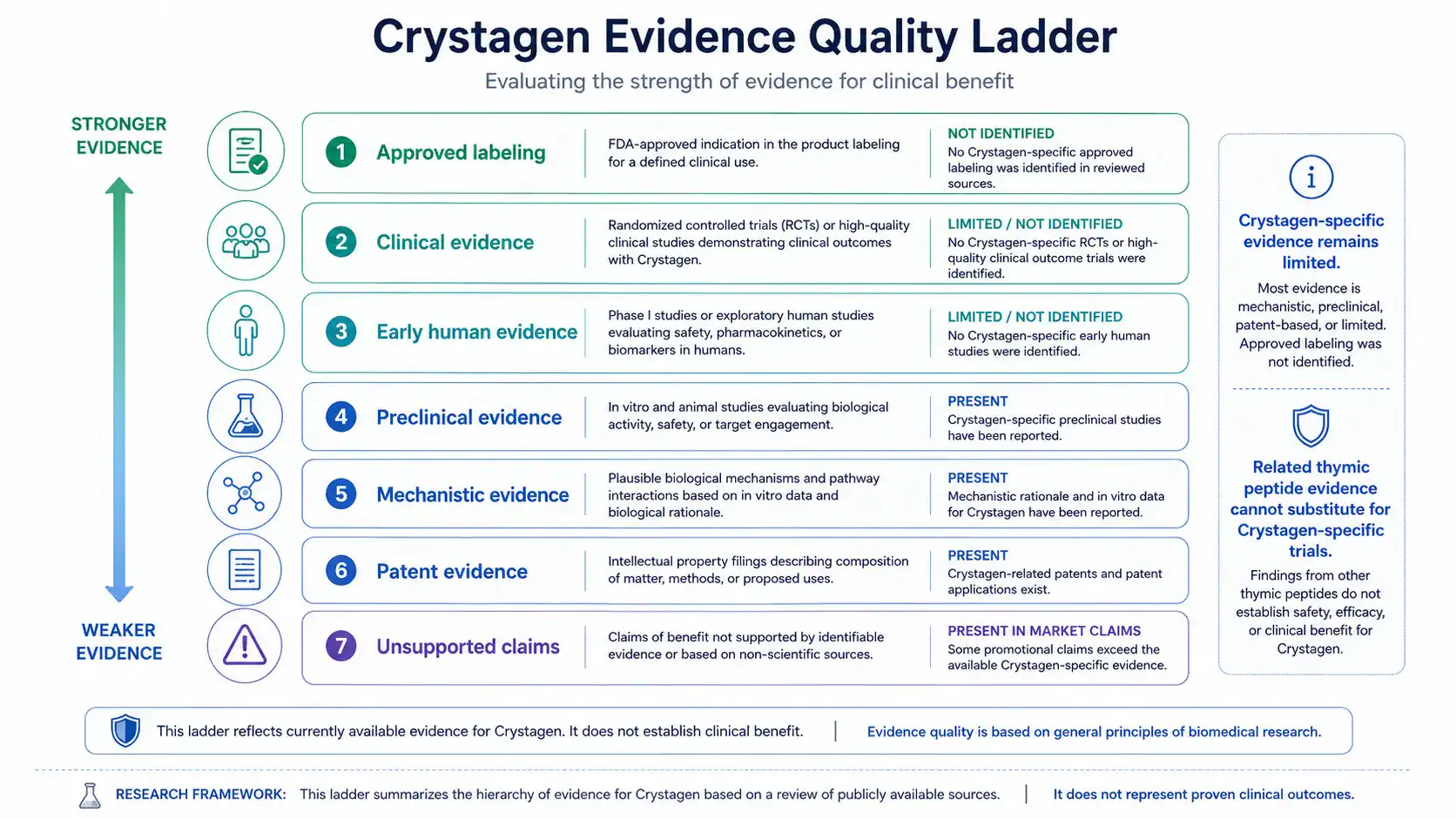
The best way to interpret Crystagen claims is to rank them by source strength: approved labeling first, then well-controlled human studies, then observational or early human evidence, then preclinical and mechanistic work, then unsupported online claims 11, 12.
| Evidence Area | What Has Been Studied | Evidence Level | What It Can and Cannot Show |
|---|---|---|---|
| Compound identity | Patent literature describes Crystagen as H-Glu-Asp-Pro-OH, or glutamyl-aspartyl-proline 1. | Patent / identity evidence | Can identify a claimed sequence; cannot prove clinical efficacy or approval. |
| Immune-cell effects | A PubMed-indexed aging-spleen study described Crystagen-related B-cell activation 2. | Preclinical / mechanistic | Can support immune research interest; cannot prove patient benefit. |
| Gene-expression mechanisms | Short peptide reviews describe peptide effects on gene expression and biological regulation 5. | Mechanistic | Can explain proposed pathways; cannot establish a treatment indication. |
| Related thymic peptides | Thymic peptides have been studied in immune dysfunction and cancer-supportive contexts 9, 10. | Related clinical evidence | Can provide context; cannot substitute for Crystagen-specific trials. |
| Regulatory status | FDA drug databases and the Orange Book identify approved drug products and safety/effectiveness determinations 11, 12. | Regulatory evidence | Can verify approval status; cannot validate unapproved products. |
Approved Use Versus Investigational Research
Crystagen should be treated as investigational unless an official regulator lists a specific approved Crystagen product and indication. FDA resources explain that Drugs@FDA and the Orange Book are used to identify approved drug products and therapeutic-equivalence information [11], [12].
During this source review, no modern FDA-approved Crystagen prescribing label was identified in the sources used for this article. Editors should recheck official databases before publication because regulatory status can change.
Clinical Evidence Versus Mechanism-Based Claims
Clinical evidence measures outcomes in humans. Mechanism-based claims explain how a compound might act in cells, tissues, or animal models.
Crystagen has more support for mechanism and immune-bioregulator discussion than for strong clinical outcome claims. That means article language should use “studied for,” “proposed to influence,” or “reported in models,” rather than “treats,” “prevents,” or “cures.”
Online Claims Compared With Published Evidence
Online claims about Crystagen often use broad language around immune support, anti-aging, recovery, and normalization. Published evidence is narrower, with more emphasis on peptide identity, thymus-related models, aging-spleen observations, and related peptide-bioregulator research [1], [2], [3].
If a claim cannot be traced to an approved label, clinical registry, peer-reviewed paper, or official regulatory source, it should be treated as unverified.
Side Effects and Safety Concerns
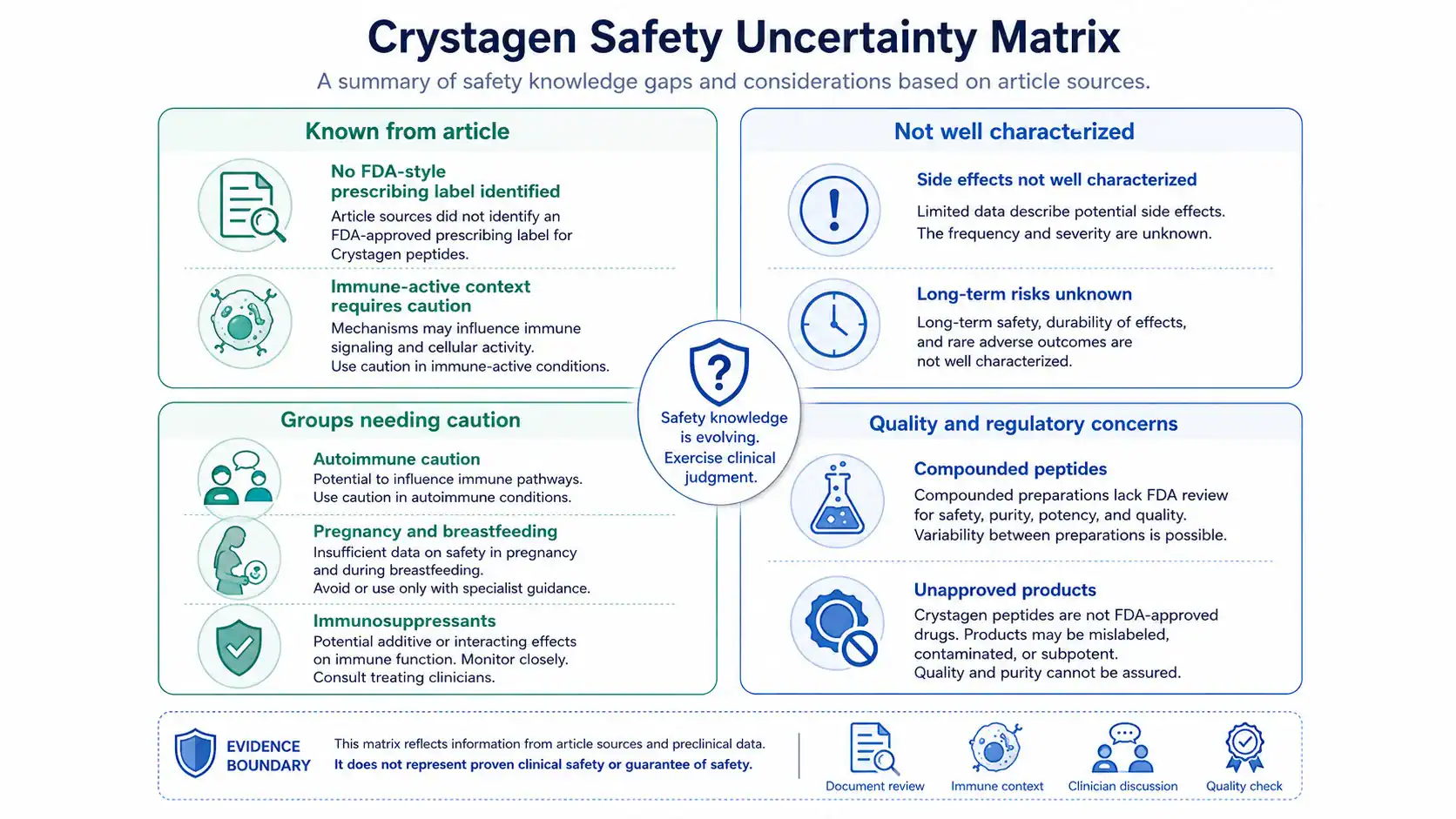
Side effects and safety concerns for Crystagen are not well defined in modern approved-drug labeling, which means absence of listed side effects should not be interpreted as proof of safety 11, 12.
What Side Effects Have Been Reported?
There is no FDA-style Crystagen prescribing label in the sources reviewed here that lists standardized adverse reactions, contraindications, warnings, or postmarketing safety data. FDA-approved drug labels are normally the preferred source for adverse reactions, dosage, contraindications, and warnings [11], [12].
Because Crystagen lacks that type of accessible regulatory labeling, side-effect discussions should focus on uncertainty, immune-related caution, product-quality risk, and the need for medical oversight.
Unknown Safety Signals and Data Gaps
Crystagen safety gaps include unclear long-term exposure data, uncertain immunologic effects in high-risk groups, and limited information about formulation-specific risks. Compounded or unapproved peptide preparations can introduce additional uncertainty around identity, impurities, sterility, and dosing consistency 16.
FDA has also warned that some products labeled for “research use” or “not for human consumption” may be marketed directly to consumers, and such products may be of unknown quality or harmful when used outside legitimate research settings 17.
Immune Activation, Autoimmunity, and Infection-Related Caution
Crystagen is discussed as an immune-active peptide, so safety questions are especially relevant for autoimmune disease, active infection, immunodeficiency, transplant status, cancer therapy, or immunosuppressant use. The thymus and immune system interact with infection, chemotherapy, radiation, and stress biology in complex ways 8.
A peptide described as “normalizing” the immune system is not automatically safe for every immune condition. Personal risk depends on diagnosis, medications, immune status, and the exact product involved.
Contraindications and Drug Interaction Considerations
Crystagen contraindications and drug interactions are not well established in approved labeling, so high-risk groups should treat Crystagen-related medical decisions as clinician-level questions rather than self-directed experimentation 11.
Who Should Use Extra Caution Before Considering Crystagen?
People who are pregnant, breastfeeding, immunocompromised, receiving chemotherapy or radiation, using immunosuppressants, living with autoimmune disease, or being treated for active infection would require careful clinician review before considering any immune-active peptide. These are high-risk contexts because immune interventions can alter disease monitoring, treatment response, or adverse-event interpretation.
This caution is based on the absence of robust Crystagen-specific safety labeling and the general complexity of thymus and immune-system biology [8], [11].
Immunosuppressants, Chemotherapy, and Immune-Active Treatments
Crystagen interaction data with immunosuppressants, biologic drugs, chemotherapy, vaccines, corticosteroids, or immune-checkpoint therapies is not well established in the sources reviewed. Related thymic peptides have been studied in cancer-supportive settings, but that literature does not establish Crystagen as safe or effective with chemotherapy 10.
Medication interactions should be assessed by a qualified clinician who can evaluate the person’s diagnosis, treatment plan, immune markers, and approved alternatives.
Crystagen Dosage Information From Studies and Product Literature
Crystagen dosage information should be treated as educational study context because no approved Crystagen drug label was identified in the regulatory sources reviewed for this article 11, 12.
Why No Universal Crystagen Dosage Can Be Assumed
No universal Crystagen dosage can be assumed because dosing depends on the compound identity, route, formulation, study design, population, and regulatory status. Patent literature describes parenteral pharmaceutical compositions and a broad dose range of 0.01 to 100 micrograms per kilogram for the claimed peptide substance 1.
That range should not be read as a personal dosage recommendation. Patent dose ranges are not the same as approved-label dosing, and they do not define safety for a specific person or product.
Capsule and Lingual Dose Claims in Published or Labeled Sources
Crystagen lingual and capsule language appears in product-style and bioregulator contexts, but those descriptions should not be equated with FDA-approved dosage instructions unless supported by an official label. FDA-approved labeling is the standard source for approved indications, dosage, warnings, and adverse reactions [11], [12].
For publication, any capsule or lingual protocol should be attributed to the exact source type. A product insert, patent, regional literature source, and FDA label carry very different evidentiary weight.
How to Interpret Protocol Ranges Responsibly
Crystagen protocol ranges should be interpreted by asking four questions: What exact peptide is being described? What route was used? Was the source a patent, clinical study, product label, or regulatory label? What outcome and safety data were measured?
This article does not provide a personal dosing protocol. Crystagen-related dosing decisions require a licensed clinician who can weigh evidence quality, medical history, concurrent medications, regulatory status, and safer approved options.
Administration Routes and Reconstitution Context
Crystagen administration is discussed in patent and product-literature contexts, including parenteral, lingual, and capsule-style language, but no route should be treated as medically appropriate for an individual without verified labeling and clinician oversight 1, 11.
Lingual and Capsule Routes in Bioregulator Literature
Lingual administration generally refers to placement in the mouth, while capsule administration refers to oral swallowing. Crystagen lingual and capsule terms appear in the keyword and product-literature ecosystem, but route descriptions do not establish clinical efficacy, absorption, or approved medical use.
Transport studies on ultrashort peptides provide mechanistic context for peptide absorption and carrier systems, including Crystagen as EDP, but those data do not replace route-specific clinical outcome studies 4.
Injectable Research Peptide Formats and Reconstitution Concepts
Injectable research peptide formats raise additional concerns because sterile preparation, concentration, excipients, impurities, and route-specific safety all matter. Patent literature describes parenteral compositions for the claimed Crystagen-related peptide substance, but a patent is not an approved injection instruction [1].
Reconstitution, in a general scientific sense, means converting a dry material into a solution of known concentration. For Crystagen, no verified FDA-approved reconstitution standard was identified in the sources reviewed, so this article does not provide step-by-step preparation instructions.
Is Crystagen Peptide FDA-Approved or Legally Regulated?
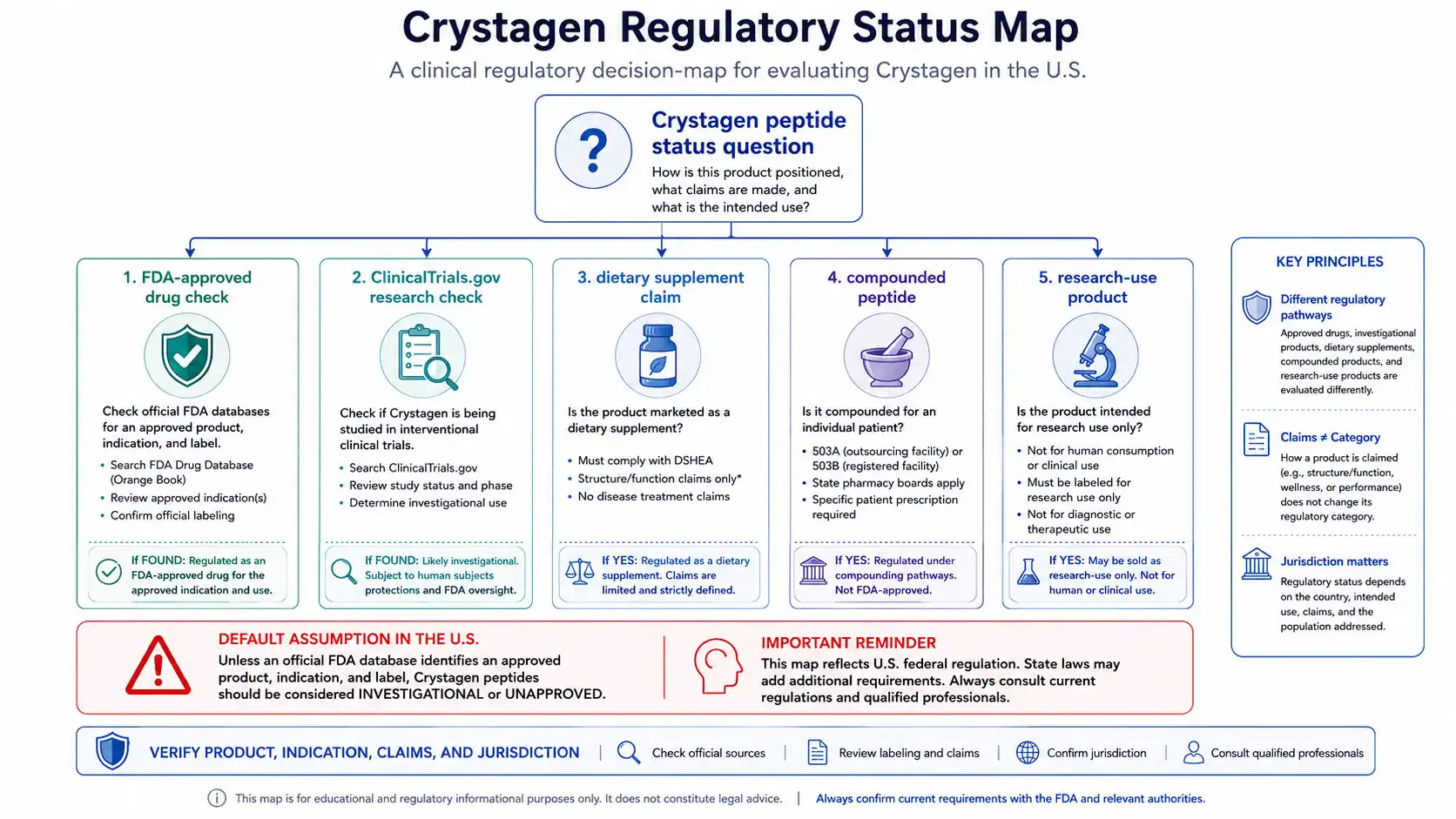
Crystagen peptide should be considered unapproved or investigational in the United States unless an official FDA database identifies a specific approved product, indication, and label 11, 12.
FDA, ClinicalTrials.gov, and International Registry Checks
FDA resources explain that Drugs@FDA contains information about FDA-approved prescription, generic, and over-the-counter drugs, while the Orange Book identifies drug products approved on the basis of safety and effectiveness [11], [12]. ClinicalTrials.gov is a public registry used to search for registered clinical studies 13.
This article did not identify a clear FDA-approved Crystagen drug label or a clearly identifiable Crystagen-specific ClinicalTrials.gov record during source review. Editors and readers should recheck official registries because regulatory and trial records can change.
Dietary Supplement Claims Versus Drug Claims
Dietary supplement claims are regulated differently from drug claims. FDA explains that dietary supplements may carry structure/function claims, but claims to diagnose, treat, cure, or prevent disease are drug claims 14. Federal regulations also specify required disclaimer language and disease-claim limits for dietary supplements 15.
That distinction is important for Crystagen. A supplement-style, capsule, or lingual product claim does not automatically mean the product has been reviewed as a drug for immune disease or aging-related indications.
Risks of Compounded or Unapproved Peptides
Compounded or unapproved peptides can create safety and quality risks that are separate from the published peptide concept. FDA has stated that certain bulk drug substances used in compounding may present significant safety risks, including concerns about immunogenicity, impurities, and limited safety information for some peptides 16.
FDA has also warned that products marketed with research-use or not-for-human-consumption language can be risky when sold directly to consumers for human use 17. Crystagen-related decisions should therefore separate published research from real-world product quality and legality.
Crystagen Compared With Related Immune Peptide Bioregulators
Crystagen can be compared with related immune peptide bioregulators to clarify mechanism and evidence level, but comparisons should not imply that one peptide is best or appropriate for personal use 9, 10.
Thymalin, Thymogen, Vilon, and Thymus-Related Peptides
Thymalin and Thymogen are thymic peptide preparations discussed in immune-dysfunction literature, while Vilon and other short peptides appear in peptide-bioregulator research [9], 18, 20. Reviews in this field often describe tissue-specific effects and immunomodulatory mechanisms, but they vary in study design and evidentiary strength [18], 19.
Crystagen is different because the Crystagen-specific evidence base is narrower. Related peptide data can provide context, not substitution.
What Makes Crystagen Different From General Immune Supplements
Crystagen differs from general immune supplements because it is framed as a short peptide bioregulator with a claimed amino acid sequence, rather than as a vitamin, mineral, botanical, or broad nutritional ingredient [1]. That peptide identity makes source verification, sequence confirmation, route, purity, and regulatory status more important.
At the same time, Crystagen should not be promoted as a drug unless supported by regulatory approval. FDA rules distinguish structure/function claims from disease-treatment claims, and disease claims require drug-level regulatory status [14], [15].
Practical Questions to Discuss With a Clinician
Crystagen-related medical decisions should be discussed with a licensed clinician using a checklist that covers evidence, safety, medications, and regulatory status. Useful questions include:
- What exact compound, route, and formulation is being discussed?
- Is there an FDA-approved or internationally approved product for the intended use [11], [12]?
- Are there registered clinical trials or peer-reviewed human studies for the same peptide and indication [13]?
- Does the person have autoimmune disease, active infection, cancer treatment, transplant history, pregnancy, breastfeeding, or immunosuppressant use [8]?
- Are there approved alternatives with clearer safety, dosage, and contraindication information [11], [12]?
- What adverse events should be monitored, and who is responsible for medical follow-up?
- Is the claim based on approved labeling, human evidence, preclinical data, patent literature, or unsupported online promotion?
The safest way to interpret Crystagen peptide is through evidence quality, regulatory status, safety uncertainty, and clinician-guided decision-making. The strongest conclusions come from verified regulatory sources and well-designed human studies; weaker claims should remain labeled as preliminary, mechanistic, or unproven.
REFERENCES
- Inventors / patent assignee. Peptide substance revealing an immunogeroprotective effect, pharmaceutical composition on its base and the method of its application. Google Patents / US Patent US8057810B2. 2011.
- Chervyakova NA, et al. Molecular aspects of immunoprotective activity of peptides in spleen during the ageing process. PubMed / Advances in Gerontology. 2014. PMID: 28976144.
- Khavinson VK, et al. The Use of Thymalin for Immunocorrection and Molecular Aspects of Biological Activity. Biology Bulletin Reviews / PMC. 2021.
- Khavinson VK, et al. Transport of Biologically Active Ultrashort Peptides Using POT and LAT Carriers. International Journal of Molecular Sciences / PMC. 2022.
- Khavinson VK, et al. Peptide Regulation of Gene Expression: A Systematic Review. Molecules / PMC. 2021.
- Avolio E, et al. Peptides Regulating Proliferative Activity and Inflammatory Responses in Human Primary Monocytes and THP-1 Cell Line. International Journal of Molecular Sciences / PMC. 2022.
- National Cancer Institute. Thymus. NCI Dictionary of Cancer Terms. Accessed 2026.
- Duah M, Li L, Shen J, Lan Q, Pan B. Thymus Degeneration and Regeneration. Frontiers in Immunology. 2021.
- Morozov VG, Khavinson VK. Natural and synthetic thymic peptides as therapeutics for immune dysfunction. International Journal of Immunopharmacology / PubMed. 1997. PMID: 9637345.
- Wolf F, et al. Thymic peptides for treatment of cancer patients. Cochrane Database of Systematic Reviews / PubMed. 2011. PMID: 21328265.
- U.S. Food and Drug Administration. Drugs. FDA official drug information and databases page. Accessed 2026.
- U.S. Food and Drug Administration. Approved Drug Products with Therapeutic Equivalence Evaluations, Orange Book. FDA. Accessed 2026.
- U.S. National Library of Medicine. ClinicalTrials.gov Expert Search. ClinicalTrials.gov. Accessed 2026.
- U.S. Food and Drug Administration. Questions and Answers on Dietary Supplements. FDA. Accessed 2026.
- Electronic Code of Federal Regulations. 21 CFR § 101.93: Certain types of statements for dietary supplements. eCFR. Accessed 2026.
- U.S. Food and Drug Administration. Certain Bulk Drug Substances for Use in Compounding May Present Significant Safety Risks. FDA. Accessed 2026.
- U.S. Food and Drug Administration. FDA’s Concerns with Unapproved GLP-1 Drugs Used for Weight Loss. FDA. Accessed 2026.
- Anisimov VN, Khavinson VK. Peptide bioregulation of aging: results and prospects. Biogerontology / PubMed. 2010. PMID: 19830585.
- Khavinson VK. Peptide bioregulators: the new class of geroprotectors. Advances in Gerontology / PubMed. 2013. PMID: 24003726.
- Khavinson VK. Tissue-specific effects of peptides. Bulletin of Experimental Biology and Medicine / PubMed. 2001. PMID: 11713572.
FAQs
What is Crystagen peptide and how does it work?
Crystagen peptide is an investigational short peptide bioregulator discussed mainly in immune-system and thymus-related research. Patent literature describes it as glutamyl-aspartyl-proline, also written as H-Glu-Asp-Pro-OH [1]. Its proposed mechanism involves short-peptide effects on cellular regulation, DNA-associated processes, and protein biosynthesis, but those mechanisms remain preliminary and do not prove clinical benefit [5].
What are the potential benefits of Crystagen peptide?
Potential benefits of Crystagen peptide are usually framed around immune function, immune response balance, aging-related immune decline, and cellular resilience. The evidence is limited, so these should be interpreted as proposed or studied effects rather than established medical outcomes. A PubMed-indexed aging-spleen study reported Crystagen-related B-cell activation, but that does not prove improved immune health in humans [2].
What does research say about Crystagen peptide?
Research on Crystagen peptide is strongest for identity, mechanistic context, and limited immune-bioregulator findings. Crystagen-specific human evidence appears limited, while related thymic peptide literature provides broader context but cannot substitute for Crystagen-specific clinical studies [9], [10]. Current evidence is best viewed as investigational, with preclinical and mechanistic findings requiring stronger human studies before therapeutic conclusions can be made.
What side effects or safety concerns are known for Crystagen peptide?
Side effects of Crystagen peptide are not well characterized in modern approved-drug labeling. No FDA-style Crystagen prescribing label was identified in the article’s source review, so safety, contraindications, adverse events, and long-term risks remain uncertain [11], [12]. Extra caution is appropriate for immune-active contexts, including autoimmune disease, active infection, pregnancy, breastfeeding, chemotherapy, immunosuppressant use, or other clinician-managed conditions.
What dosage and administration information has been reported for Crystagen peptide?
Dosage information for Crystagen peptide should be treated as educational study context, not a personal prescription. Patent literature describes a broad parenteral dose range of 0.01 to 100 micrograms per kilogram for the claimed peptide substance, but that is not the same as FDA-approved labeling [1]. Lingual, capsule, and injectable research-format discussions require product-specific, regulatory, and clinician-supervised interpretation.
Is Crystagen peptide FDA-approved or legally regulated?
Crystagen peptide should be considered investigational or unapproved in the United States unless an official FDA database identifies a specific approved product, indication, and label [11], [12]. Regulatory status matters because approved drugs, dietary supplements, compounded peptides, and research-use products are evaluated differently [14], [16]. Legal status can also depend on product claims, formulation, jurisdiction, and whether the product is marketed for human use.
Contributing Authors
The following authors are recognized for published research that helped shape the scientific and clinical context discussed in this article.
Vladimir Khatskelevich Khavinson
Author profile: ORCID
Vladimir Khatskelevich Khavinson’s published work is closely connected to the peptide bioregulator literature discussed in this article. His research appears in reviews and mechanistic papers examining short peptides, gene expression, protein synthesis, peptide transport, and aging-related biological regulation. For a topic such as Crystagen peptide, where the evidence base is more mechanistic and investigational than approved-label clinical medicine, his publications provide useful background for understanding how peptide bioregulators are framed in the scientific literature and why evidence quality must be interpreted carefully.
Selected publications:
- Peptide Regulation of Gene Expression: A Systematic Review – Molecules, 2021. DOI: 10.3390/molecules26227053. PMID: 34834147
- Transport of Biologically Active Ultrashort Peptides Using POT and LAT Carriers – International Journal of Molecular Sciences, 2022. DOI: 10.3390/ijms23147733. PMID: 35887081
Natalia Sergeevna Linkova
Author profile: Google Scholar
Natalia Sergeevna Linkova’s publications are relevant to the molecular and translational context around short peptide bioregulators. Her work includes research on peptide-gene interactions, ultrashort peptide transport, and structural motifs involved in peptide binding to double-stranded DNA. Those areas connect directly to the article’s discussion of proposed Crystagen mechanisms, including DNA-associated processes, protein biosynthesis, bioavailability questions, and the limits of translating mechanistic findings into clinical conclusions.
Selected publications:
- Systematic Search for Structural Motifs of Peptide Binding to Double-Stranded DNA – Nucleic Acids Research, 2019. DOI: 10.1093/nar/gkz850. PMID: 31598715
- Transport of Biologically Active Ultrashort Peptides Using POT and LAT Carriers – International Journal of Molecular Sciences, 2022. DOI: 10.3390/ijms23147733. PMID: 35887081
PUBLISHING FIELDS
- SEO Title: Crystagen Peptide: Uses, Safety, Dosage & Research
- Meta Description: Crystagen peptide guide to immune-system research, proposed mechanisms, safety concerns, dosage context, FDA status, and evidence limits.
- Suggested URL Slug:
/crystagen-peptide - Page Type: Therapeutic Peptide Educational Article
- ArticleFormat: Therapeutic Peptide Educational Guide
- TargetPeptide: Crystagen
- MainKeyword: crystagen peptide
- CanonicalKeyword: Crystagen peptide
- ExactKeywordVariant: crystagen peptide
- AliasTerms: Crystagen®, Crystagen lingual, AC-6, peptide complex AC-6, glutamyl-aspartyl-proline, H-Glu-Asp-Pro-OH, thymic peptide, thymus-related peptide, Khavinson peptide
- PeptideCategory: Bioregulator Peptide / Investigational Peptide
- Primary Search Intent: Therapeutic informational
- Secondary Keywords: Crystagen benefits, Crystagen dosage, Crystagen side effects, Crystagen safety, Crystagen research, Crystagen FDA approval, Crystagen mechanism of action, Crystagen peptide bioregulator, Crystagen immune system, AC-6 peptide complex, Crystagen lingual, thymic peptide research
- Evidence Levels Covered: approved-use status reviewed, early human evidence, preclinical evidence, mechanistic evidence, unsupported or unverified claims
- Excerpt: Crystagen peptide is an investigational short peptide bioregulator discussed in immune-system, thymus, and aging-related research. This guide reviews proposed mechanisms, evidence quality, potential benefits, side effects, dosage context, administration routes, contraindication concerns, and regulatory status.
- Suggested Tags: Crystagen, peptide bioregulators, immune system research, thymic peptides, peptide safety, peptide dosage, FDA peptide regulation, preclinical evidence
- Featured Image Concept: Clinical evidence map showing Crystagen peptide identity, proposed immune-system mechanisms, evidence levels, safety uncertainty, and regulatory status.
- Featured Image Alt Text: Scientific evidence map for Crystagen peptide research, safety, dosage context, and regulatory status.
- Suggested Schema: Article schema only.
INFOGRAPHIC BRIEFS
Infographic Brief 1
- Placement: After
## How Is Crystagen Proposed to Work? - Title: Proposed Crystagen Peptide Mechanism
- Purpose: Explain how the article frames Crystagen as a short peptide bioregulator with proposed DNA-associated, protein-biosynthesis, and cellular immune-function mechanisms while making clear that mechanism does not prove clinical benefit.
- Visual Format: Mechanism-of-action concept diagram
- Key Labels: Short peptide, DNA-associated processes, protein biosynthesis, cellular regulation, immune cell function, thymus context, mechanism hypothesis, clinical uncertainty
- Suggested Layout: Left-to-right flowchart beginning with “Crystagen peptide / short peptide,” moving through “cellular regulation,” “DNA-associated processes,” and “protein biosynthesis,” ending in a clearly separated “clinical outcomes not established” box.
- Data or Concepts to Include: Crystagen is discussed as a short peptide bioregulator; proposed mechanisms involve cellular regulation, DNA-associated processes, and protein biosynthesis; mechanistic plausibility does not establish human clinical benefit.
- Visual Style: Clean, clinical, editorial, with simple molecular icons, cell icons, and evidence-boundary labels.
- Compliance Restrictions: No injection imagery, no dosing visuals, no reconstitution steps, no human body transformation imagery, no guaranteed immune benefit claims, no product packaging, no vendor branding.
- Alt Text: Mechanism diagram showing proposed Crystagen peptide effects on cellular regulation, DNA-associated processes, protein biosynthesis, and immune research context.
- Full AI Image Prompt: Create a clean clinical editorial infographic titled “Proposed Crystagen Peptide Mechanism.” Show a left-to-right conceptual flow beginning with a simple abstract short-peptide icon labeled “Crystagen peptide,” then arrows to “cellular regulation,” “DNA-associated processes,” and “protein biosynthesis.” Add a separate immune-cell and thymus-context panel labeled “immune-system research context.” End with a clearly separated caution box labeled “mechanism hypothesis, clinical benefit not established.” Use a modern scientific style, white background, subtle blue and green accents, minimal text, no product packaging, no syringes, no injection imagery, no dosing instructions, no before-and-after imagery, and no guaranteed benefit language.
Infographic Brief 2
- Placement: After
## Evidence Quality and Claim Strength Framework - Title: Crystagen Evidence Quality Ladder
- Purpose: Help readers distinguish approved labeling, human evidence, preclinical findings, mechanistic research, patent evidence, and unsupported claims when interpreting Crystagen-related statements.
- Visual Format: Evidence ladder
- Key Labels: Approved labeling, clinical evidence, early human evidence, preclinical evidence, mechanistic evidence, patent evidence, unsupported claims, evidence gap
- Suggested Layout: Vertical ladder from strongest to weakest evidence. Place “approved labeling” at the top, followed by “clinical evidence,” “early human evidence,” “preclinical evidence,” “mechanistic evidence,” “patent evidence,” and “unsupported claims.” Include a side note that Crystagen-specific evidence is limited.
- Data or Concepts to Include: Article states no modern FDA-approved Crystagen prescribing label was identified in reviewed sources; Crystagen-specific evidence is mainly mechanistic, preclinical, patent-based, or limited; related thymic peptide evidence cannot substitute for Crystagen-specific trials.
- Visual Style: Clean editorial evidence hierarchy with restrained medical colors and clear evidence-strength contrast.
- Compliance Restrictions: No sales claims, no product imagery, no treatment promises, no “proven benefit” labels, no patient outcome graphics that imply efficacy, no vendor references.
- Alt Text: Evidence quality ladder for Crystagen peptide showing approved labeling, clinical evidence, preclinical findings, mechanistic research, patent evidence, and unsupported claims.
- Full AI Image Prompt: Create a clinical evidence-ladder infographic titled “Crystagen Evidence Quality Ladder.” Design a vertical ladder from strongest to weakest evidence. Top rung: “Approved labeling.” Next: “Clinical evidence.” Next: “Early human evidence.” Next: “Preclinical evidence.” Next: “Mechanistic evidence.” Next: “Patent evidence.” Bottom rung: “Unsupported claims.” Add a small neutral note: “Crystagen-specific evidence remains limited.” Use a white background, clean typography, soft blue-gray medical palette with green accents, no product imagery, no syringes, no treatment-result imagery, no vendor branding, and no language implying proven benefit.
Infographic Brief 3
- Placement: After
## Side Effects and Safety Concerns - Title: Crystagen Safety Uncertainty Matrix
- Purpose: Summarize why Crystagen safety interpretation depends on missing approved labeling, limited adverse-event data, immune-active context, high-risk groups, and product-quality concerns.
- Visual Format: Safety matrix
- Key Labels: Side effects, safety gaps, adverse events, immune-active context, autoimmune caution, pregnancy and breastfeeding, immunosuppressants, product quality
- Suggested Layout: Four-quadrant matrix. Quadrants: “Known from article,” “Not well characterized,” “Groups needing caution,” and “Quality/regulatory concerns.” Use icons for document review, immune cell, clinician conversation, and quality check.
- Data or Concepts to Include: No FDA-style Crystagen prescribing label was identified in article sources; side effects and long-term risks are not well characterized; immune-active contexts require caution; compounded or unapproved peptide preparations may carry quality concerns.
- Visual Style: Clinical safety-reference layout, calm colors, clear labels, no alarmist imagery.
- Compliance Restrictions: No fear-based imagery, no injection-site graphics, no self-use visuals, no step-by-step safety protocol, no claims that Crystagen is safe or unsafe for everyone, no product sales elements.
- Alt Text: Safety matrix for Crystagen peptide showing side effects, adverse-event uncertainty, immune-related caution, and product-quality concerns.
- Full AI Image Prompt: Create a clean medical safety matrix titled “Crystagen Safety Uncertainty Matrix.” Use a four-quadrant layout with the labels “Known from article,” “Not well characterized,” “Groups needing caution,” and “Quality and regulatory concerns.” Include concise labels for side effects, adverse events, immune-active context, autoimmune caution, pregnancy and breastfeeding, immunosuppressants, compounded peptides, and unapproved products. Use abstract document, immune-cell, clinician-discussion, and quality-check icons. Keep the style editorial and clinical, white background, soft blue and green palette, no syringes, no injection sites, no patient photos, no product packaging, no vendor branding, and no safety guarantees.
Infographic Brief 4
- Placement: After
## Is Crystagen Peptide FDA-Approved or Legally Regulated? - Title: Crystagen Regulatory Status Map
- Purpose: Clarify how approved drugs, investigational peptides, dietary supplement claims, compounded peptides, and research-use products are evaluated differently.
- Visual Format: Regulatory status map
- Key Labels: FDA-approved drug, investigational peptide, dietary supplement claim, compounded peptide, research-use product, product quality, legal status, verification
- Suggested Layout: Central node labeled “Crystagen peptide status question” with branches to “FDA databases,” “ClinicalTrials.gov,” “dietary supplement claims,” “compounded products,” and “research-use products.” Add a final branch labeled “verify product, indication, and jurisdiction.”
- Data or Concepts to Include: Article states Crystagen should be considered investigational or unapproved in the U.S. unless an official FDA database identifies an approved product, indication, and label; product claims and regulatory categories are not the same.
- Visual Style: Clear regulatory decision map with neutral icons and official-document styling.
- Compliance Restrictions: No buying guidance, no vendor names, no “legal to use” claims, no bypass-regulation imagery, no product photos, no prescription-pad imagery that implies access.
- Alt Text: Regulatory status map for Crystagen peptide showing FDA approval checks, investigational status, supplement claims, compounded peptides, and research-use product concerns.
- Full AI Image Prompt: Create a clinical regulatory status map titled “Crystagen Regulatory Status Map.” Place a central node labeled “Crystagen peptide status question.” Branch to five document-style nodes: “FDA-approved drug check,” “ClinicalTrials.gov research check,” “dietary supplement claim,” “compounded peptide,” and “research-use product.” Add a bottom verification bar reading “verify product, indication, claims, and jurisdiction.” Use a clean white background, official-document icons, muted blue and green accents, no vendor branding, no product sales imagery, no purchase language, no syringe imagery, and no claims that Crystagen is approved or safe.
Infographic Brief 5
- Placement: After
## Crystagen Compared With Related Immune Peptide Bioregulators - Title: Immune Peptide Bioregulator Context
- Purpose: Show how Crystagen fits within the same-lane thymic peptide and peptide-bioregulator literature without implying that evidence from related peptides proves Crystagen-specific benefits.
- Visual Format: Related peptide comparison chart
- Key Labels: Crystagen, Thymalin, Thymogen, Vilon, thymic peptide research, immune function, related literature, evidence not interchangeable
- Suggested Layout: Horizontal comparison chart with one row per peptide or category. Columns: “Research lane,” “Evidence role,” and “Interpretation caution.” Include a clear note: “Related peptide evidence provides context, not substitution.”
- Data or Concepts to Include: Article compares Crystagen with Thymalin, Thymogen, Vilon, and thymus-related peptides; related peptide data can support context but should not be used to assign benefits from one peptide to another.
- Visual Style: Editorial comparison table with restrained icons and clear evidence-boundary language.
- Compliance Restrictions: No ranking peptides as best, no treatment recommendations, no product claims, no buying guidance, no outcome promises, no human performance or anti-aging imagery.
- Alt Text: Comparison chart showing Crystagen peptide alongside related thymic peptide bioregulators and noting that related evidence is not interchangeable.
- Full AI Image Prompt: Create a clean scientific comparison chart titled “Immune Peptide Bioregulator Context.” Include rows for “Crystagen,” “Thymalin,” “Thymogen,” “Vilon,” and “Thymus-related peptide research.” Use columns labeled “Research lane,” “Evidence role,” and “Interpretation caution.” Add a highlighted note: “Related peptide evidence provides context, not substitution.” Use a clinical editorial style, white background, subtle blue and green accents, simple molecular and document icons, no rankings, no best-peptide language, no product imagery, no sales language, no injection imagery, and no guaranteed benefit claims.