
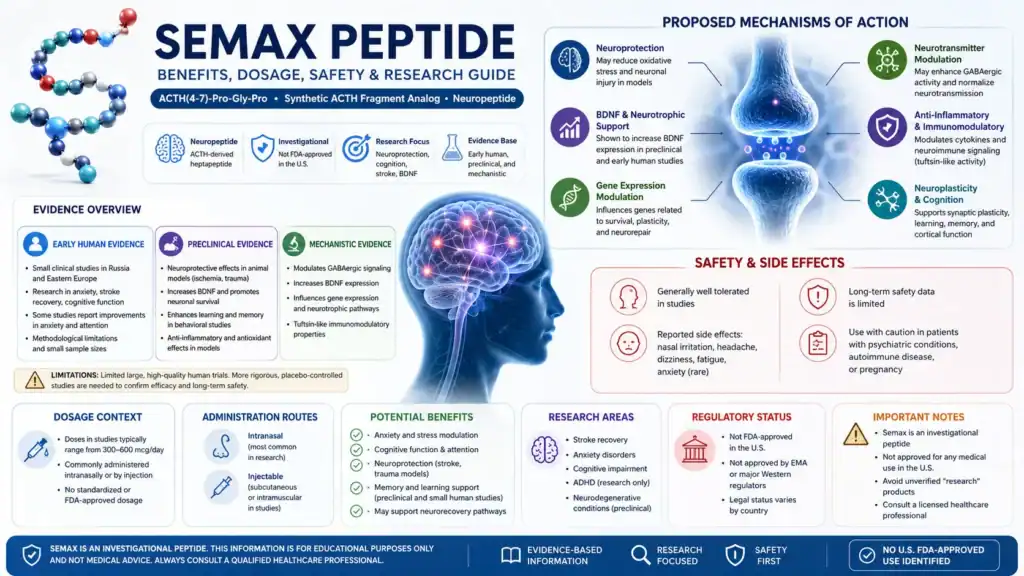
Semax peptide is a synthetic ACTH-derived neuropeptide studied mainly for neuroprotection, cognition, stroke-related recovery, and nervous-system signaling. This educational article reviews what is known from compound databases, human studies, animal research, regulatory sources, and safety literature; it does not provide personal medical advice or instructions to use Semax.
- Semax is a synthetic heptapeptide related to the ACTH 4-7 fragment with a Pro-Gly-Pro extension, and PubChem lists ACTH(4-7), Pro-Gly-Pro as a Semax synonym 1.
- Semax is commonly discussed as a nootropic peptide, but cognitive and neuroprotective claims are supported unevenly, with much of the mechanistic evidence coming from rat brain, hippocampus, gene-expression, and ischemia models 2 3.
- Human evidence exists, including Russian stroke studies and small neuroimaging studies, but the evidence base is not equivalent to large multicenter approval programs used for FDA-approved drugs 4 5.
- Semax nasal spray is the route most often discussed in accessible human literature, while injectable Semax appears more often in experimental or non-label discussions; intranasal brain delivery is biologically plausible but route-specific absorption varies 6 7.
- Reported Semax dosage information should be read as study context or regional-use context, not as a personal dosing recommendation [4].
- The FDA has identified Semax-related compounded drugs as a safety concern because of possible immunogenicity, aggregation, peptide-related impurities, and limited safety information for proposed routes of administration 8.
- Readers considering any peptide-related medical decision should discuss diagnosis, medications, pregnancy or breastfeeding status, regulatory status, and approved alternatives with a qualified clinician 9.
Fast Answer
Semax peptide is a synthetic ACTH-fragment neuropeptide studied for nootropic, neuroprotective, and stroke-related effects, with most mechanistic evidence coming from preclinical brain and gene-expression studies and some limited human research from Russia and neuroimaging studies [1] [3] [4] [5]. Semax is not supported by a U.S. FDA-approved prescribing label, and FDA materials raise safety concerns for Semax-related compounded drugs, especially around immunogenicity, impurities, and limited human safety data [8] [9].
Evidence basis: This page uses compound databases, peer-reviewed studies, PubMed-indexed clinical and preclinical literature, and FDA regulatory materials. Claims without reliable clinical or regulatory support are treated as preliminary, unsupported, or limited by study design.
What Is the Semax Peptide?
Semax is a synthetic peptide derived from the adrenocorticotropic hormone, or ACTH, fragment literature and is usually described as ACTH(4-7)-Pro-Gly-Pro or an ACTH(4-10)-related analog depending on the source 1 10. Semax is discussed therapeutically because it has been studied in neurobiology, stroke, cognitive function, BDNF signaling, and nervous-system gene-expression research 2 3.
Semax as a Synthetic ACTH-Derived Peptide
Semax is a synthetic heptapeptide, meaning it contains seven amino-acid residues, and PubChem lists the molecular formula for ACTH(4-7), Pro-Gly-Pro as C37H51N9O10S [1]. The sequence is commonly represented as Met-Glu-His-Phe-Pro-Gly-Pro, although articles vary in whether they emphasize ACTH(4-7), ACTH(4-10), or the Pro-Gly-Pro extension [1] [10].
Why Semax Is Discussed as a Neuropeptide
Semax is discussed as a neuropeptide because published work has examined its effects on the central nervous system, brain-derived neurotrophic factor, hippocampal BDNF/trkB expression, dopaminergic and serotoninergic systems, and experimental ischemic brain injury [2] 11 12. These mechanisms make Semax relevant to neuroprotection and cognition research, but mechanistic relevance is not the same as proven clinical benefit.
How Semax Differs From Approved Peptide Drugs
Semax differs from FDA-approved peptide drugs because the FDA does not provide an approved Semax prescribing label in the way it does for approved products listed in approval databases such as the Orange Book and Drugs@FDA 13. FDA compounding materials instead discuss Semax-related bulk substances in the context of nominated compounded drugs and safety concerns [8].
How Semax Works in the Nervous System
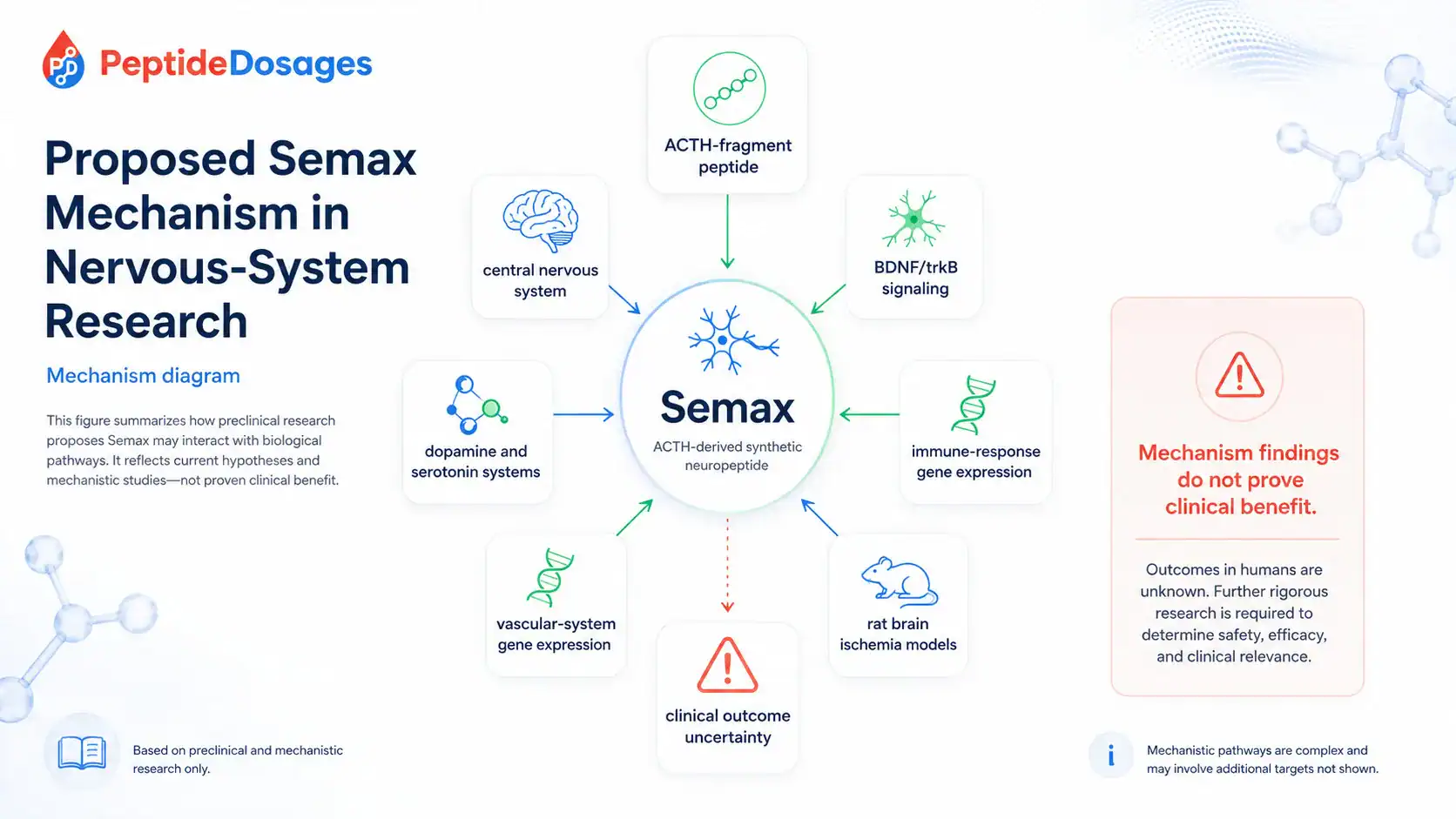
Semax is thought to affect nervous-system biology through neurotrophic, neurotransmitter, immune-response, and vascular-gene pathways, but its complete mechanism of action is not settled [2] [3] [11]. The strongest mechanistic literature is preclinical, so Semax works as a research model better than it works as a fully defined therapeutic mechanism.
Proposed Mechanism of Action
The proposed mechanism of Semax includes modulation of brain-derived neurotrophic factor, trkB signaling, dopaminergic and serotoninergic systems, and gene-expression networks involved in immune and vascular responses [2] [3] [11] [12]. In rat hippocampus research, Semax was reported to regulate BDNF and trkB expression, which is why BDNF appears frequently in Semax mechanism discussions [2].
ACTH Fragment Activity and Melanocortin-Receptor Context
Semax belongs to the ACTH-fragment and melanocortin-derivative research lane, and a PubMed-indexed hypothesis paper describes Semax as an ACTH 4-10 analog without hormonal activity [10]. Melanocortin systems are biologically relevant to neuroendocrine and central nervous system signaling, but a receptor-family context should not be interpreted as proof that Semax has an established clinical effect for mood, memory, or stroke outside the evidence already studied [10] 14.
Why Mechanism Does Not Prove Clinical Benefit
Semax mechanism findings are important, but they do not automatically translate into patient outcomes because animal models, gene-expression studies, and neurochemical experiments test biological plausibility rather than real-world clinical effectiveness [3] [11]. For Semax, the gap between rat brain focal ischemia findings and broad human nootropic claims is one of the central evidence limitations [3] [4].
Semax Nasal Spray and Other Administration Routes
Semax nasal spray is the most discussed route in human and regional-use contexts, while injection is more often discussed in experimental, preclinical, or non-approved settings [4] [6]. Route matters because intranasal, systemic, and injectable administration can produce different absorption patterns, tolerability issues, and regulatory questions [6] [7].
Why Nasal Delivery Is Commonly Discussed
Nasal delivery is commonly discussed for Semax because intranasal drug delivery can, in some cases, move drugs from the nasal cavity toward the brain through olfactory and trigeminal pathways [6]. Reviews of intranasal proteins and peptides also describe the nose-to-brain route as a delivery strategy for peptide and protein therapeutics, although formulation, molecule size, nasal mucosa, and delivery technique can affect exposure [7].
Nasal Spray vs Injection in Medical Literature
Semax nasal spray has more visible human-study relevance than injectable Semax, especially in stroke and neuroimaging literature [4] [5]. Injection-related Semax discussion should be handled cautiously because FDA has identified limited safety-related information for proposed Semax routes in compounded-drug contexts [8].
Bioavailability and Blood-Brain Barrier Questions
Semax bioavailability remains difficult to generalize because nose-to-brain delivery is affected by nasal anatomy, mucosal clearance, formulation, dose volume, enzymatic breakdown, and the blood-brain barrier [6] [7]. A nasal route may be biologically plausible for central nervous system exposure, but it does not guarantee predictable clinical effect.
Potential Benefits of Semax Peptide
Potential benefits of Semax peptide are best understood by evidence level: limited human stroke and neuroimaging findings, stronger preclinical mechanism research, and weaker online nootropic claims [3] [4] [5]. Semax may be biologically active in nervous-system models, but broad claims about memory, focus, or recovery need careful evidence grading.
Nootropic and Cognitive Effects
Semax is often called a nootropic peptide because studies have examined attention, memory, default-mode network activity, and cognitive effects [5] [10]. A 2018 study reported resting-state fMRI measurements before and 5 and 20 minutes after intranasal 1% Semax in 14 subjects and placebo in 10 subjects, making it a small neuroimaging study rather than definitive cognitive-treatment evidence [5].
Neuroprotective Effects and Brain Stress Models
Semax has been studied for neuroprotective effects in ischemia and stress-related animal models, including rat brain focal ischemia and permanent middle cerebral artery occlusion models [3] 15. These studies suggest biologically plausible neuroprotection mechanisms, but animal neuroprotection does not establish benefit in human stroke care without stronger clinical confirmation.
Learning, Memory, and Cognitive Performance Claims
Learning and memory claims around Semax come from mixed evidence streams, including animal studies, early human literature, and neuroimaging work [5] [10] 16. A nootropic claim is strongest when tied to a specific study population, route, dose, endpoint, and duration; general claims about cognitive performance in healthy adults remain less secure.
How Online Benefit Claims Should Be Interpreted
Online claims that Semax improves focus, mood, mental clarity, recovery, or neuroprotection should be compared against the actual study type behind each claim [3] [4] [5]. The strongest conclusion is not that Semax “works for everyone,” but that Semax has a biologically active research profile with limited, regionally concentrated human evidence.
What Is Semax Peptide Used For or Studied For?
Semax peptide has been studied most prominently in neurologic contexts, especially ischemic stroke, neuroprotection, cognition, and nervous-system signaling [3] [4] [5]. Some sources also discuss regional medical use in Russia, but U.S. regulatory status and evidence standards must be evaluated separately [8] [13].
Research on Stroke, Ischemia, and Brain Injury Contexts
A PubMed-indexed 1997 study evaluated Semax in 30 patients during the acute period of hemispheric ischemic stroke and compared them with 80 controls treated with conventional therapy [4]. The same abstract reported daily doses of 12 mg for moderate stroke and 18 mg for severe stroke over 5- and 10-day treatment courses, which should be read only as historical study context [4].
Neurocognitive Disorder and Cognitive Impairment Research
Semax has been proposed or studied in cognitive impairment and neurocognitive contexts because ACTH fragments, BDNF pathways, hippocampal signaling, and monoamine systems are relevant to cognition [2] [10] [11]. However, cognitive impairment is a clinical category, and Semax should not be presented as an established treatment for neurocognitive disorders without large, high-quality clinical trials.
Optic Nerve and Neuroprotection-Related Study Areas
Semax appears in broader neuroprotection-related literature, including ischemic brain injury and optic-nerve-adjacent discussion in regional sources and reviews [3] 17. The article-level takeaway is that Semax has a neuroprotective research lane, not that it has universal approved indications across jurisdictions.
Uses That Remain Experimental or Region-Specific
Semax uses remain highly jurisdiction-dependent because regional use in Russia or Eastern Europe does not equal FDA-approved use in the United States [8] [13] [17]. Any claim about Semax as a treatment should be tied to the regulatory system, study design, and patient population being discussed.
What Human Research Says About Semax
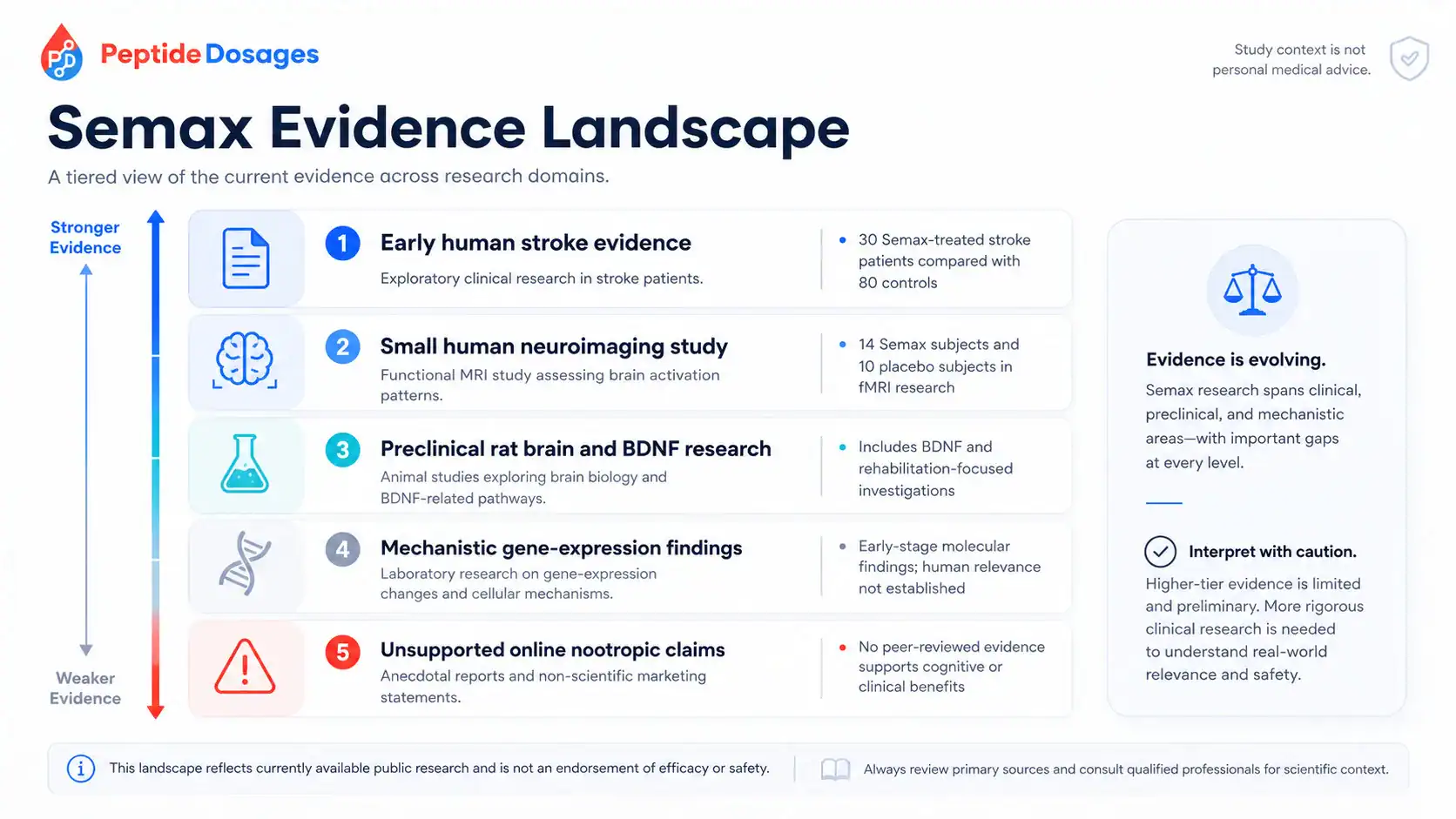
Human research on Semax includes small or regional studies in stroke, neuroimaging work in healthy participants, and a functional-connectivity study involving Semax and Selank [4] [5] 18. The human evidence is meaningful enough to discuss, but not strong enough to support broad self-treatment claims.
Clinical and Early Human Evidence
The 1997 ischemic-stroke study enrolled 30 Semax-treated patients and used 80 conventionally treated controls, while a 2018 stroke-rehabilitation study concluded that early rehabilitation with Semax increased plasma BDNF and was associated with faster functional recovery and motor-performance improvement [4] 19. These findings are clinically relevant but require careful interpretation because regional study design, reporting standards, and replication matter.
Reported Outcomes in Neurologic Research
Reported human outcomes include neurologic recovery measures in stroke research, BDNF plasma changes during rehabilitation, and short-term fMRI default-mode network changes after intranasal Semax [4] [5] [19]. These outcomes do not support a blanket claim that Semax improves cognition or recovery in all readers.
Study Size, Design, and Regional Evidence Limits
The Semax human evidence base is limited by small samples, regional concentration, and fewer large blinded multicenter studies than would normally support broad approval claims in the United States or European Union [4] [5] [18] [19]. That limitation should guide how strongly Semax benefits are described.
| Evidence Area | What Has Been Studied | Evidence Level | What It Can and Cannot Show |
|---|---|---|---|
| Ischemic stroke | 30 Semax-treated patients compared with 80 controls in a 1997 acute hemispheric ischemic stroke study [4] | Early human / regional clinical evidence | Suggests possible neurologic recovery signal, but does not establish broad approval-level efficacy. |
| Stroke rehabilitation and BDNF | 2018 study reported higher BDNF plasma level and faster functional recovery with early rehabilitation plus Semax [19] | Early human evidence | Supports further study, not personal dosing or universal treatment claims. |
| Default-mode network activity | Intranasal 1% Semax studied by fMRI in 14 subjects versus 10 placebo subjects [5] | Small human neuroimaging study | Shows short-term brain-signal changes, not proven cognitive enhancement. |
| Rat brain focal ischemia | Semax affected immune, vascular, and gene-expression pathways in rat ischemia models [3] | Preclinical evidence | Supports mechanism hypotheses, not confirmed human outcomes. |
| BDNF/trkB and hippocampus | Rat hippocampus work reported regulation of BDNF and trkB expression [2] | Preclinical mechanism | Explains biological plausibility, not clinical efficacy. |
| Online nootropic claims | Focus, mental clarity, mood, and productivity claims commonly appear outside formal trials | Unsupported or anecdotal | Requires clinical confirmation before being treated as reliable. |
What Preclinical Research Suggests
Preclinical Semax research suggests effects on BDNF, trkB, immune-related genes, vascular-system genes, neurotrophins, and monoamine systems in animal and mechanistic models [2] [3] [11] [12]. Preclinical research is useful for understanding mechanism, but it cannot determine whether Semax is safe or effective for an individual patient.
Rat Brain and Focal Ischemia Studies
In rat brain focal ischemia, Semax affected expression of genes related to immune response and vascular function [3]. Separate work on permanent middle cerebral artery occlusion reported Semax and Pro-Gly-Pro effects on transcription of neurotrophins and receptors, supporting the idea that Semax influences injury-response pathways in preclinical ischemia models [15].
Hippocampus, Neurons, and Synapse-Related Findings
Semax has been reported to regulate BDNF and trkB expression in rat hippocampus, a brain region involved in learning and memory [2]. This supports interest in cognitive effects, but hippocampal gene or protein changes in rats do not prove human cognitive performance benefits.
What Animal Models Can and Cannot Show
Animal models can show biological activity, dose-response signals, and mechanistic pathways under controlled conditions [3] [15]. Animal models cannot establish human contraindications, long-term safety, real-world effectiveness, or the best route of administration for clinical use.
Semax, BDNF, and Gene Expression
Semax is strongly associated in the literature with BDNF and gene-expression research, especially in rat brain and ischemia models [2] [3]. These findings help explain why Semax is described as neuroprotective, but they remain a mechanistic evidence layer rather than approval-grade clinical proof.
Brain-Derived Neurotrophic Factor and Neurotrophic Pathways
Semax was reported to increase brain-derived neurotrophic factor protein levels in rat basal forebrain and to regulate BDNF/trkB expression in rat hippocampus 20 [2]. BDNF is relevant to neuronal survival and plasticity, but a BDNF signal alone does not establish a therapeutic effect in humans.
How Semax May Affect the Expression of Genes
Semax affects the expression of genes related to immune response, chemokines, immunoglobulins, and vascular-system function in rat brain focal ischemia research [3]. This is a key information-gain point: Semax appears to act beyond a single neurotransmitter pathway, but multi-pathway activity can also make clinical prediction more complex.
Genes Related to the Immune System and Stress Response
Gene-expression studies suggest Semax may modulate immune-system and stress-response biology in brain-injury contexts [3] 21. These findings align with neuroinflammation and hypoxia research, but they do not establish that Semax should be used for immune or stress-related disorders.
Mechanistic Findings vs Therapeutic Outcomes
Mechanistic findings describe what Semax affects in experimental systems, while therapeutic outcomes require patient-centered endpoints such as function, safety, disability, cognition, or quality of life [3] [4] [19]. This distinction prevents overreading molecular results as proven clinical benefits.
Semax Side Effects and Safety Profile
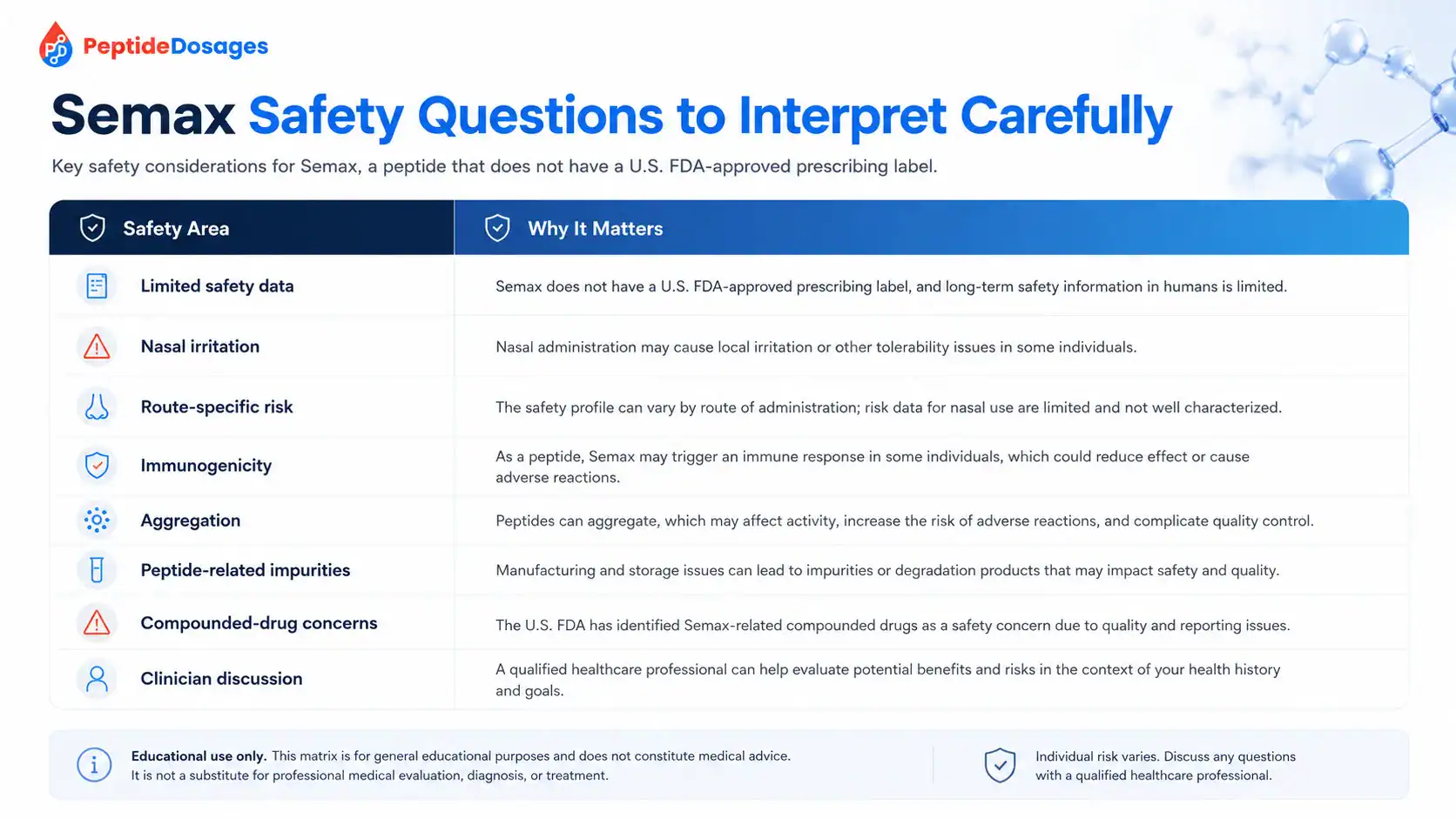
Semax side effects and safety remain incompletely characterized in U.S.-style labeling terms because there is no FDA-approved Semax label and the FDA has identified limited safety information for proposed Semax routes in compounded-drug settings [8] [13]. Available human studies do not substitute for large, prospective safety datasets.
Reported Semax Side Effects
Reported Semax side effects in accessible sources are not as well standardized as adverse-reaction tables for FDA-approved drugs [8] [9]. Because Semax is commonly discussed as a nasal peptide, local nasal effects, headache, tolerability, and formulation quality are practical concerns, but robust incidence rates are not well established in FDA labeling [8].
Nasal Spray Side Effects and Mild Nasal Irritation
Nasal spray side effects are biologically plausible because intranasal products contact nasal mucosa directly, and intranasal drug-delivery reviews note that local anatomy, formulation, and mucosal factors can affect tolerability and delivery [6] [7]. Mild nasal irritation should be treated as a route-specific safety issue rather than dismissed as trivial.
Adverse Effects That Need More Study
Adverse effects that need more study include immune reactions, impurities, aggregation-related risks, route-specific tolerability, effects in people with neurologic disease, and effects in people using central nervous system medications [8] [9]. FDA specifically states that compounded drugs containing Semax may pose immunogenicity risk for certain routes because of potential aggregation and peptide-related impurities [8].
Why a Favorable Safety Profile Still Requires Caution
A favorable safety profile cannot be assumed for Semax because FDA says it has no or limited safety-related information for proposed Semax routes of administration [8]. In medical content, “limited reported harm” is not the same as “known safe.”
Contraindications, Interactions, and Medical Supervision
Contraindications and interactions for Semax are not well defined in approved U.S. labeling because Semax does not have an FDA-approved prescribing label [8] [13]. The practical safety approach is to treat Semax as a medically active compound with uncertain contraindication and interaction data.
Who Should Discuss Semax With a Clinician First?
Anyone with neurologic disease, psychiatric conditions, cardiovascular disease, diabetes, immune disorders, medication changes, pregnancy, breastfeeding, or prior reactions to nasal or injectable products should discuss Semax-related questions with a qualified clinician [8] [9]. This is especially important because compounded drugs are not FDA-approved and FDA does not verify their safety, effectiveness, or quality before marketing [9].
Pregnancy, Breastfeeding, and Neurologic Conditions
Pregnancy and breastfeeding should be treated as special-risk contexts because there is no FDA Semax label providing reproductive-risk guidance, lactation information, or pregnancy exposure data [8] [13]. Neurologic conditions also require clinician evaluation because stroke, cognitive impairment, and neurocognitive symptoms need diagnosis rather than peptide self-selection.
Drug Interaction Questions Involving the Central Nervous System
Drug interaction questions are especially relevant for Semax because published studies examine central nervous system pathways, dopamine and serotonin systems, BDNF, and neuroimaging outcomes [2] [5] [11] [12]. People using antidepressants, stimulants, sedatives, antiepileptics, or other CNS-active medicines should not assume interaction safety without medical review.
Allergy, Sensitivity, and Nasal-Route Considerations
Allergy and sensitivity questions include the peptide itself, excipients, preservatives, nasal formulation components, sterility, and impurities [8] [9]. Nasal-route considerations also include rhinitis, nasal mucosal injury, congestion, and local tolerability because nasal anatomy can influence delivery and irritation [6] [7].
Semax Dosage Information From Studies and Regional Use
Semax dosage information should be presented as study data, regional-use context, or protocol descriptions from literature, not as instructions for personal use [4]. The most concrete accessible human dose information comes from the ischemic-stroke literature and small intranasal neuroimaging studies [4] [5].
What Dosage Has Been Reported in Published Research?
The 1997 acute hemispheric ischemic-stroke study reported that the most effective daily doses were 12 mg for moderate strokes and 18 mg for severe strokes over 5- and 10-day treatment courses [4]. The 2018 fMRI study used intranasal 1% Semax and evaluated brain activity before dosing and 5 and 20 minutes after dosing in 14 Semax subjects versus 10 placebo subjects [5].
Dose, Frequency, and Study Context
Semax dose, frequency, route, and duration must be interpreted within the exact study design and indication [4] [5]. A stroke-study dose cannot be converted into a general nootropic dose, and a short neuroimaging study cannot define long-term dosing safety.
Why Semax Dosage Is Not the Same as Personal Medical Advice
Semax dosage in published research is not personal medical advice because dosing depends on diagnosis, route, formulation, jurisdiction, medical history, concurrent medications, and product quality [4] [8] [9]. The educational value of study doses is that they show what researchers used, not what a reader should use.
Commonly Cited Protocol Ranges and Their Limitations
Commonly cited Semax protocol ranges online often blend regional medicine, research dosing, compounded-peptide practice, and anecdotal nootropic use. That blend is a limitation because FDA-reviewed labeling, large clinical trials, and standardized pharmacokinetic data are not available for U.S. Semax use [8] [13].
| Dosage Context | What the Source Describes | How to Interpret It |
|---|---|---|
| Acute ischemic stroke study | 12 mg/day for moderate stroke and 18 mg/day for severe stroke in a 1997 study context [4] | Historical regional clinical-study dosing, not general advice. |
| Intranasal neuroimaging study | Intranasal 1% Semax in 14 subjects with fMRI at 5 and 20 minutes after dosing [5] | Short-term brain-signal research, not a therapeutic protocol. |
| Compounded-drug context | FDA states Semax-related compounded drugs have limited safety information for proposed routes [8] | Regulatory caution, especially for unapproved formulations. |
| Personal use claims | Online dosing ranges often lack standardized clinical validation | Not reliable enough for individualized dosing decisions. |
Reconstitution and Administration Concepts Explained
Semax reconstitution and administration should be discussed only as general educational concepts because there is no FDA-approved Semax label giving standardized U.S. preparation instructions [8] [13]. For readers, the safest interpretation is that formulation, concentration, sterility, and route are medical-quality issues, not casual arithmetic problems.
Concentration, Volume, and Dose Calculation Basics
Concentration is generally the amount of active ingredient divided by the final liquid volume, but this concept should not be treated as a home-preparation instruction for Semax [9]. In an approved-drug setting, concentration, excipients, sterility, storage, and delivery device are controlled through labeling and manufacturing oversight; FDA notes that compounded drugs are not FDA-approved and are not verified by FDA for safety, effectiveness, or quality before marketing [9].
Educational Context for Injectable Semax
Injectable Semax has a higher safety burden than casual online discussions suggest because injections raise sterility, route, immune-response, and dosing-accuracy concerns [8] [9]. FDA’s Semax-specific compounding language highlights potential immunogenicity, aggregation, peptide-related impurities, and limited safety information for proposed routes [8].
Why Route, Formulation, and Supervision Matter
Route, formulation, and supervision matter because the same peptide can behave differently when delivered intranasally, systemically, or by injection [6] [7] [8]. A clinician can evaluate whether symptoms require approved treatments, whether a peptide is medically appropriate, and whether safety concerns outweigh uncertain benefits [9].
Regulatory Status of Semax Peptide
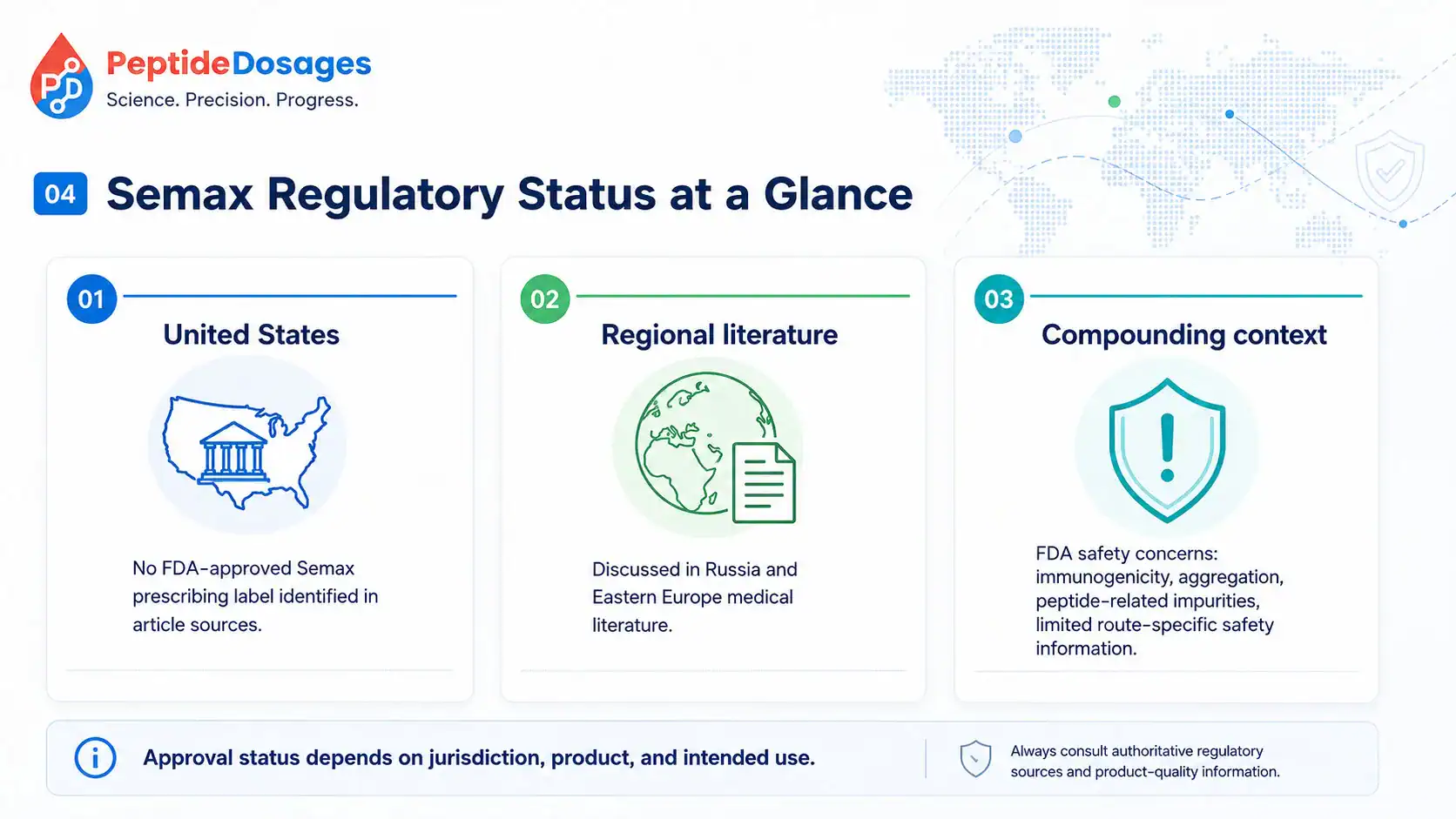
Semax peptide has a complicated regulatory profile: it appears in regional medical literature and is discussed as a Russian peptide drug, but FDA materials do not provide a U.S. approved Semax prescribing label and instead discuss Semax-related bulk substances in compounding-risk terms [8] [13] [17]. Regulatory status matters because approved and unapproved products are evaluated differently.
Is Semax Peptide FDA-Approved?
Semax peptide is not supported by an FDA-approved Semax label in the FDA approval framework cited here, and FDA materials discuss Semax-related substances in the context of compounding and potential safety risks rather than approved prescribing information [8] [13]. The Orange Book identifies FDA-approved drug products based on safety and effectiveness, and Semax does not appear in the Semax-specific FDA approval context reviewed for this article [13].
How Status May Differ in Russia, Eastern Europe, and the United States
A 2025 review reports that Semax is included in the Russian list of “Vital and Essential Drugs for Medical Application,” showing that its status differs by country [17]. Country-specific use should not be generalized to the United States, where FDA approval and compounding rules follow a separate legal and evidence framework [8] [9] [13].
What Unapproved Status Means for Quality and Safety
Unapproved status means readers should not assume that Semax products have the same evidence, manufacturing controls, adverse-reaction labeling, or quality oversight as FDA-approved medicines [8] [9]. FDA says compounded drugs are not FDA-approved and that poor compounding practices can create quality problems such as contamination or incorrect active-ingredient amounts [9].
How to Verify Regulatory Claims Through Authoritative Sources
Semax regulatory claims should be verified through FDA approval databases, Orange Book information, FDA compounding pages, Federal Register notices, and national regulator sources rather than vendor pages or nootropic forums [8] [13] 22. FDA has scheduled Semax-related bulk substances for discussion at the July 24, 2026 Pharmacy Compounding Advisory Committee meeting, so the regulatory picture should be checked again after that meeting [22].
Semax and Selank Compared
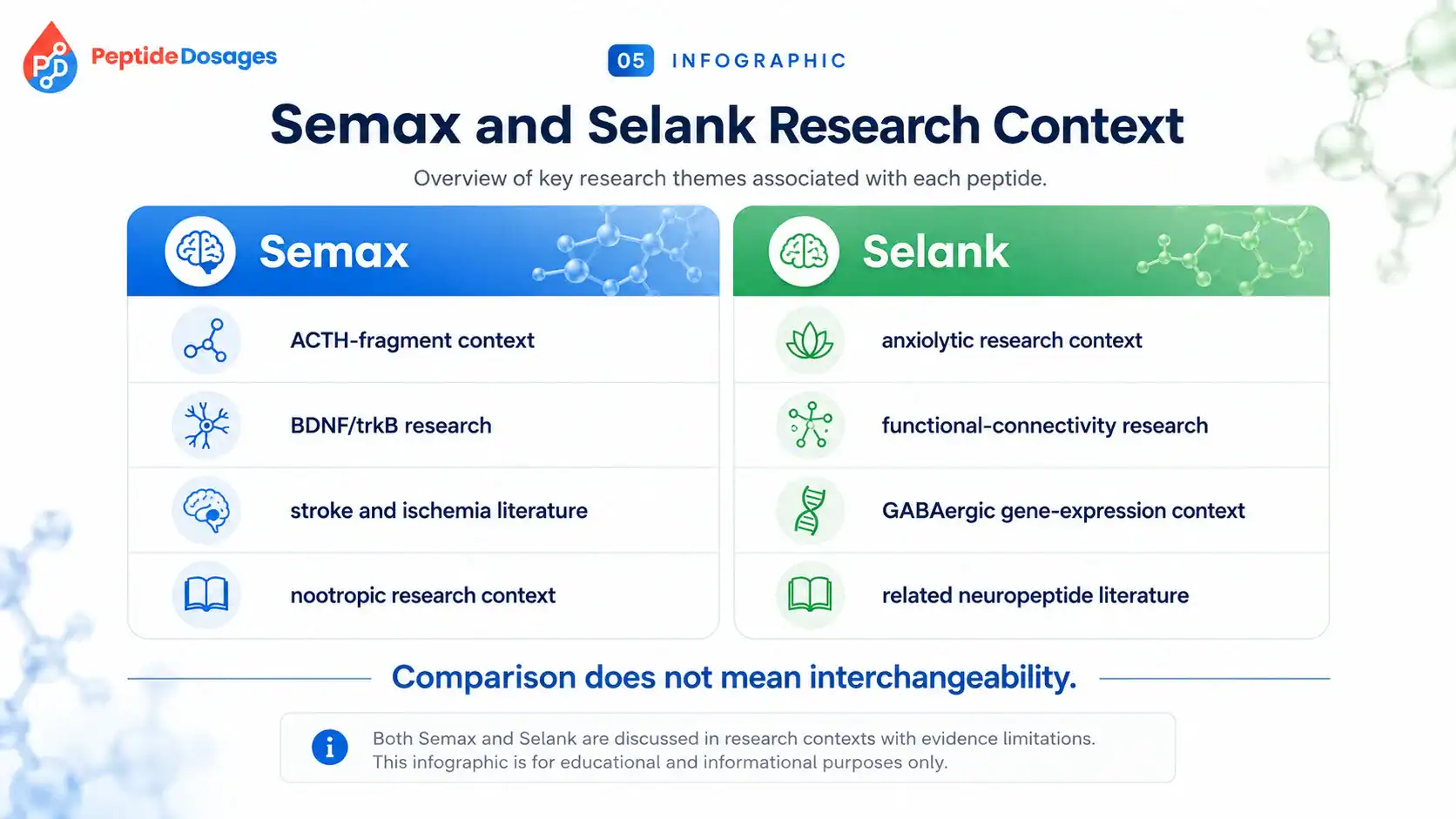
Semax and Selank are related in that both appear in Russian neuropeptide research and online nootropic discussion, but they are not interchangeable compounds [18]. Semax is generally discussed in ACTH-fragment, BDNF, stroke, and nootropic contexts, while Selank is commonly discussed in anxiolytic and GABAergic research contexts [18] 23.
Shared Neuropeptide Research Context
A functional connectomic study examined the effects of anxiolytic Selank and nootropic Semax on whole-brain resting-state functional connectivity in 52 healthy participants [18]. This shared research context supports comparison, but it does not prove that the two peptides have the same clinical uses.
Differences in Proposed Effects and Mechanisms
Semax is more closely tied in the literature to ACTH-fragment neurotrophic pathways, BDNF/trkB expression, stroke research, and dopaminergic or serotoninergic systems [2] [4] [11] [12]. Selank research includes gene-expression changes involving neurotransmission and possible GABAergic-system modulation [23].
Why Comparison Does Not Mean Interchangeability
Semax and Selank comparison should focus on mechanism, evidence level, safety uncertainty, and regulatory status rather than which peptide is “better” [18] [23]. Different mechanisms and study contexts mean one cannot be substituted for the other without medical and regulatory review.
Evidence Limitations and Unsupported Claims
Semax evidence is promising in several mechanistic lanes but limited for broad therapeutic claims, especially claims about everyday focus, mental clarity, mood, or neuroenhancement in healthy users [2] [3] [5]. The key limitation is that strong mechanistic and regional signals do not equal large-scale clinical validation.
Where Semax Evidence Is Still Limited
Semax evidence is limited by small human samples, regional concentration of clinical studies, incomplete long-term safety data, and the absence of a U.S. FDA-approved prescribing label [4] [5] [8] [13]. The lack of standardized approved labeling also limits clear discussion of contraindications, interactions, and adverse-reaction rates.
Nootropic Claims vs Published Evidence
Nootropic claims for Semax often exceed the published evidence because brain-signal changes, animal memory tests, or BDNF findings do not prove durable real-world cognitive enhancement [2] [5] [16]. Published evidence supports continued research more strongly than broad wellness use.
Translational Gaps Between Rat Studies and Human Use
The translational gap is especially important for Semax because many detailed mechanism claims come from rat brain, rat hippocampus, permanent middle cerebral artery occlusion, and focal ischemia models [2] [3] [15]. Translation requires human pharmacokinetic, dose-response, efficacy, and safety studies.
Questions Future Clinical Trials Need to Answer
Future Semax trials should clarify dose-response, route-specific bioavailability, safety, adverse effects, drug interactions, duration of effect, patient selection, and clinically meaningful endpoints [6] [8] [9]. The most useful studies would be randomized, blinded, adequately powered, and registered with transparent protocols.
Key Takeaways for Readers
Semax is best interpreted as an ACTH-derived synthetic neuropeptide with limited human evidence, stronger preclinical mechanism data, and unresolved regulatory and safety questions in the United States [1] [3] [8]. Readers should focus less on online claims and more on evidence quality, route, safety, regulation, and clinician-guided decision-making.
What Is Reasonably Known About Semax
Semax is reasonably known to be a synthetic ACTH-fragment peptide, to affect BDNF and gene-expression pathways in preclinical studies, and to have limited human research in stroke and neuroimaging contexts [1] [2] [3] [4] [5]. It is also reasonably known that FDA has identified Semax-related compounded drugs as having unresolved safety concerns [8].
What Remains Unclear About Benefits and Safety
What remains unclear is whether Semax provides reliable clinical benefit for cognitive enhancement, healthy-user nootropic effects, long-term neurologic outcomes, or broad neuroprotection outside studied contexts [4] [5] [8]. Long-term safety, route-specific adverse events, interactions, and special-population risks also remain insufficiently defined.
What to Discuss With a Qualified Clinician
Readers can use this checklist to guide a clinician conversation:
- Current diagnosis, symptoms, and whether approved therapies should be considered first [9] [13]
- Current medications, especially antidepressants, stimulants, sedatives, antiepileptics, or other CNS-active drugs [11] [12]
- Pregnancy, breastfeeding, neurologic disease, immune disorders, diabetes, or prior drug reactions [8] [9]
- Whether any Semax claim is based on human evidence, animal evidence, mechanism only, or anecdote [3] [4] [5]
- Route-specific safety questions for nasal or injectable formulations [6] [7] [8]
- Regulatory status, product quality, sterility, impurities, and compounding oversight [8] [9] [22]
- Approved alternatives with stronger labeling and safety data when treatment is needed [13]
The safest way to interpret Semax peptide is through evidence quality, regulatory status, safety data, and clinician-guided decision-making rather than through online nootropic claims or informal dosing protocols.
REFERENCES
- National Center for Biotechnology Information. ACTH (4-7), Pro-Gly-Pro, PubChem Compound Summary. PubChem. Accessed 2026.
- Dolotov OV, et al. Semax, an analog of ACTH(4-10) with cognitive effects, regulates BDNF and trkB expression in the rat hippocampus. Brain Research. 2006. PMID: 16996037.
- Medvedeva EV, et al. The peptide Semax affects the expression of genes related to the immune and vascular systems in rat brain focal ischemia. BMC Genomics. 2014. PMCID: PMC3987924.
- Gusev EI, et al. Effectiveness of Semax in the acute period of hemispheric ischemic stroke. Zhurnal Nevrologii i Psikhiatrii imeni S.S. Korsakova. 1997. PMID: 11517472.
- Lebedeva IS, et al. Effects of Semax on the Default Mode Network of the Brain. Bulletin of Experimental Biology and Medicine. 2018. PMID: 30225715.
- Crowe TP, Greenlee MHW, Kanthasamy AG, Hsu WH. Mechanism of intranasal drug delivery directly to the brain. Life Sciences. 2018. PMID: 29277310.
- Meredith ME, Salameh TS, Banks WA. Intranasal delivery of proteins and peptides in the treatment of neurodegenerative diseases. AAPS Journal. 2015. PMCID: PMC4476983.
- U.S. Food and Drug Administration. Certain Bulk Drug Substances for Use in Compounding that May Present Significant Safety Risks. FDA. Content current as of 2026.
- U.S. Food and Drug Administration. Compounding and the FDA: Questions and Answers. FDA. Content current as of 2025.
- Tsai SJ. Semax, an analogue of adrenocorticotropin (4-10), is a potential agent for the treatment of attention-deficit hyperactivity disorder and Rett syndrome. Medical Hypotheses. 2007. PMID: 16996699.
- Eremin KO, et al. Semax, an ACTH(4-10) analogue with nootropic properties, activates dopaminergic and serotoninergic brain systems in rodents. Neurochemical Research. 2005. PMID: 16362768.
- Eremin KO, et al. Effects of Semax on dopaminergic and serotoninergic systems of the brain. Doklady Biological Sciences. 2004. PMID: 15088389.
- U.S. Food and Drug Administration. Approved Drug Products with Therapeutic Equivalence Evaluations, Orange Book. FDA. Updated 2026.
- Cai M, et al. The Melanocortin Receptor System: A Target for Multiple Degenerative Diseases. Current Protein & Peptide Science. 2016. PMCID: PMC5999398.
- Dmitrieva VG, et al. Semax and Pro-Gly-Pro activate the transcription of neurotrophins and their receptor genes after cerebral ischemia. Cellular and Molecular Neurobiology. 2010. PMID: 19633950.
- Manchenko DM, et al. Nootropic and analgesic effects of Semax following different routes of administration. Neuroscience and Behavioral Physiology. 2010. PMID: 21268834.
- Radchenko AI, et al. The Potential of the Peptide Drug Semax and Its Derivative for the Correction of Behavioral and Neurological Disorders. Peer-reviewed open-access article. 2025. PMCID: PMC12755871.
- Kozlova AA, et al. Functional Connectomic Approach to Studying Selank and Semax Effects. Human Physiology. 2020. PMID: 32342318.
- Gusev EI, et al. The efficacy of Semax in the treatment of patients at different stages of ischemic stroke. Zhurnal Nevrologii i Psikhiatrii imeni S.S. Korsakova. 2018. PMID: 29798983.
- Dolotov OV, et al. Semax, an analogue of adrenocorticotropin (4-10), binds specifically and increases levels of brain-derived neurotrophic factor protein in rat basal forebrain. Journal of Neurochemistry. 2006. PMID: 16635254.
- Filippenkov IB, et al. Antistress Action of Melanocortin Derivatives Associated with Correction of Gene Expression Patterns in the Brain. International Journal of Molecular Sciences. 2021. PMCID: PMC8469576.
- U.S. Food and Drug Administration. July 23-24, 2026 Meeting of the Pharmacy Compounding Advisory Committee. FDA Advisory Committee Calendar. 2026.
- Volkova AA, et al. Selank Administration Affects the Expression of Some Genes Involved in GABAergic Neurotransmission. Frontiers in Pharmacology. 2016. PMCID: PMC4757669. :::
FAQs
What is Semax peptide, and how does it work in the brain?
Semax peptide is a synthetic ACTH-derived neuropeptide studied for effects on brain signaling, neuroprotection, and cognition-related pathways. It is commonly described as ACTH(4-7)-Pro-Gly-Pro or an ACTH-fragment analog [1]. In preclinical research, Semax has been linked to BDNF, trkB, gene expression, dopamine, serotonin, and ischemia-related pathways, but these mechanisms do not prove broad clinical benefit [2] [3] [11] [12].
What does Semax peptide do for you?
Semax peptide is researched for possible nootropic, neuroprotective, and neurologic recovery-related effects, but the strength of evidence depends on the outcome. Human studies have examined Semax in stroke and brain-network research, while many cognitive enhancement claims still rely on small studies, preclinical findings, or online reports [4] [5] [19]. It should not be treated as a proven focus, memory, or mood treatment for everyone.
What are the potential side effects or downsides of Semax?
Potential side effects or downsides of Semax include incomplete human safety data, route-specific nasal irritation, uncertain interaction risks, and product-quality concerns for unapproved or compounded products. FDA materials identify Semax-related compounded drugs as a potential safety concern because of immunogenicity, aggregation, peptide-related impurities, and limited safety information for proposed routes [8]. Safety claims should be interpreted cautiously, especially outside regulated clinical settings.
Is Semax used for ADHD or to improve focus and attention?
Semax has been proposed in ADHD and focus-related discussions, but clinical evidence is not strong enough to establish Semax as an approved ADHD treatment. One hypothesis paper discussed Semax as a possible agent for ADHD and Rett syndrome, but a hypothesis is not the same as a clinical recommendation [10]. Focus and attention claims should be framed as preliminary unless supported by controlled human trials.
What dosage information has been reported for Semax peptide?
Semax dosage information should be interpreted as study context, not personal medical advice. A 1997 ischemic-stroke study reported daily doses of 12 mg for moderate stroke and 18 mg for severe stroke over 5- and 10-day courses [4]. A small neuroimaging study used intranasal 1% Semax and measured brain activity shortly after dosing [5]. Individual dosing decisions require clinician guidance.
Is Semax legal or FDA-approved in the United States?
Semax is not supported by a U.S. FDA-approved prescribing label in the FDA approval framework discussed in the article. FDA materials address Semax-related substances in a compounding-risk context rather than as approved prescribing information [8] [13]. Legal status can depend on product type, intended use, jurisdiction, and compounding rules, so regulatory claims should be verified through authoritative sources rather than sales or nootropic content.
Contributing Authors
The following authors are recognized for published research that helped shape the scientific and clinical context discussed in this article.
Ekaterina V. Medvedeva
Author profile: ResearchGate
Ekaterina V. Medvedeva is recognized for published Semax peptide research examining transcriptomic changes in experimental focal ischemia and immune-response gene expression. Her publications are relevant to the article’s discussion of preclinical evidence, gene expression, neuroprotective mechanisms, and the limits of translating rat brain findings into human clinical conclusions. This work helps frame Semax as a biologically active neuropeptide in model systems while keeping the evidence distinction clear between mechanistic findings, animal research, and clinical evidence.
Selected publications:
- The peptide Semax affects the expression of genes related to the immune and vascular systems in rat brain focal ischemia: Genome-wide transcriptional analysis – BMC Genomics, 2014. DOI: 10.1186/1471-2164-15-228
- Semax, an analog of ACTH(4-7), regulates expression of immune response genes during ischemic brain injury in rats – Molecular Genetics and Genomics, 2017. PMID: 28255762
Oleg V. Dolotov
Author profile: ResearchGate
Oleg V. Dolotov is recognized for published work relevant to Semax pharmacology, BDNF signaling, and ACTH-fragment neuropeptide research. His publications helped shape the article’s discussion of Semax mechanism of action, hippocampal BDNF/trkB findings, and neurotrophic-factor context. These studies are most useful for understanding mechanistic and preclinical research questions rather than for making broad clinical claims, which is why they support the article’s evidence-graded approach to Semax peptide benefits, limitations, and translational uncertainty.
Selected publications:
- Semax, an analog of ACTH(4-10) with cognitive effects, regulates BDNF and trkB expression in the rat hippocampus – Brain Research, 2006. PMID: 16996037
- Semax, an analogue of adrenocorticotropin (4-10), binds specifically and increases levels of brain-derived neurotrophic factor protein in rat basal forebrain – Journal of Neurochemistry, 2006. PMID: 16635254
PUBLISHING FIELDS
- SEO Title: Semax Peptide: Benefits, Dosage, Safety & Research
- Meta Description: Semax peptide guide to uses, mechanism, dosage context, side effects, safety, human research, preclinical evidence, and FDA status.
- Suggested URL Slug:
/semax-peptide - Page Type: Therapeutic Peptide Educational Article
- ArticleFormat: Therapeutic Peptide Educational Guide
- TargetPeptide: Semax
- MainKeyword: semax peptide
- CanonicalKeyword: Semax peptide
- ExactKeywordVariant: Semax peptide
- AliasTerms: Semax; peptide Semax; heptapeptide Semax; synthetic ACTH analog; adrenocorticotropic hormone fragment; Semax nasal spray; injectable Semax; ACTH(4-7)-Pro-Gly-Pro; ACTH-fragment analog; ACTH(4-10) analog
- PeptideCategory: Neuropeptide
- Primary Search Intent: Therapeutic informational
- Secondary Keywords: Semax dosage, Semax side effects, Semax nasal spray, Semax benefits, Semax mechanism of action, Semax and BDNF, Semax research, Semax FDA approval, Semax and Selank, Semax safety, Semax clinical evidence, Semax peptide uses
- Evidence Levels Covered: early human evidence; preclinical evidence; mechanistic evidence; regulatory evidence; unsupported or anecdotal claims; no U.S. FDA-approved use identified in the article
- Excerpt: Semax peptide is a synthetic ACTH-derived neuropeptide studied for neuroprotection, cognition-related pathways, stroke research, BDNF signaling, and gene expression. This guide reviews potential benefits, side effects, dosage context, administration routes, evidence limitations, and regulatory status.
- Suggested Tags: Semax, neuropeptides, nootropic peptides, peptide safety, peptide research, BDNF, clinical evidence, FDA status
- Featured Image Concept: Clinical evidence map showing Semax as an ACTH-derived neuropeptide with branches for mechanism, human evidence, preclinical evidence, safety, dosage context, and regulatory status.
- Featured Image Alt Text: Scientific evidence map for Semax peptide covering ACTH-fragment identity, BDNF research, safety, dosage context, and regulatory status.
- Suggested Schema: Article schema only. Do not add FAQ schema here because FAQs are generated separately.
INFOGRAPHIC BRIEFS
Infographic Brief 1
- Placement: How Semax Works in the Nervous System
- Title: Proposed Semax Mechanism in Nervous-System Research
- Purpose: Explain how the article frames Semax mechanism of action without implying proven clinical benefit. This visual helps readers distinguish ACTH-fragment identity, neurotrophic signaling, neurotransmitter systems, and gene-expression findings from therapeutic outcomes.
- Visual Format: Mechanism diagram
- Key Labels: ACTH-fragment peptide, central nervous system, BDNF/trkB, dopamine and serotonin, gene expression, immune-response genes, vascular-system genes, clinical outcome uncertainty
- Suggested Layout: Place “Semax” in the center. Use surrounding nodes for ACTH-fragment context, BDNF/trkB signaling, neurotransmitter systems, immune and vascular gene-expression findings, and a separate caution box labeled “Mechanism does not prove clinical benefit.”
- Data or Concepts to Include: Semax is described as an ACTH-derived synthetic peptide; preclinical research links Semax to BDNF/trkB, dopamine, serotonin, immune-response genes, vascular-system genes, and rat brain ischemia models; the article states that mechanism findings do not establish clinical benefit.
- Visual Style: Clean, clinical, editorial, soft medical colors, simple arrows, minimal icons, no decorative clutter.
- Compliance Restrictions: Do not depict self-administration, product packaging, syringes, guaranteed cognitive effects, or treatment claims. Do not imply that Semax improves cognition or recovery in humans.
- Alt Text: Mechanism diagram for Semax peptide showing ACTH-fragment identity, BDNF signaling, neurotransmitter systems, gene expression, and clinical uncertainty.
- Full AI Image Prompt: Create a clean clinical infographic titled “Proposed Semax Mechanism in Nervous-System Research.” Center label: “Semax, ACTH-derived synthetic neuropeptide.” Add surrounding labeled nodes: “BDNF/trkB signaling,” “dopamine and serotonin systems,” “immune-response gene expression,” “vascular-system gene expression,” “rat brain ischemia models,” and “clinical outcome uncertainty.” Use simple arrows from Semax to the mechanism nodes and a separate caution box reading “Mechanism findings do not prove clinical benefit.” Use an editorial medical style, white background, blue and green scientific accents, minimal line icons, no product imagery, no syringes, no dosing instructions, no before-and-after imagery, and no guaranteed benefit language.
Infographic Brief 2
- Placement: What Human Research Says About Semax
- Title: Semax Evidence Landscape
- Purpose: Summarize the article’s evidence hierarchy so readers can quickly see how early human evidence, small neuroimaging studies, preclinical studies, and unsupported online claims differ.
- Visual Format: Evidence ladder
- Key Labels: early human stroke evidence, small neuroimaging study, BDNF rehabilitation research, preclinical rat studies, mechanism findings, unsupported nootropic claims, evidence gaps
- Suggested Layout: Vertical ladder from strongest to weakest evidence categories. Top: “Early human evidence.” Middle: “Small human neuroimaging study” and “preclinical mechanism research.” Bottom: “unsupported online claims.” Add a side note: “Study context is not personal medical advice.”
- Data or Concepts to Include: The article discusses a 30-patient acute ischemic stroke study with 80 controls, a 14-subject intranasal Semax fMRI study with 10 placebo subjects, stroke rehabilitation research involving BDNF, and rat brain focal ischemia and hippocampal BDNF/trkB studies.
- Visual Style: Evidence-focused, academic, clear hierarchy, restrained colors, easy to read on mobile.
- Compliance Restrictions: Do not present the ladder as proof of effectiveness. Do not include claims that Semax treats stroke, ADHD, or cognitive impairment. Do not include personal dosing or use guidance.
- Alt Text: Evidence ladder for Semax peptide showing early human studies, small neuroimaging research, preclinical models, and unsupported nootropic claims.
- Full AI Image Prompt: Create a medically responsible evidence ladder infographic titled “Semax Evidence Landscape.” Use a vertical ladder with tiers labeled “Early human stroke evidence,” “Small human neuroimaging study,” “Preclinical rat brain and BDNF research,” “Mechanistic gene-expression findings,” and “Unsupported online nootropic claims.” Include small neutral notes: “30 Semax-treated stroke patients compared with 80 controls,” “14 Semax subjects and 10 placebo subjects in fMRI research,” and “Study context is not personal medical advice.” Use clean typography, white background, subtle blue and gray palette, no patient photos, no product imagery, no treatment promises, no results language, and no dosing instructions.
Infographic Brief 3
- Placement: Semax Side Effects and Safety Profile
- Title: Semax Safety Questions to Interpret Carefully
- Purpose: Help readers understand that Semax safety is not fully characterized in FDA-label terms and that route, formulation, compounding quality, immune reactions, and limited safety data matter.
- Visual Format: Side-effect and safety matrix
- Key Labels: limited safety data, nasal irritation, route-specific risk, immunogenicity, aggregation, peptide-related impurities, compounded-drug concerns, clinician discussion
- Suggested Layout: Two-column matrix. Left column: “Safety area.” Right column: “Why it matters.” Include rows for nasal route, injectable context, compounded products, impurities, immune response, and unknown long-term safety.
- Data or Concepts to Include: The article states that Semax lacks a U.S. FDA-approved prescribing label, FDA identified Semax-related compounded drugs as a safety concern, and potential issues include immunogenicity, aggregation, peptide-related impurities, and limited safety information for proposed routes.
- Visual Style: Clinical safety matrix, calm colors, warning icons used sparingly, no alarmist design.
- Compliance Restrictions: Do not claim Semax is unsafe for everyone or safe for everyone. Do not show injection technique, syringes, vials, product labels, or how-to administration visuals.
- Alt Text: Safety matrix for Semax peptide showing limited safety data, nasal irritation, route-specific risk, immunogenicity, impurities, and compounded-drug concerns.
- Full AI Image Prompt: Create a clean clinical safety matrix titled “Semax Safety Questions to Interpret Carefully.” Design a two-column table with headers “Safety Area” and “Why It Matters.” Rows: “Limited safety data,” “Nasal irritation,” “Route-specific risk,” “Immunogenicity,” “Aggregation,” “Peptide-related impurities,” “Compounded-drug concerns,” and “Clinician discussion.” Keep all language neutral and educational. Use a white background, subtle blue-gray medical palette, simple shield and caution icons, no syringes, no vial imagery, no injection technique, no product branding, no vendor language, and no claims that Semax is proven safe or unsafe for everyone.
Infographic Brief 4
- Placement: Regulatory Status of Semax Peptide
- Title: Semax Regulatory Status at a Glance
- Purpose: Clarify the article’s regulatory distinction between regional use, U.S. FDA approval status, compounded-drug safety concerns, and the need to verify claims through authoritative sources.
- Visual Format: Regulatory status map
- Key Labels: U.S. FDA status, no FDA-approved Semax label, regional use context, Russia and Eastern Europe, compounding-risk context, product quality, authoritative verification
- Suggested Layout: Horizontal comparison map with three panels: “United States,” “Regional literature,” and “Compounding context.” Add a footer note: “Approval status depends on jurisdiction, product, and intended use.”
- Data or Concepts to Include: The article states that Semax does not have a U.S. FDA-approved prescribing label in the cited approval framework, appears in regional medical literature, and is discussed by FDA in a compounding-risk context.
- Visual Style: Regulatory explainer graphic, clean and editorial, map-inspired but not geographically detailed.
- Compliance Restrictions: Do not include buying guidance, no-prescription language, product sourcing, vendor references, or claims that unapproved products are safe or effective.
- Alt Text: Regulatory status map for Semax peptide comparing U.S. FDA status, regional medical literature, and compounded-drug safety concerns.
- Full AI Image Prompt: Create a clinical regulatory infographic titled “Semax Regulatory Status at a Glance.” Use three side-by-side panels labeled “United States,” “Regional literature,” and “Compounding context.” Under “United States,” include “No FDA-approved Semax prescribing label identified in article sources.” Under “Regional literature,” include “Discussed in Russia and Eastern Europe medical literature.” Under “Compounding context,” include “FDA safety concerns: immunogenicity, aggregation, peptide-related impurities, limited route-specific safety information.” Add a footer: “Approval status depends on jurisdiction, product, and intended use.” Use clean medical editorial style, white background, restrained blue and green accents, no vendor branding, no product imagery, no purchase language, and no claims of safety or effectiveness.
Infographic Brief 5
- Placement: Semax and Selank Compared
- Title: Semax and Selank Research Context
- Purpose: Show a careful comparison between Semax and Selank without implying interchangeability or recommending one peptide over the other.
- Visual Format: Related peptide comparison chart
- Key Labels: Semax, Selank, neuropeptide research, ACTH-fragment context, BDNF/trkB, functional connectivity, anxiolytic research context, not interchangeable
- Suggested Layout: Two-column comparison chart. Semax column highlights ACTH-fragment, BDNF/trkB, stroke and nootropic research context. Selank column highlights anxiolytic research context and GABAergic gene-expression context. Middle footer: “Comparison does not mean interchangeability.”
- Data or Concepts to Include: The article discusses Semax in ACTH-fragment, BDNF, stroke, neuroimaging, and nootropic contexts, while Selank is discussed in anxiolytic, functional-connectivity, and GABAergic research contexts.
- Visual Style: Clean comparison chart, academic, balanced, no ranking or “best” language.
- Compliance Restrictions: Do not imply either peptide is better, safer, or recommended for personal use. Do not include dosing, stacking, cycle, protocol, or purchase language.
- Alt Text: Comparison chart for Semax peptide and Selank showing research context, mechanisms, evidence limitations, and non-interchangeability.
- Full AI Image Prompt: Create a balanced scientific comparison chart titled “Semax and Selank Research Context.” Use two columns labeled “Semax” and “Selank.” In the Semax column, include “ACTH-fragment context,” “BDNF/trkB research,” “stroke and ischemia literature,” and “nootropic research context.” In the Selank column, include “anxiolytic research context,” “functional-connectivity research,” “GABAergic gene-expression context,” and “related neuropeptide literature.” Add a centered footer: “Comparison does not mean interchangeability.” Use a clean clinical editorial style, white background, blue and green accents, no ranking, no product imagery, no dosing language, no protocol language, and no claims that either peptide is recommended for personal use.