
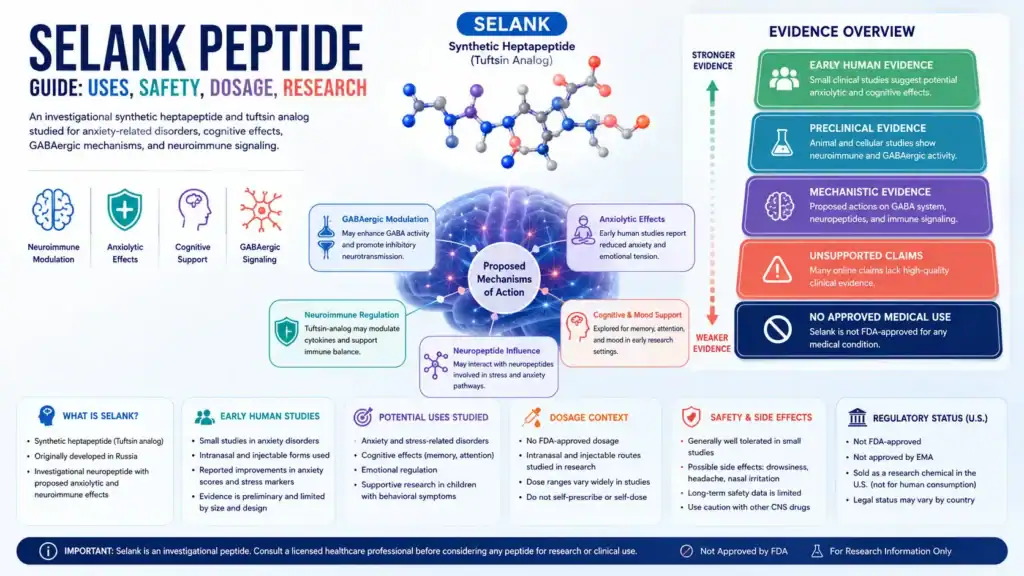
Selank peptide is a synthetic neuropeptide analog of tuftsin, a naturally occurring immunomodulatory tetrapeptide, and it is discussed mainly for anxiety, stress biology, cognition, and GABA-related mechanisms. This article is educational and reviews published research, not personalized medical advice or a recommendation to use Selank.
- Selank is a synthetic heptapeptide related to tuftsin, with the sequence Thr-Lys-Pro-Arg-Pro-Gly-Pro and the formula C33H57N11O9 1.
- Selank is mainly discussed as a nootropic anxiolytic peptide, but the strongest human evidence is limited, regional, and relatively small 4.
- Proposed mechanisms include GABAergic signaling, neurotransmission gene expression, serotonin and dopamine pathways, and enkephalin-degrading enzyme activity 2.
- Human studies have examined Selank in anxiety-related disorders, including generalized anxiety disorder, phobic-anxiety disorders, somatoform disorders, and neurasthenia [4].
- Preclinical studies in rats and cell models provide mechanistic clues, but animal and in vitro findings cannot prove human therapeutic benefit 7.
- Selank has no FDA-approved prescribing label identified in U.S. FDA drug approval sources used for this article, and FDA lists Selank acetate among nominated compounding substances with potential safety risks and information gaps 14.
- Dosage and administration information should be interpreted as study context only; it is not a personal dose, protocol, injection instruction, or treatment recommendation.
Fast Answer
Selank peptide is a synthetic heptapeptide and tuftsin analog studied for anxiolytic, nootropic, and neuroimmune effects, especially in Russian clinical and preclinical literature 1, 2. Early human studies have evaluated Selank for anxiety-related disorders, but the evidence base is small and not equivalent to FDA-approved labeling 4. Safety and regulatory caution matter because FDA has flagged Selank acetate compounding concerns, including immunogenicity and limited human safety information 14.
Evidence basis note: This page uses regulator sources, public scientific databases, peer-reviewed studies, PubMed-indexed abstracts, and full-text research where available. Claims that rely on small, regional, preclinical, or mechanistic evidence are identified as limited rather than established medical use.
What Is the Selank Peptide?
Selank is a synthetic regulatory peptide built from the tuftsin sequence plus a Pro-Gly-Pro extension, and it is mainly discussed in therapeutic contexts because of its proposed anxiolytic, cognitive, and neuroimmune activity 2.
Is Selank a Synthetic Heptapeptide or Tuftsin Analog?
Selank is a synthetic heptapeptide, meaning it contains seven amino acids. PubChem lists Selank as C33H57N11O9, and the commonly cited amino acid sequence is Thr-Lys-Pro-Arg-Pro-Gly-Pro 1. Selank is also described as a synthetic analog of tuftsin, which is a naturally occurring immunomodulatory tetrapeptide, Thr-Lys-Pro-Arg 3.
Why Is Selank Discussed as a Nootropic Anxiolytic Peptide?
Selank is discussed as a nootropic anxiolytic peptide because early clinical studies reported anxiolytic effects and mild nootropic effects in anxiety-related disorders 5. The term “nootropic” should be interpreted cautiously here, because reported cognitive or antiasthenic effects came from limited clinical and preclinical studies, not large multicenter approval trials.
How Selank Differs From Approved Peptide Drugs
Selank differs from approved peptide drugs because it does not have a U.S. FDA-approved prescribing label identified in the FDA approval sources used here. The FDA Orange Book identifies drug products approved by FDA based on safety and effectiveness, while FDA separately lists Selank acetate as a nominated compounding bulk substance with potential significant safety risks and insufficient human safety information 15, 14.
How Does Selank Peptide Work?
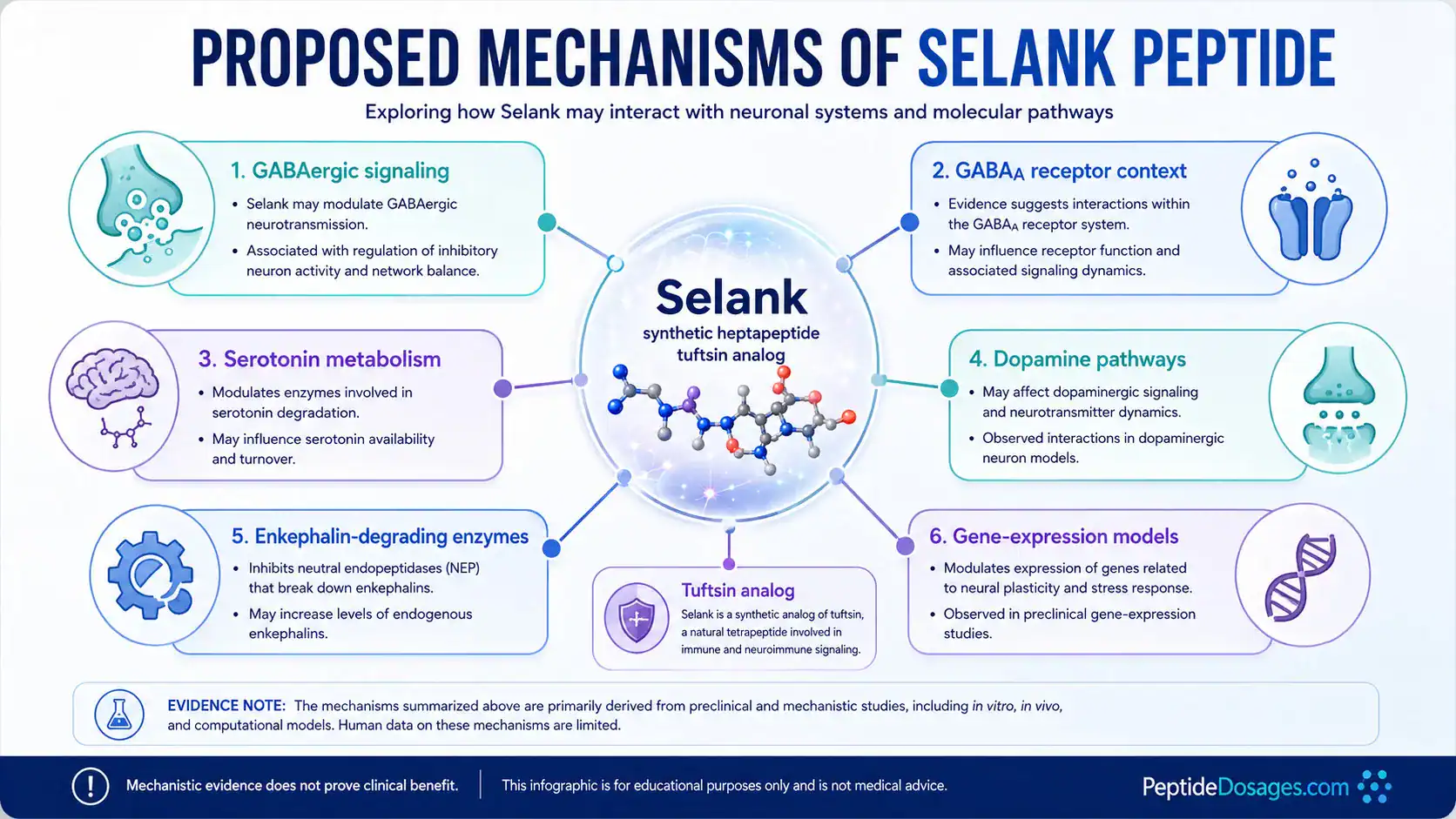
Selank peptide is thought to work through multiple neurochemical and gene-expression pathways rather than one confirmed receptor target, with the GABAergic system, serotonin, dopamine, and endogenous opioid peptide metabolism appearing repeatedly in published research 2, 12.
Proposed Mechanism of Action of Selank
The proposed mechanism of action of Selank includes modulation of neurotransmission-related gene expression and possible allosteric effects on GABAergic signaling [2]. In one rat study, researchers measured 84 genes involved in neurotransmission after intranasal Selank or GABA and found significant expression changes in 45 genes at 1 hour and 22 genes at 3 hours [2].
How GABA, GABAA Receptors, and Inhibitory Signaling May Fit
Selank research often connects the peptide with GABA and GABAA receptor signaling because benzodiazepines also act through GABAA receptor modulation 16. In the 2016 Frontiers study, the authors interpreted gene-expression patterns as consistent with possible allosteric modulation of the GABAergic system, but that remains a mechanistic hypothesis rather than confirmed clinical pharmacology [2].
Serotonin, Stress Biology, and Nervous System Activity
Selank may influence serotonin-related pathways in animal studies, but that does not establish a human antidepressant or antianxiety effect. A rat study comparing Selank and tuftsin found changes in 5-HT metabolism in the brain stem 30 minutes after injection in animals pretreated with a serotonin synthesis inhibitor 9. Serotonin itself is involved in mood, memory, behavior, and anxiety-related disorders, so this pathway is biologically relevant but not sufficient to prove efficacy 17.
Why Mechanism Does Not Prove Clinical Benefit
A plausible mechanism does not prove that Selank treats anxiety, improves cognition, or protects the brain in humans. The mechanistic evidence includes animal studies, gene-expression experiments, and cell models, while clinical interpretation depends on the size, design, endpoints, comparators, and regulatory review status of human trials [2], 8.
What Are the Potential Benefits and Uses of Selank Peptide?
Potential benefits of Selank peptide are most often discussed around anxiety symptoms, stress response, cognitive function, and neuroimmune signaling, but each claim requires evidence grading because the research base is not equally strong across outcomes 4, 5.
Potential Anxiolytic Effects and Reduce Anxiety Claims
Selank has been evaluated as an anxiolytic in small human studies. A 2008 study reported that 62 patients with generalized anxiety disorder and neurasthenia were studied, with Selank in 30 patients compared with medazepam in 32 patients [4]. A 2014 study compared Selank and phenazepam in 60 patients with phobic-anxiety and somatoform disorders, reporting pronounced anxiolytic and mild nootropic effects [5].
Benefits for Cognitive Function, Memory, and Well-Being
Cognitive and memory claims are more evidence-sensitive than anxiety claims because much of the support comes from preclinical or small regional studies. A PubMed-indexed animal study reported that Selank affected learning and memory processes in experimental models 10. These findings are relevant to nootropic hypotheses, but they should not be read as proof that Selank improves human cognitive function.
How Nootropic Effects Differ From Therapeutic Outcomes
Nootropic effects usually refer to cognition, attention, learning, or memory, while therapeutic outcomes require clinical endpoints in defined patient groups. Selank studies have reported mild nootropic or antiasthenic effects in anxiety-related clinical contexts, but these reports do not establish Selank as an approved cognitive-enhancement medication [4], [5].
Neuroprotection and Neurodegenerative Disease Claims
Selank is sometimes discussed for neuroprotection and neurodegenerative disease, but those claims are not established clinical uses. A 2019 animal study described Selank as a peptide analog of tuftsin and reported effects on age-related memory disturbances associated with chronic alcohol intoxication in experimental models 11. That type of evidence is preclinical and should not be converted into Alzheimer’s disease, Parkinson’s disease, or neurodegenerative disease treatment claims.
What Do Clinical Studies Say About Selank?
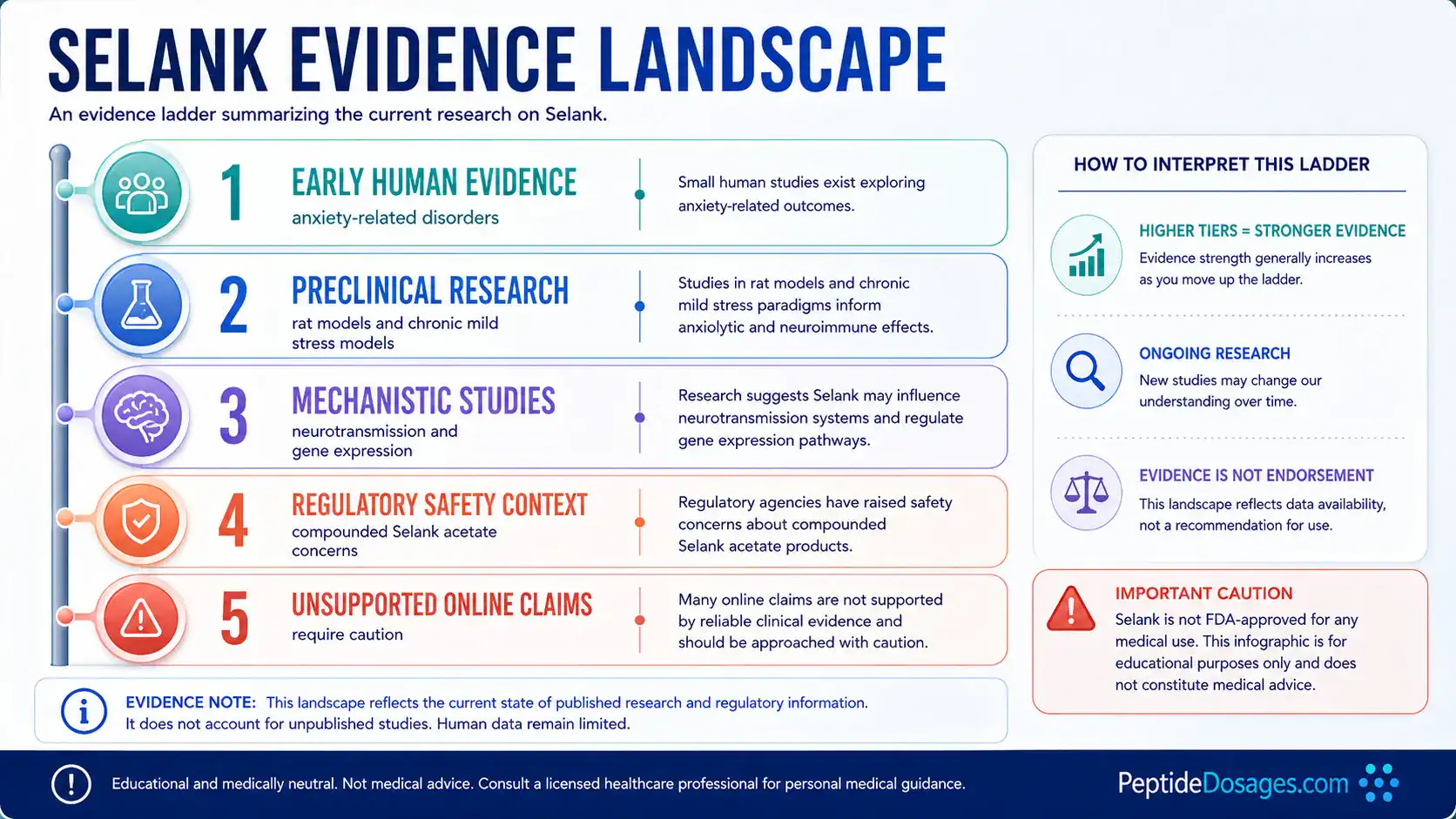
Clinical studies suggest Selank has been investigated for anxiety-related conditions, but the human evidence is early, regionally concentrated, and not equivalent to modern FDA-style approval evidence 4, 5.
Early Human Evidence From Russian Research Settings
The most cited human studies come from Russian-language or Russian research settings. The 2008 study of generalized anxiety disorder and neurasthenia compared 30 Selank patients with 32 medazepam patients, using psychometric scales and serum enkephalin activity measures [4]. The small sample and regional publication context limit broad generalization.
Selank Therapy in Generalized Anxiety Disorders
The 2008 generalized anxiety disorder study reported similar anxiolytic effects between Selank and medazepam, with additional antiasthenic and psychostimulant effects reported for Selank [4]. Those findings are clinically interesting, but they need independent replication, clearer methods reporting, and larger controlled trials before they can support broad treatment conclusions.
What Was Reported About Selank and Phenazepam Tolerability?
A 2014 comparative study of Selank and phenazepam included 60 patients with phobic-anxiety and somatoform disorders and reported anxiolytic effects, mild nootropic effects, and tolerability observations favoring Selank in that study context [5]. Because phenazepam is a benzodiazepine used in some countries and not a standard U.S. comparator, the study’s practical relevance depends on the reader’s jurisdiction and clinical setting 16.
Study Size, Design, and Publication Limitations
The key limitation is not that human evidence is absent; it is that the human evidence is not yet broad, multinational, or strongly replicated. Small sample sizes, regional publication patterns, older comparators, and limited regulatory review make the evidence better suited for cautious discussion than for strong clinical recommendations [4], [5], 14.
| Evidence Area | What Has Been Studied | Evidence Level | What It Can and Cannot Show |
|---|---|---|---|
| Anxiety-related disorders | Selank compared with medazepam in 62 patients with GAD and neurasthenia 4 | Early human evidence | Suggests possible anxiolytic effects, but does not establish broad approval-level efficacy |
| Phenazepam comparison | Selank compared with phenazepam in 60 patients with anxiety and somatoform disorders 5 | Early human evidence | Supports further study, but has limited generalizability |
| GABAergic mechanism | Rat frontal cortex expression of 84 neurotransmission genes after Selank or GABA 2 | Preclinical mechanism | Supports a mechanism hypothesis, not proven human benefit |
| Diazepam combination | Selank plus diazepam in unpredictable chronic mild stress conditions in rats 7 | Preclinical | Raises interaction questions, not a human combination recommendation |
| Compounding and regulation | FDA listing of Selank acetate as a nominated bulk substance with safety information gaps 14 | Regulatory safety context | Supports caution about compounded products and unapproved use |
What Does Preclinical Research Suggest About Selank?
Preclinical research suggests Selank affects anxiety-like behavior, neurotransmitter systems, and gene expression in animal or cell models, but preclinical findings are not the same as demonstrated human therapeutic outcomes 2, 7.
Which Animal and Rat Models Have Been Used?
Selank research includes Wistar rats, mouse strains, chronic stress models, serotonin-depletion models, and behavioral tests such as the elevated plus maze [2], [7], 9. These models help researchers ask mechanistic questions, but they do not reproduce the full complexity of human anxiety disorders or clinical treatment decisions.
Chronic Mild Stress Conditions and Behavioral Endpoints
A 2017 rat study reported that Selank, diazepam, and their combination were evaluated under unpredictable chronic mild stress conditions [7]. The study reported that Selank alone reduced elevated anxiety-like behavior in one context, while Selank plus diazepam had the strongest effect in the chronic stress condition [7]. This is an interaction signal to investigate, not a dosing or combination instruction.
Effects of Heptapeptide Selank in Molecular Studies
Molecular studies suggest Selank has broad effects on neurotransmission-related genes. In a rat frontal cortex study, Selank affected genes involved in GABA receptors, transporters, ion channels, dopamine receptors, serotonin receptors, and other neurotransmission pathways [2]. In IMR-32 neuroblastoma cells, however, Selank did not directly change mRNA levels of GABAergic genes by itself, highlighting that effects can vary by model 8.
How Does Selank Relate to Benzodiazepines, Diazepam, and Phenazepam?
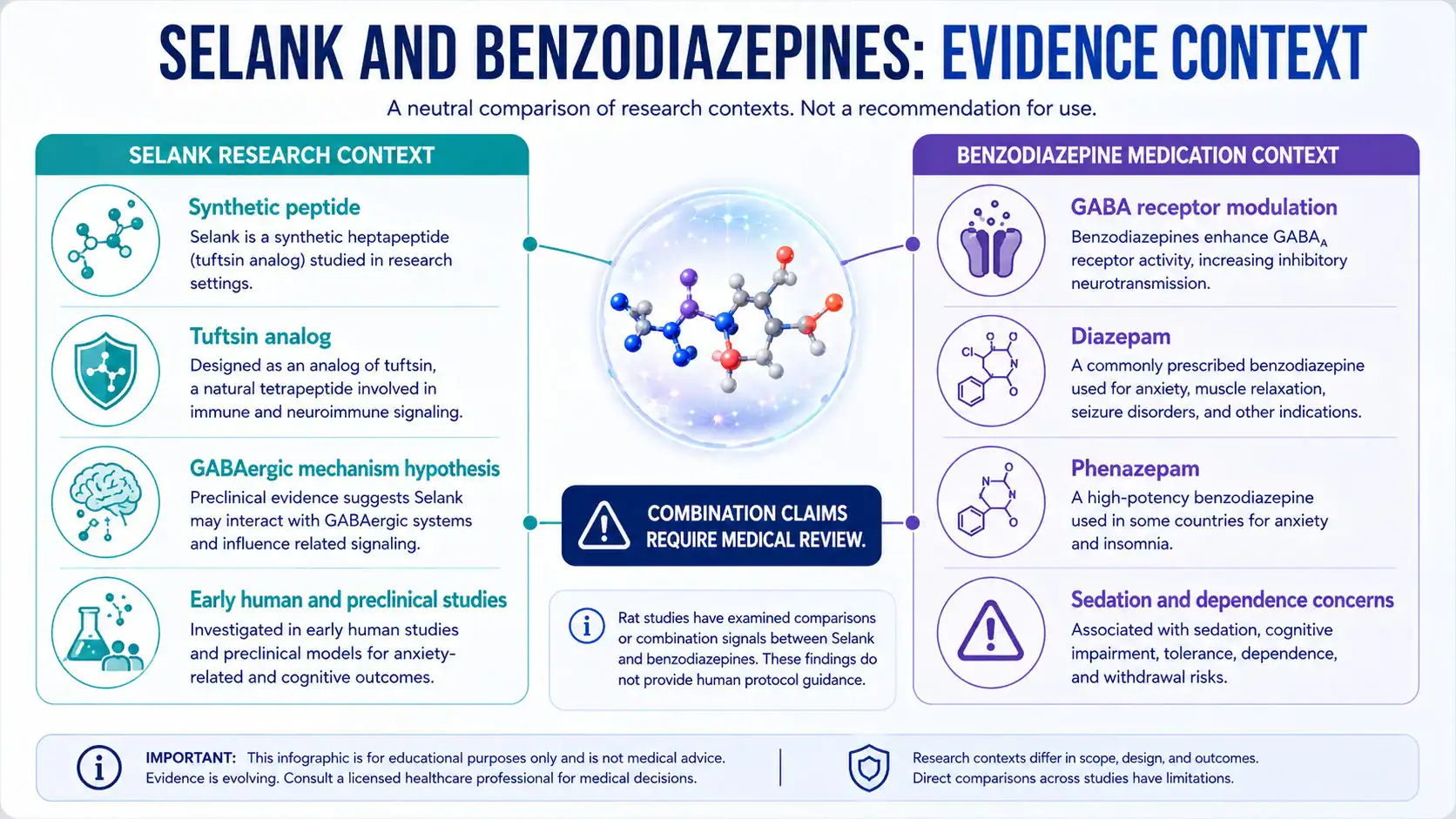
Selank is often compared with benzodiazepines because both areas of research involve anxiety and GABAergic signaling, but Selank should not be treated as a benzodiazepine substitute without stronger clinical and regulatory evidence 5, 16.
How Selank Compares With Benzodiazepine Medications
Benzodiazepines are CNS depressants that produce anxiolysis, drowsiness, and sleep by facilitating GABA activity at GABA receptors in the central nervous system [16]. Selank research proposes GABAergic modulation, but Selank is structurally a peptide analog of tuftsin, not a benzodiazepine drug [2], 3.
Reports That Selank Enhances the Effect of Diazepam
The phrase “Selank enhances the effect of diazepam” comes mainly from preclinical research, not from clinical prescribing guidance. In rats under unpredictable chronic mild stress, the Selank-diazepam combination produced the strongest reduction in anxiety-like measures in that experiment 7.
Why Combination Claims Require Interaction Caution
Selank in combination with benzodiazepines, sedatives, antipsychotics, or psychiatric medications should be treated as a high-risk medical topic because human drug-interaction evidence is limited. A cell study also examined Selank with olanzapine and GABA, showing that model-dependent gene-expression results cannot be turned into safe human combination advice 8.
How Do Semax and Selank Compare?
Semax and Selank are both Russian-developed regulatory peptides discussed in neuropeptide research, but they are not interchangeable and should be compared by structure, mechanism, evidence level, and regulatory status 2, 12.
Shared Russian Neuropeptide Research Context
Selank and Semax appear together in studies of regulatory peptides and enkephalin-degrading enzymes. A PubMed-indexed study reported dose-dependent effects of the synthetic heptapeptides Semax and Selank on enkephalin-degrading enzymes from human serum [12]. That shared mechanism lane does not mean they have the same clinical uses.
Differences in Proposed Mechanisms and Studied Uses
Selank is most often discussed as an anxiolytic and nootropic peptide related to tuftsin, while Semax is typically discussed in neuropeptide and ACTH-fragment contexts. Selank’s proposed mechanisms include GABAergic modulation, serotonin metabolism, dopamine-related gene expression, and endogenous opioid peptide metabolism [2], 9, [12].
What Dosage and Reconstitution Information Exists for Selank?
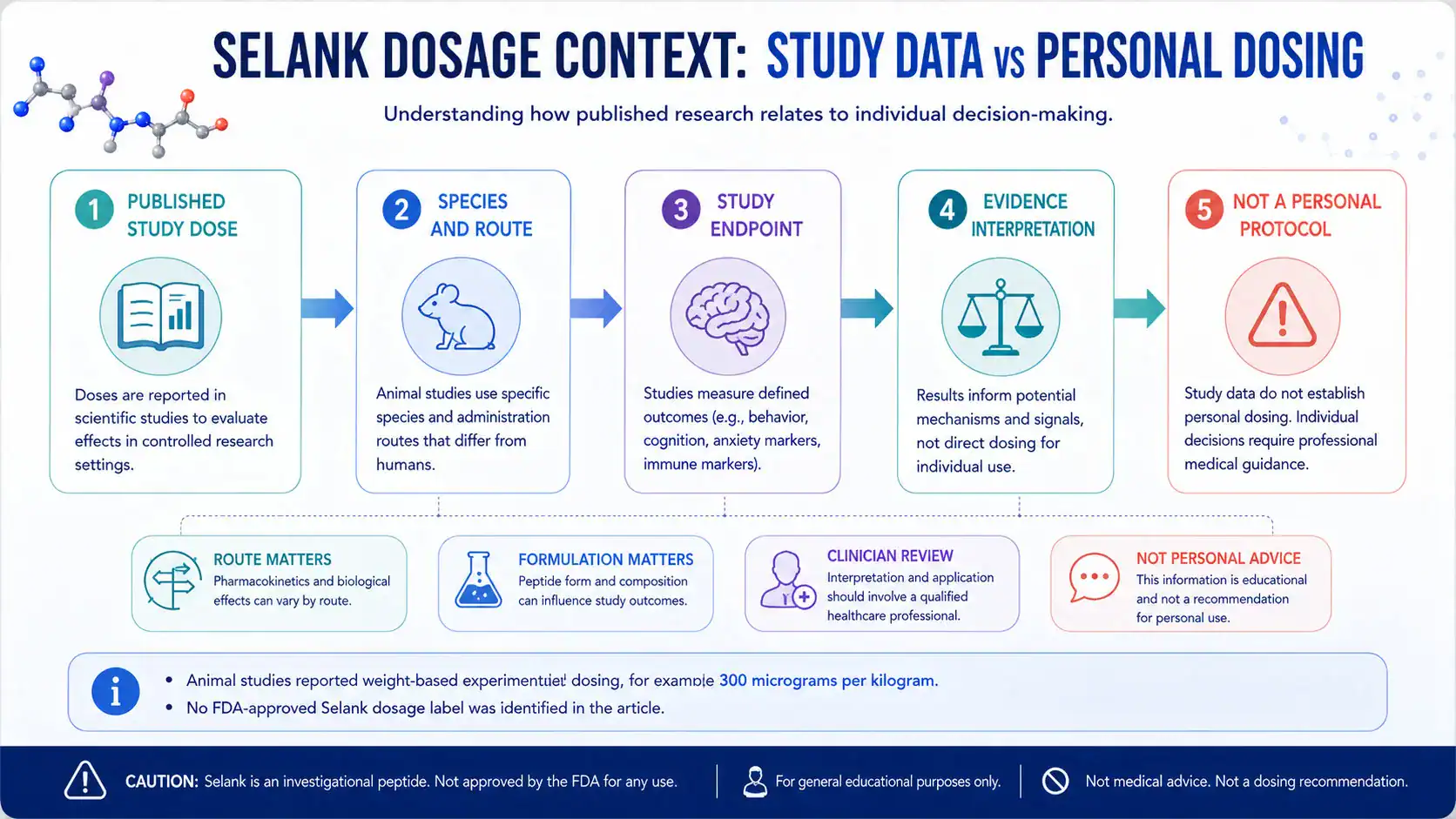
Selank dosage information is limited to published study context and non-U.S. clinical literature, with no FDA-approved Selank dosing label identified in the sources used for this article 4, 14.
What Dosage Has Been Used in Published Studies?
Published preclinical studies have used weight-based experimental dosing. For example, the 2016 rat gene-expression study administered Selank intranasally at 300 micrograms per kilogram and measured gene expression at 1 and 3 hours [2]. The 2017 diazepam interaction study also described a 300 micrograms per kilogram Selank dose in rats [7]. These are animal-study doses, not human dose recommendations.
Course of Selank and 14 Days of Selank Administration
Clinical and online discussions often mention a course of Selank or 14 days of Selank administration, but dose-course details should be taken only from the specific study being discussed. The human studies cited here report patient groups and outcomes but do not provide an FDA-style label with standardized indications, contraindications, dose adjustments, and adverse-reaction tables [4], [5].
Commonly Cited Protocol Ranges Versus Personal Dosing Advice
Commonly cited Selank protocol ranges online should not be treated as validated medical dosing. This article does not recommend a personal dose, cycle, stack, or frequency. For educational interpretation, the most reliable dose statements are those tied to a specific published study, species, route, duration, and endpoint [2], [7].
How Reconstitution and Concentration Are Explained Educationally
Reconstitution changes concentration, and concentration is generally understood as drug amount divided by final solution volume. Because Selank lacks an FDA-approved dosing label in the sources used here, this article does not provide preparation steps, sterile handling instructions, or a patient-use calculation. A clinician or pharmacist should handle medical dosing decisions and sterile preparation questions.
How Is Selank Administered in Medical Literature?
Selank administration is most often discussed as intranasal administration in the literature reviewed here, while injection and subcutaneous injection appear mainly in preclinical or non-label contexts 2, 9.
Intranasal Administration of Selank in Medical Literature
Intranasal administration of Selank appears in animal mechanism studies and is described as a route selected for peptide delivery to the central nervous system in that research context [2]. This is a route-of-administration observation from the literature, not a personal instruction to administer Selank intranasally.
Nasal Spray Delivery and Peptide Molecules in the CNS
Selank nasal spray discussions often focus on the idea that nasal delivery may help peptide molecules reach central nervous system targets. In the 2016 Frontiers study, the authors stated that intranasal administration had been shown to be optimal for CNS delivery of peptide molecules in their cited research context [2]. Human absorption, consistency, formulation quality, and safety still require separate evaluation.
Injection and Subcutaneous Injection in Study Contexts
Injection appears in Selank studies, especially animal studies, but injection-route findings do not establish a safe human self-administration protocol. A serotonin-metabolism rat study discussed Selank injection in animals pretreated with a serotonin synthesis inhibitor [9]. Any discussion of injection should remain route context, not step-by-step use guidance.
What Is Known About Side Effects, Safety, and Tolerability?
Selank safety data are incomplete: small human studies reported tolerability findings, but FDA has highlighted potential safety risks for compounded Selank acetate and insufficient human safety information 5, 14.
What Side Effects Have Been Reported?
The 2014 Selank and phenazepam comparison reported that Selank demonstrated anxiolytic and mild nootropic effects and had tolerability advantages in that study context [5]. However, the absence of prominent side effects in small studies does not mean Selank has no side effects, especially across different formulations, routes, populations, and long-term use.
Why “Without the Side Effects” Claims Need Context
Claims that Selank works “without the side effects” of benzodiazepines are too broad unless tied to a specific study. Benzodiazepines can cause drowsiness, sleep, CNS depression, tolerance, withdrawal, and dependence concerns depending on drug and context [16]. Selank may not share the same pharmacologic class, but its own long-term human safety profile remains inadequately characterized [14].
Sedation, Nasal Irritation, Allergy, and Immune Response Questions
Sedation, nasal irritation, allergic reaction, immunogenicity, and peptide-related impurities are safety questions that matter when a peptide is used outside approved labeling. FDA specifically states that compounded drugs containing Selank acetate may pose immunogenicity risks for certain routes because of aggregation and peptide-related impurities, and FDA lacks important safety information about Selank acetate administered to humans [14].
What Remains Unclear About Long-Term Safety?
Long-term safety remains unclear because the evidence base does not include large, modern, long-duration, regulator-reviewed trials. Key gaps include pregnancy and breastfeeding data, pediatric safety, geriatric safety, psychiatric comorbidity data, drug-interaction data, dose adjustment information, and adverse-event rates across standardized formulations [14], 15.
What Contraindications and Interactions Need Medical Review?
Selank contraindications and drug interactions are not well defined in approved-label form, so medical review is especially important for people using psychiatric medications, sedatives, benzodiazepines, antipsychotics, or other central nervous system agents 8, 14.
Who Should Discuss Selank With a Clinician First?
Anyone with an anxiety disorder, major depressive disorder, substance-use history, seizure disorder, pregnancy, breastfeeding, immune disease, allergy history, or current psychiatric medication use should discuss Selank-related decisions with a licensed clinician. This caution is based on incomplete safety information and the lack of standardized FDA-approved labeling for Selank [14], [15].
Possible Interactions With Sedatives and Psychiatric Medications
Possible interactions with sedatives and psychiatric medications are not well characterized in humans. Selank has been studied with diazepam in rats and with olanzapine or GABA in cell models, which raises mechanistic interaction questions but does not establish clinical safety for combining Selank with benzodiazepines, antipsychotics, sleep medications, alcohol, or other CNS depressants [7], [8].
Pregnancy, Breastfeeding, and Vulnerable Populations
Pregnancy, breastfeeding, pediatric use, older adults, and medically complex patients are high-uncertainty populations for Selank. FDA notes that it lacks important information about safety issues raised by Selank acetate administered to humans, which is directly relevant when considering populations that are usually underrepresented or excluded from early studies [14].
Regulatory Status, Evidence Limits, and Key Takeaways
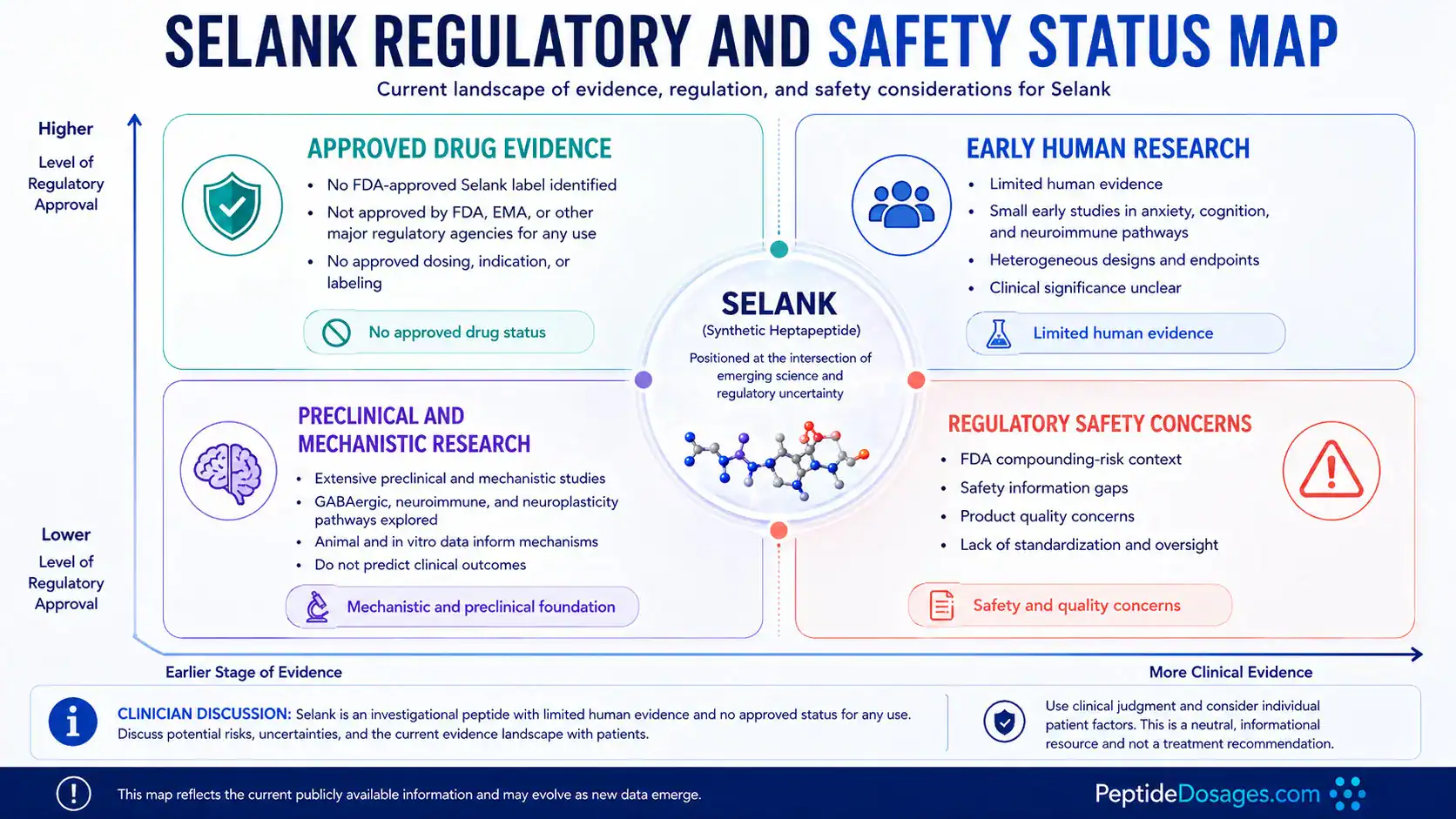
Selank should be interpreted as an evidence-limited, non-FDA-approved peptide in the U.S. context, with early human studies, preclinical mechanism research, and unresolved safety and compounding questions 14, 15.
Is Selank FDA-Approved?
Selank is not supported by an FDA-approved Selank prescribing label in the official FDA approval sources used for this article. FDA’s Orange Book describes the official list of approved drug products based on safety and effectiveness, while FDA’s compounding-risk page lists Selank acetate as a nominated bulk substance with potential significant safety risks [15], [14].
How Approval Status May Differ by Country
Approval status can differ by country, and Russian clinical literature discusses Selank as a peptide preparation studied or used in anxiety-related conditions [4], [5]. For readers outside Russia, country-specific regulator sources matter because clinical availability, product quality standards, labeling, and lawful medical use are jurisdiction-dependent.
Claim Strength Matrix for Selank Peptide Benefits
Selank’s strongest claim category is early human anxiolytic research, followed by preclinical mechanism research. Cognitive, neuroprotective, stress-resilience, immune, drug-withdrawal, and neurodegenerative-disease claims require more caution because many are based on animal, cell, mechanistic, or limited regional evidence [2], [7], 10, 11.
Practical claim grading:
- Anxiety-related symptoms: early human evidence, limited by study size and regional context [4], [5].
- GABAergic mechanism: preclinical and mechanistic evidence, biologically plausible but incomplete [2], [8].
- Diazepam interaction: preclinical signal, not a human combination protocol [7].
- Cognitive and memory effects: mostly preclinical or secondary human observations [10], [11].
- “No side effects” claims: unsupported as a broad statement; safety data remain incomplete [14].
Practical Questions to Discuss With a Clinician
Readers considering Selank-related medical decisions should discuss the following with a licensed healthcare professional:
- Whether anxiety symptoms need formal diagnosis and evidence-based treatment.
- Current medications, especially benzodiazepines, sedatives, antipsychotics, antidepressants, alcohol, or sleep medications.
- Pregnancy, breastfeeding, immune conditions, allergy history, and psychiatric comorbidities.
- Whether the claim being considered is supported by human evidence, preclinical evidence, or only online reports.
- Regulatory status, compounding risks, formulation quality, adverse-event monitoring, and approved alternatives.
The safest way to interpret Selank peptide is through evidence quality, regulatory status, safety data, and clinician-guided decision-making. The current evidence is interesting, but it is not strong enough to treat online protocols, combination claims, or broad benefit statements as established medical guidance.
REFERENCES
- National Center for Biotechnology Information. Selank, PubChem Compound Summary, CID 11765600. PubChem. Accessed 2026.
- Volkova A, Shadrina M, Kolomin T, et al. Selank Administration Affects the Expression of Some Genes Involved in GABAergic Neurotransmission. Frontiers in Pharmacology. 2016. DOI: 10.3389/fphar.2016.00031.
- Bashi T, et al. Novel therapeutic compound tuftsin–phosphorylcholine attenuates collagen-induced arthritis. Clinical and Experimental Immunology. 2016.
- Zozulia AA, Neznamov GG, Siuniakov TS, et al. Efficacy and possible mechanisms of action of a new peptide anxiolytic Selank in the therapy of generalized anxiety disorders and neurasthenia. Zhurnal Nevrologii i Psikhiatrii imeni S.S. Korsakova. 2008. PMID: 18454096.
- Medvedev VE, Tereshchenko ON, Israelian AIu, et al. A comparison of the anxiolytic effect and tolerability of Selank and phenazepam in the treatment of anxiety disorders. Zhurnal Nevrologii i Psikhiatrii imeni S.S. Korsakova. 2014. PMID: 25176261.
- Medvedev VE, et al. Optimization of the treatment of anxiety disorders with Selank. Zhurnal Nevrologii i Psikhiatrii imeni S.S. Korsakova. 2015. PMID: 26356395.
- Kasian A, Kolomin T, Andreeva L, et al. Peptide Selank Enhances the Effect of Diazepam in Reducing Anxiety in Unpredictable Chronic Mild Stress Conditions in Rats. Behavioural Neurology. 2017. DOI: 10.1155/2017/5091027.
- Filatova E, Shadrina M, Kolomin T, et al. GABA, Selank, and Olanzapine Affect the Expression of Genes Involved in GABAergic Neurotransmission in IMR-32 Cells. Frontiers in Pharmacology. 2017. DOI: 10.3389/fphar.2017.00089.
- Semenova TP, Kozlovskii II, Zakharova NM, Kozlovskaia MM. Comparison of the effects of Selank and tuftsin on the metabolism of serotonin in the brain of rats pretreated with PCPA. Eksperimental’naia i Klinicheskaia Farmakologiia. 2009. PMID: 19803361.
- Semenova TP, Kozlovskii II, Zakharova NM, Kozlovskaia MM. Experimental optimization of learning and memory processes by Selank. Eksperimental’naia i Klinicheskaia Farmakologiia. 2010. PMID: 20919548.
- Kolik LG, et al. Selank, Peptide Analogue of Tuftsin, Protects Against Age-Related Memory Disturbances Associated with Chronic Alcohol Intoxication. Bulletin of Experimental Biology and Medicine. 2019. PMID: 31625062.
- Kost NV, Sokolov OY, Gabaeva MV, et al. Semax and Selank inhibit the enkephalin-degrading enzymes from human serum. Bioorganicheskaia Khimiia. 2001. PMID: 11443939.
- Sokolov OY, Kost NV, Andreeva LA, et al. Effects of Selank on behavioral reactions and activities of enkephalin-degrading enzymes. Bulletin of Experimental Biology and Medicine. 2002. PMID: 12432865.
- U.S. Food and Drug Administration. Certain Bulk Drug Substances for Use in Compounding that May Present Significant Safety Risks. FDA. Content current as of April 22, 2026.
- U.S. Food and Drug Administration. Approved Drug Products with Therapeutic Equivalence Evaluations, Orange Book. FDA. Content current as of June 12, 2026.
- European Union Drugs Agency. Benzodiazepines drug profile. EUDA. Accessed 2026.
- Bamalan OA, et al. Physiology, Serotonin. StatPearls, NCBI Bookshelf. Updated 2023. :::
FAQs
What is Selank peptide?
Selank peptide is a synthetic heptapeptide related to tuftsin, a naturally occurring immune peptide. It is usually discussed as a nootropic anxiolytic peptide because published research has examined anxiety-related outcomes, cognitive effects, and possible neuroimmune mechanisms [1], [3]. Selank is not the same as an FDA-approved peptide drug in the U.S. context, so claims about clinical use should be interpreted through evidence quality and regulatory status [14], [15].
What is Selank peptide used for?
Selank peptide has been studied mainly for anxiety-related disorders, stress-related behavior, and possible cognitive or nootropic effects. Early human studies examined Selank in generalized anxiety disorder, neurasthenia, phobic-anxiety disorders, and somatoform disorders, but the evidence remains limited and regionally concentrated [4], [5]. Online claims about broader uses, including neuroprotection or cognitive enhancement, usually rely on preclinical or mechanistic evidence rather than large human trials.
How does Selank work in the brain?
Selank appears to work through several proposed brain and nervous system mechanisms, not one fully confirmed clinical target. Published studies have examined GABAergic neurotransmission, GABAA receptor-related signaling, serotonin metabolism, dopamine-related pathways, and enkephalin-degrading enzyme activity [2], [9], [12]. These mechanisms may help explain research interest in Selank, but mechanism of action data do not prove that Selank produces reliable therapeutic outcomes in humans.
Are there any side effects of Selank?
Side effects of Selank are not fully characterized across all products, routes, doses, or long-term use. Small human studies reported tolerability findings, but FDA has noted safety concerns for compounded Selank acetate, including immunogenicity risks and limited human safety information [5], [14]. Possible adverse events, allergic reactions, nasal irritation, medication interactions, and formulation-quality concerns should be discussed with a licensed clinician rather than assumed to be absent.
How is Selank administered and what dosage has been studied?
Selank administration in the literature is often described as intranasal, including nasal spray research contexts, while injection appears mainly in animal or non-label study settings [2], [9]. Published rat studies used weight-based experimental doses such as 300 micrograms per kilogram, but animal-study dosing is not a personal dosage protocol [2], [7]. There is no FDA-approved Selank dosage label identified in the article sources [14], [15].
Is Selank legal in the U.S. or FDA-approved?
Selank is not FDA-approved as a drug in the U.S. based on the FDA approval sources reviewed for the article. FDA lists Selank acetate among nominated compounding bulk substances that may present significant safety risks, which is different from an approved medication with reviewed labeling, indications, dosing, and safety data [14], [15]. U.S. legal status can depend on product type, intended use, compounding context, and regulatory enforcement.
Contributing Authors
The following authors are recognized for published research that helped shape the scientific and clinical context discussed in this article.
Maria Shadrina
Author profile: Loop Author Profile
Maria Shadrina is a published researcher whose work is relevant to the mechanism-of-action discussion around Selank peptide, especially the peptide’s relationship to GABAergic neurotransmission and gene-expression models. Her publications help frame Selank as a neuropeptide with evidence that is strongest in mechanistic and preclinical contexts, rather than as an established clinical therapy. This work is useful for interpreting how animal and cell-model findings may inform, but not replace, human clinical evidence.
Selected publications:
- Selank Administration Affects the Expression of Some Genes Involved in GABAergic Neurotransmission — Frontiers in Pharmacology, 2016. DOI: 10.3389/fphar.2016.00031.
- GABA, Selank, and Olanzapine Affect the Expression of Genes Involved in GABAergic Neurotransmission in IMR-32 Cells — Frontiers in Pharmacology, 2017. DOI: 10.3389/fphar.2017.00089.
Petr A. Slominsky
Author profile: Loop Author Profile
Petr A. Slominsky is a published author in Selank-related pharmacology and molecular research. His work is relevant to the article’s discussion of peptide research, GABA-related signaling, neurotransmission, and the limits of translating preclinical mechanisms into therapeutic conclusions. These publications provide useful context for evaluating Selank’s proposed central nervous system activity while keeping clinical claims separated from experimental findings.
Selected publications:
- Selank Administration Affects the Expression of Some Genes Involved in GABAergic Neurotransmission — Frontiers in Pharmacology, 2016. DOI: 10.3389/fphar.2016.00031.
- GABA, Selank, and Olanzapine Affect the Expression of Genes Involved in GABAergic Neurotransmission in IMR-32 Cells — Frontiers in Pharmacology, 2017. DOI: 10.3389/fphar.2017.00089.
PUBLISHING FIELDS
- SEO Title: Selank Peptide Guide: Uses, Safety, Dosage, Research
- Meta Description: Selank peptide guide covering what it is, proposed mechanisms, early human evidence, side effects, dosage context, and U.S. regulatory status.
- Suggested URL Slug:
/selank-peptide - Page Type: Therapeutic Peptide Educational Article
- ArticleFormat: Therapeutic Peptide Educational Guide
- TargetPeptide: Selank
- MainKeyword: selank peptide
- CanonicalKeyword: Selank peptide
- ExactKeywordVariant: Same as CanonicalKeyword.
- AliasTerms: Selank, heptapeptide Selank, synthetic peptide Selank, peptide Selank, nootropic anxiolytic peptide, synthetic analogue of tuftsin, immunomodulatory peptide tuftsin
- PeptideCategory: Neuropeptide / Investigational Peptide
- Primary Search Intent: Therapeutic informational
- Secondary Keywords: Selank benefits, Selank uses, Selank side effects, Selank dosage, Selank nasal spray, Selank mechanism of action, Selank and GABA, Selank and benzodiazepines, Selank clinical studies, Selank FDA approval, Selank legal status, Semax and Selank
- Evidence Levels Covered: Early human, preclinical, mechanistic, regulatory safety context, unsupported online claims
- Excerpt: Selank is a synthetic heptapeptide and tuftsin analog studied for anxiety-related disorders, cognitive effects, GABAergic mechanisms, and neuroimmune signaling. This educational guide reviews early human studies, preclinical evidence, side effects, dosage context, administration routes, and U.S. regulatory status.
- Suggested Tags: Selank, neuropeptides, anxiolytic peptides, peptide research, GABA, clinical evidence, peptide safety, FDA status
- Featured Image Concept: Clinical evidence map showing Selank identity, proposed nervous system mechanisms, early human evidence, preclinical findings, safety uncertainty, and regulatory status.
- Featured Image Alt Text: Evidence map for Selank peptide research, mechanism, safety, dosage context, and regulatory status.
- Suggested Schema: Article schema only. Do not add FAQ schema here because FAQs are generated separately.
INFOGRAPHIC BRIEFS
Infographic Brief 1
- Placement: How Does Selank Peptide Work?
- Title: Proposed Mechanisms of Selank Peptide
- Purpose: Explain the main mechanism pathways discussed in the article without implying confirmed clinical benefit.
- Visual Format: Mechanism of action diagram
- Key Labels: Selank, tuftsin analog, GABAergic signaling, GABAA receptor context, serotonin metabolism, dopamine pathways, enkephalin-degrading enzymes, gene expression
- Suggested Layout: Center node labeled “Selank” with non-directional pathway branches to GABAergic signaling, serotonin metabolism, dopamine-related pathways, endogenous opioid peptide metabolism, and gene-expression models. Add a small caution footer: “Mechanistic evidence does not prove clinical benefit.”
- Data or Concepts to Include: Selank is a synthetic heptapeptide related to tuftsin; studies discussed GABAergic neurotransmission, serotonin metabolism, dopamine-related pathways, and enkephalin-degrading enzyme activity; mechanism data are mainly preclinical or mechanistic.
- Visual Style: Clean, clinical, editorial, soft scientific color palette, simple icons for brain signaling and gene expression, no decorative clutter.
- Compliance Restrictions: Do not show treatment outcomes, before-and-after imagery, product vials, syringes, self-administration, or guaranteed benefits.
- Alt Text: Mechanism diagram showing proposed Selank peptide pathways involving GABAergic signaling, serotonin metabolism, dopamine pathways, and gene expression.
- Full AI Image Prompt: Create a clean clinical infographic titled “Proposed Mechanisms of Selank Peptide.” Use a central rounded node labeled “Selank” with branches to “Tuftsin analog,” “GABAergic signaling,” “GABAA receptor context,” “Serotonin metabolism,” “Dopamine pathways,” “Enkephalin-degrading enzymes,” and “Gene-expression models.” Add a subtle footer label reading “Mechanistic evidence does not prove clinical benefit.” Use an editorial medical style with simple line icons, a light background, clear typography, and no product imagery, no syringes, no dosing steps, and no outcome promises.
Infographic Brief 2
- Placement: What Do Clinical Studies Say About Selank?
- Title: Selank Evidence Landscape
- Purpose: Help readers distinguish early human evidence from preclinical, mechanistic, and regulatory safety evidence.
- Visual Format: Evidence ladder
- Key Labels: Early human evidence, anxiety-related disorders, preclinical studies, mechanism research, chronic mild stress model, FDA compounding-risk context, unsupported online claims
- Suggested Layout: Vertical ladder or tiered pyramid from “Regulatory status” and “Early human studies” down to “Preclinical models,” “Mechanistic studies,” and “Unsupported online claims.” Each tier includes a short caution label.
- Data or Concepts to Include: Early human studies examined generalized anxiety disorder, neurasthenia, phobic-anxiety disorders, and somatoform disorders; preclinical studies included rat models and chronic mild stress conditions; FDA identified safety concerns and information gaps for compounded Selank acetate.
- Visual Style: Clinical evidence-map style, neutral colors, strong hierarchy, easy-to-scan labels.
- Compliance Restrictions: Do not imply Selank is FDA-approved, proven effective, safer than benzodiazepines, or appropriate for personal use.
- Alt Text: Evidence ladder for Selank peptide showing early human studies, preclinical research, mechanism data, regulatory safety context, and unsupported claims.
- Full AI Image Prompt: Design a clinical evidence ladder infographic titled “Selank Evidence Landscape.” Show five tiers: “Early human evidence: anxiety-related disorders,” “Preclinical research: rat and chronic mild stress models,” “Mechanistic studies: neurotransmission and gene expression,” “Regulatory safety context: compounded Selank acetate concerns,” and “Unsupported online claims: require caution.” Use concise labels, no detailed citations, no treatment claims, no product imagery, no injection visuals, and no guarantee language. Style should be clean, editorial, and medically neutral.
Infographic Brief 3
- Placement: How Does Selank Relate to Benzodiazepines, Diazepam, and Phenazepam?
- Title: Selank and Benzodiazepines: Evidence Context
- Purpose: Clarify that Selank is structurally a peptide and not a benzodiazepine, while showing why the article discusses diazepam, phenazepam, and GABA-related research.
- Visual Format: Comparison chart
- Key Labels: Selank, benzodiazepines, GABA activity, diazepam, phenazepam, preclinical combination signal, interaction caution, not a substitute claim
- Suggested Layout: Two-column comparison: “Selank research context” and “Benzodiazepine medication context,” with a center caution band labeled “Combination claims require medical review.”
- Data or Concepts to Include: Benzodiazepines act through GABA receptor modulation; Selank is a peptide analog of tuftsin; studies compared Selank with phenazepam and examined Selank plus diazepam in rats; combination findings are not human protocol guidance.
- Visual Style: Professional pharmacology comparison, balanced and neutral, no winner/loser framing.
- Compliance Restrictions: Do not imply Selank is a safer alternative to benzodiazepines, a replacement for medication, or a recommended combination with diazepam or phenazepam.
- Alt Text: Comparison chart explaining Selank peptide research context alongside benzodiazepine, diazepam, phenazepam, and GABA-related evidence.
- Full AI Image Prompt: Create a neutral medical comparison chart titled “Selank and Benzodiazepines: Evidence Context.” Use two columns: left column “Selank research context” with labels “Synthetic peptide,” “Tuftsin analog,” “GABAergic mechanism hypothesis,” and “Early human and preclinical studies”; right column “Benzodiazepine medication context” with labels “GABA receptor modulation,” “Diazepam,” “Phenazepam,” and “Sedation and dependence concerns.” Add a centered caution bar reading “Combination claims require medical review.” Avoid promotional language, replacement claims, self-use advice, medication-switching imagery, and product visuals.
Infographic Brief 4
- Placement: What Dosage and Reconstitution Information Exists for Selank?
- Title: Selank Dosage Context: Study Data vs Personal Dosing
- Purpose: Show that dosage information in the article is limited to published study context and not personal medical guidance.
- Visual Format: Dosage context framework
- Key Labels: Published study context, animal-study dosing, no FDA-approved Selank label, route matters, formulation matters, clinician review, not personal advice
- Suggested Layout: Flow diagram moving from “Published study dose” to “Species and route” to “Study endpoint” to “Evidence interpretation,” ending in a caution box: “Not a personal protocol.”
- Data or Concepts to Include: Rat studies used weight-based experimental dosing such as 300 micrograms per kilogram; the article identified no FDA-approved Selank dosage label; route and formulation affect interpretation.
- Visual Style: Clean educational framework with simple boxes and arrows; minimal numeric content.
- Compliance Restrictions: Do not include step-by-step reconstitution, syringe measurement visuals, vial preparation, self-administration instructions, or personal dose recommendations.
- Alt Text: Dosage context framework for Selank peptide showing published study dosing, animal-study context, route considerations, and no personal protocol guidance.
- Full AI Image Prompt: Create an educational medical infographic titled “Selank Dosage Context: Study Data vs Personal Dosing.” Use a left-to-right flow: “Published study dose” → “Species and route” → “Study endpoint” → “Evidence interpretation” → “Not a personal protocol.” Include a small note that animal studies reported weight-based experimental dosing and that no FDA-approved Selank dosage label was identified in the article. Do not show syringes, vials, injection steps, reconstitution steps, measurement markings, or personal-use instructions. Use a clean clinical style and neutral colors.
Infographic Brief 5
- Placement: Regulatory Status, Evidence Limits, and Key Takeaways
- Title: Selank Regulatory and Safety Status Map
- Purpose: Help readers understand the difference between FDA-approved drugs, compounded peptide concerns, early clinical literature, and unsupported claims.
- Visual Format: Regulatory status map
- Key Labels: Not FDA-approved in article sources, FDA compounding-risk context, early human studies, preclinical research, safety information gaps, product quality concerns, clinician discussion
- Suggested Layout: Four quadrant map: “Approved drug evidence,” “Early human research,” “Preclinical/mechanistic research,” and “Regulatory safety concerns.” Highlight Selank under early human/preclinical/regulatory concern context, not approved-drug status.
- Data or Concepts to Include: FDA Orange Book context; FDA listing of Selank acetate among compounding substances with potential safety risks; early human studies exist but are limited; long-term safety remains unclear.
- Visual Style: Editorial regulatory infographic, restrained colors, no alarmist visuals.
- Compliance Restrictions: Do not include buying guidance, sourcing advice, legal workaround language, product branding, or claims that unapproved products are safe or effective.
- Alt Text: Regulatory status map for Selank peptide showing FDA approval context, compounded peptide safety concerns, early human evidence, and preclinical research.
- Full AI Image Prompt: Design a clean regulatory status map titled “Selank Regulatory and Safety Status Map.” Use four labeled quadrants: “Approved drug evidence,” “Early human research,” “Preclinical and mechanistic research,” and “Regulatory safety concerns.” Place Selank near early human research, preclinical research, and regulatory safety concerns, not in the approved-drug quadrant. Add short labels: “No FDA-approved Selank label identified,” “FDA compounding-risk context,” “Limited human evidence,” and “Safety information gaps.” Use a professional clinical editorial style, no product imagery, no vendor language, no legal workaround language, and no claims of safety or effectiveness.