
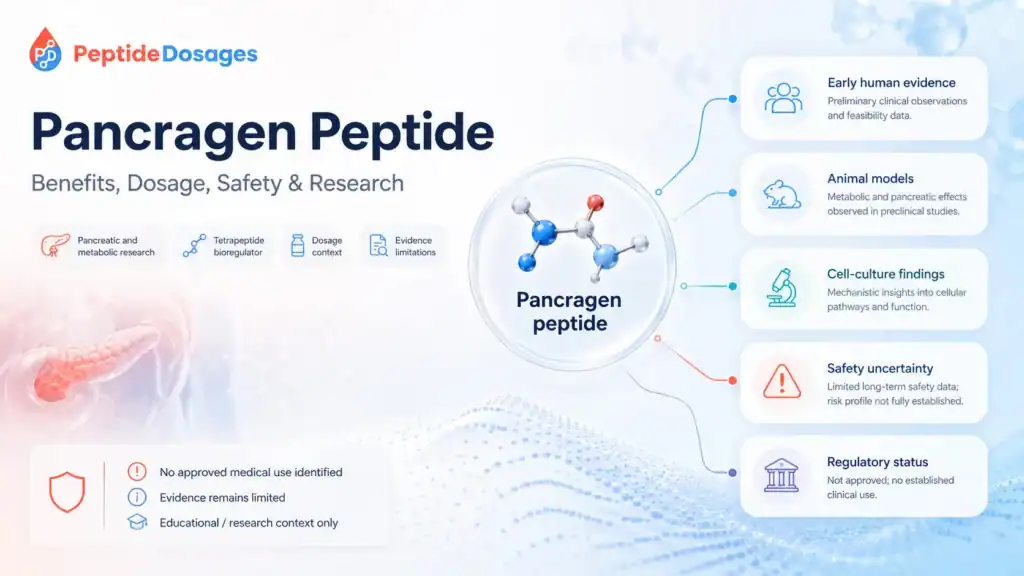
Pancragen peptide is a synthetic tetrapeptide bioregulator discussed in pancreatic, metabolic, and glucose-regulation research, especially in relation to aging, insulin resistance, and pancreatic cell function. This educational article reviews Pancragen research, potential benefits, dosage context from published studies, safety concerns, and regulatory status without giving personalized medical advice. Published evidence remains limited, with the strongest Pancragen-specific material coming from small human research, animal models, and pancreatic cell-culture studies 1, 2, 3.
- Pancragen is described in published research as a short tetrapeptide, including the sequence Lys-Glu-Asp-Trp or Lys-Glu-Asp-Trp-NH2, studied in pancreatic and metabolic models 3, 4.
- Pancragen peptide is mainly discussed for pancreatic function, glucose metabolism, insulin resistance, and age-related endocrine function, but it is not an established diabetes treatment [1], 5.
- The proposed mechanism involves pancreatic cell differentiation markers, gene-expression effects, and metabolic regulation in laboratory models [2], 6.
- Human evidence is small and preliminary; animal and cell-culture studies cannot prove clinical benefit in people [1], [2], [3].
- Side-effect data are sparse, so safety should be interpreted cautiously, especially for people using insulin, sulfonylureas, or other glucose-lowering medications.
- No FDA-approved Pancragen drug label or approved dosage was identified from the regulatory sources used for this review; unapproved drugs and compounded products are not reviewed by FDA for safety, effectiveness, or quality before marketing 7, 8, 9.
Fast Answer
Pancragen peptide is a synthetic tetrapeptide bioregulator studied for pancreatic cell function, glucose metabolism, insulin resistance, and age-related endocrine changes. Published Pancragen evidence includes a small older human study, rat diabetes models, rhesus monkey research, and pancreatic cell-culture experiments, but it does not establish Pancragen as an approved diabetes therapy [1], [2], [3], [5]. Safety, dosing, and administration remain evidence-limited, and regulatory status matters because unapproved peptides are not evaluated like approved drugs [7], [8].
Evidence-basis note: This page relies on peer-reviewed studies, public regulatory information, clinical-trial registry context, and official health sources. Claims without reliable clinical support are identified as preliminary, preclinical, unsupported, or uncertain.
What Is the Pancragen Peptide?
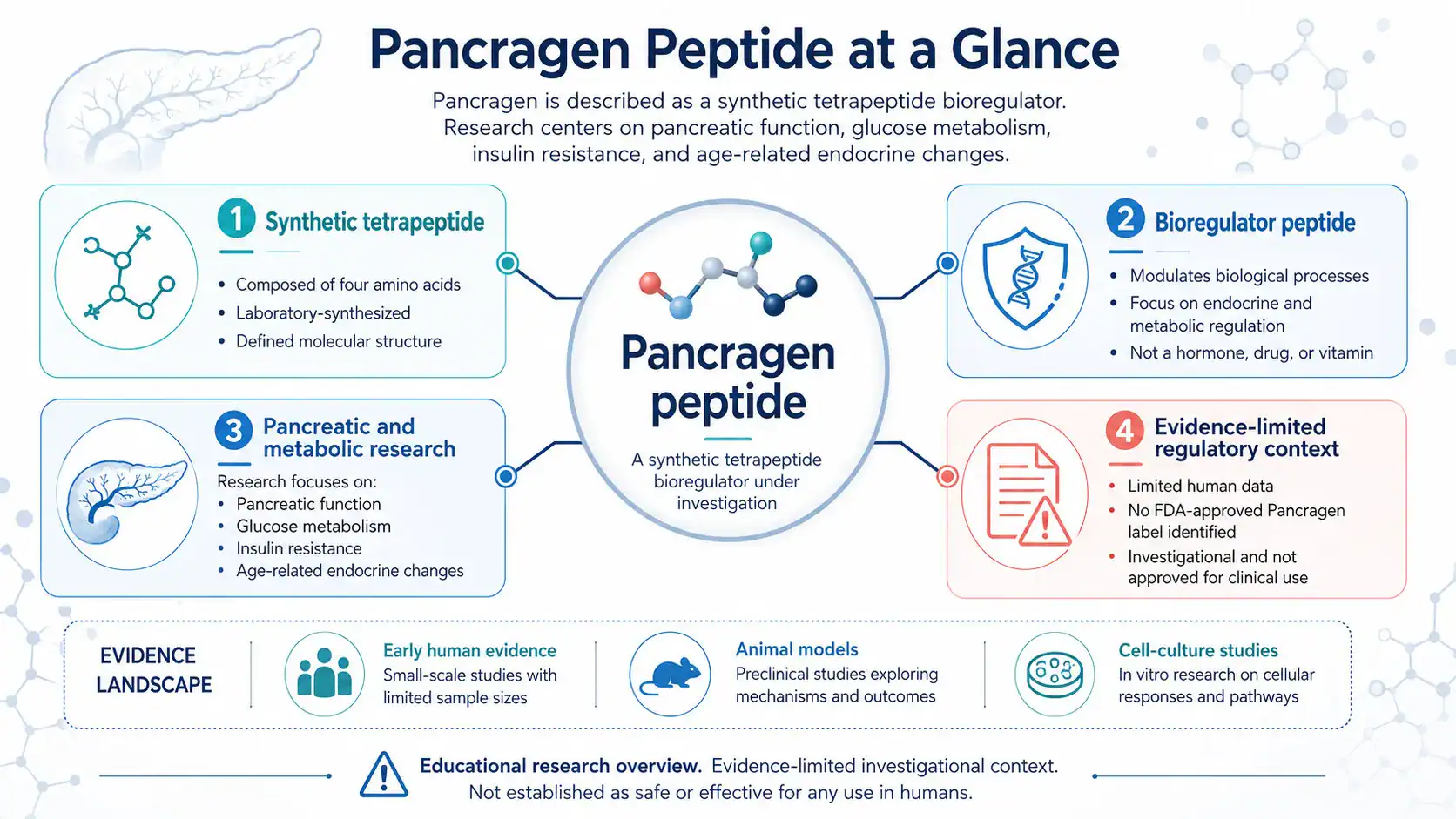
Pancragen peptide is a short synthetic peptide bioregulator studied primarily in pancreatic and metabolic research rather than as an approved mainstream drug. Published papers describe Pancragen as a tetrapeptide connected to pancreatic cell differentiation, glucose metabolism, insulin resistance, and age-related endocrine function [1], [2], [5].
Pancragen as a Synthetic Tetrapeptide Bioregulator
Pancragen is a synthetic tetrapeptide described in the literature as Lys-Glu-Asp-Trp or Lys-Glu-Asp-Trp-NH2, depending on the study and formulation context [3], [4]. A tetrapeptide contains four amino acids, and the “bioregulator” label reflects a research tradition that studies short peptides for tissue-specific signaling and gene-expression effects 6, 10.
Why Pancragen Is Linked to Pancreatic Health Research
Pancragen is linked to pancreatic health research because several studies examined pancreatic cells, pancreatic tissue models, glucose tolerance, insulin, and C-peptide outcomes [1], [2], [5]. Those topics are clinically relevant because the pancreas helps regulate blood glucose through endocrine cells that produce insulin and glucagon 11.
Pancragen Peptide Versus Approved Peptide Drugs
Pancragen peptide should be separated from approved peptide drugs because published Pancragen studies do not amount to an FDA-approved indication, label, or standardized prescribing information. FDA drug approval requires evidence that a product is safe and effective for a specific use, and FDA-approved drug products are evaluated through regulatory review rather than simply because they are discussed in scientific literature [7], 12.
How Pancragen Is Thought to Work
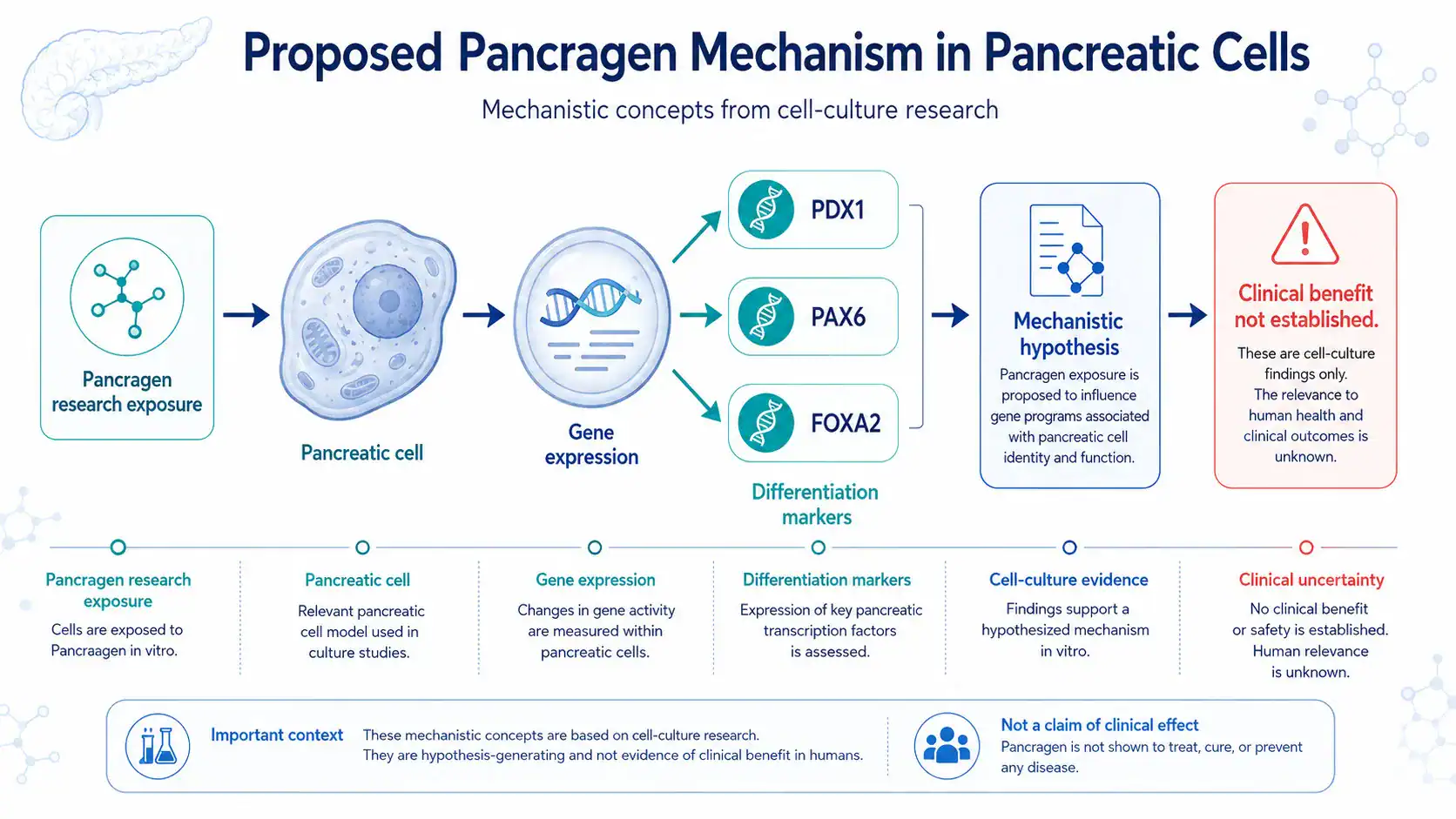
Pancragen is thought to work through pancreatic cell signaling, gene-expression activity, and differentiation-related pathways, but the mechanism remains mostly preclinical. Laboratory findings can generate plausible hypotheses, yet they do not prove that Pancragen produces reliable clinical outcomes in people [2], [6].
Proposed Effects on Pancreatic Cell Function
Pancragen research has examined pancreatic cell function through differentiation markers in pancreatic cell cultures. One study reported that Pancragen stimulated expression of markers linked to acinar and islet-cell differentiation, including Pdx1, Ptf1a, Pax6, Pax4, Foxa2, and NKx2.2, in young and aged pancreatic cell cultures [2].
Gene Expression and Metabolic Regulation
Gene-expression research is central to Pancragen’s proposed mechanism. Short-peptide studies have reported tissue-specific stimulation of differentiation-related factors in aged cell cultures, with Pancragen studied in pancreatic cells and other peptides studied in different tissue models [6]. This supports a mechanistic hypothesis, not a confirmed therapeutic effect.
Why Mechanism Does Not Prove Clinical Benefit
A mechanism can be biologically interesting without being clinically proven. Pancragen’s reported effects on transcription factors, pancreatic markers, glucose, or insulin resistance need confirmation in larger, controlled human studies before they can be interpreted as reliable treatment effects [1], [2].
Pancreatic Function and Metabolic Health Context
Pancragen’s research context centers on the pancreas because pancreatic endocrine cells are directly involved in blood sugar regulation. Understanding insulin, glucagon, beta cells, alpha cells, and glucose tolerance helps clarify why Pancragen is discussed in metabolic health research [11], 13.
The Endocrine Function of the Pancreas
The endocrine function of the pancreas includes hormone secretion from pancreatic islets, especially insulin and glucagon. Insulin helps lower blood glucose, while glucagon helps raise blood glucose when needed [11].
Insulin, Glucagon, and Blood Sugar Regulation
Insulin resistance occurs when tissues do not respond normally to insulin, which can contribute to higher blood glucose and type 2 diabetes risk 14. Type 2 diabetes develops when insulin resistance combines with inadequate insulin production from the pancreas [13].
Beta Cells, Alpha Cells, and Pancreatic Islets
Beta cells, alpha cells, and other islet cells coordinate blood sugar regulation. NIH describes beta cells as insulin-producing cells and alpha cells as glucagon-producing cells, which explains why pancreatic islet research often measures insulin, glucagon, C-peptide, and glucose tolerance [11].
What Is Pancragen Peptide Used For in Research?
Pancragen peptide is used in research to explore pancreatic function, glucose metabolism, insulin resistance, age-related metabolic function, and diabetes-related models. These are studied uses, not approved medical uses or personal treatment recommendations [1], [3], [5].
Pancreatic Function and Pancreatic Tissue Models
Pancragen has been studied in pancreatic cell cultures and pancreatic endocrine-function models. In vitro work has focused on pancreatic differentiation markers, while primate research has examined glucose, insulin, and C-peptide in old rhesus monkeys [2], [5].
Glucose Metabolism and Insulin Resistance Research
A small human study in older adults reported that Pancragen was associated with lower fasting glucose, lower glucose during a standard glucose tolerance test, lower insulin, and a reduced insulin resistance index in older patients with type 2 diabetes [1]. This finding is early human evidence, not proof of general efficacy.
Age-Related Metabolic Function Questions
Pancragen appears in aging-related research because some studies evaluated old animals or elderly humans. A primate study examined Pancragen in old female rhesus monkeys, and a human study examined older adults with and without type 2 diabetes [1], [5].
Diabetes and Type 2 Diabetes Research Context
Pancragen is discussed in diabetes research because insulin resistance, glucose tolerance, beta-cell function, and pancreatic endocrine function are central to type 2 diabetes [13], [14]. However, Pancragen should not replace established diabetes evaluation or evidence-based care.
Potential Benefits of Pancragen Peptide
Potential benefits of Pancragen peptide are best understood by evidence level: preliminary human findings for glucose and insulin resistance, animal findings for glucose and pancreatic endocrine markers, and cell-culture findings for differentiation markers. None of these categories proves broad clinical benefit [1], [2], [3].
Supporting Pancreatic Function: What the Claim Means
“Supporting pancreatic function” is a broad claim that can mean many things, including effects on endocrine hormones, pancreatic cell markers, glucose tolerance, or insulin resistance. For Pancragen, the strongest direct evidence is not an approved-label claim but a mix of small human, animal, and cell-culture research [1], [2], [5].
Metabolic Health and Blood Sugar Level Outcomes
Pancragen has been studied for blood sugar level outcomes in a small human type 2 diabetes study and in animal models. The human study reported lower fasting glucose and improved glucose tolerance measures, while rat research reported a hypoglycemic effect in streptozotocin-induced diabetes [1], [3].
Insulin Production, C-Peptide, and Glucose Markers
Insulin and C-peptide are often interpreted together because C-peptide is released when the body produces insulin. In old rhesus monkey research, Pancragen was studied alongside glucose, insulin, and C-peptide outcomes during glucose testing [5], 15.
Benefits of Pancragen Versus Evidence Strength
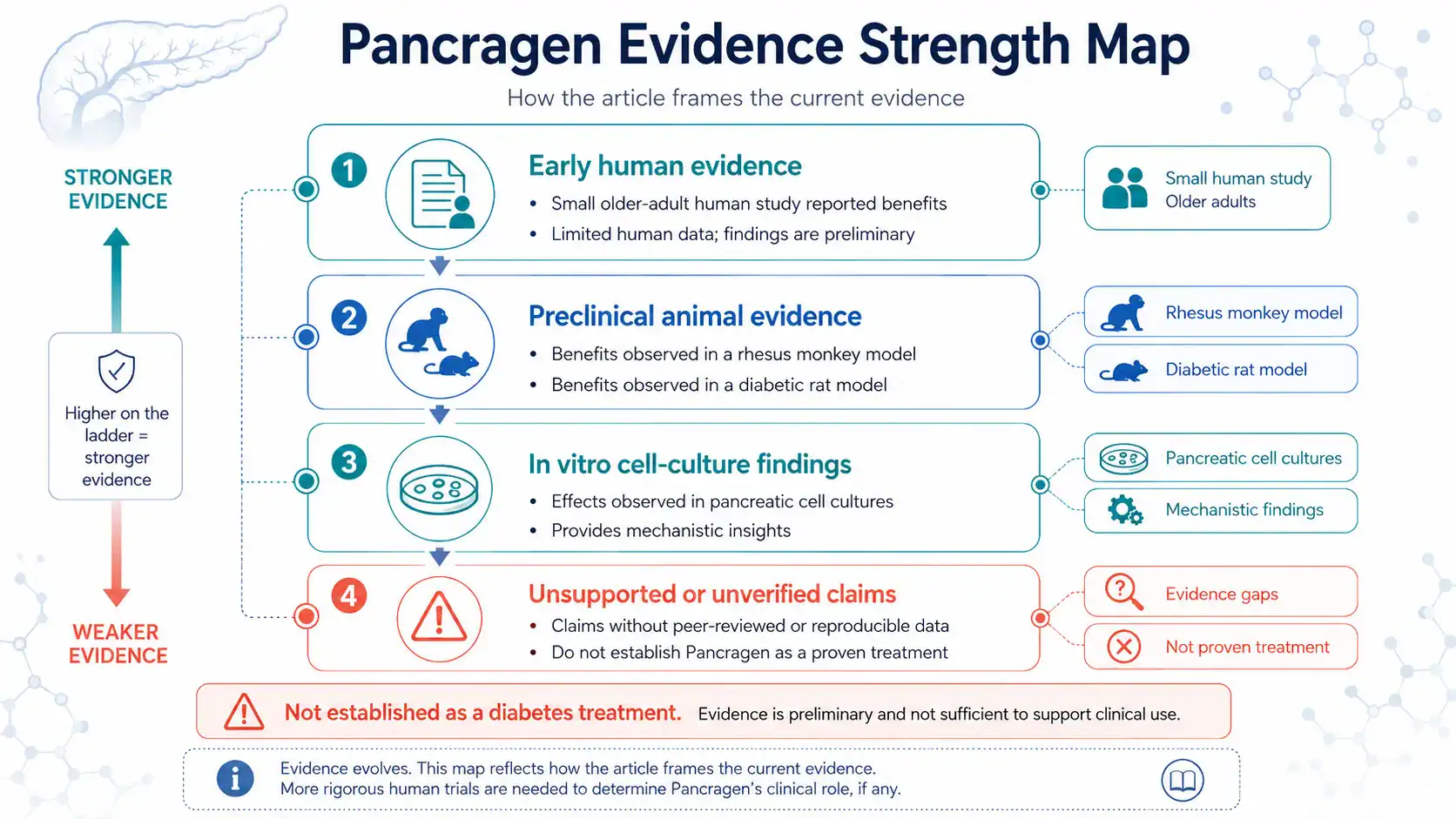
The benefits of Pancragen are not equally supported across outcomes. Glucose and insulin-resistance claims have limited human evidence, pancreatic differentiation claims are cell-culture evidence, and anti-aging or broad metabolic claims remain insufficiently established for clinical conclusions.
| Evidence Area | What Has Been Studied | Evidence Level | What It Can and Cannot Show |
|---|---|---|---|
| Older adults with type 2 diabetes | Fasting glucose, glucose tolerance, insulin, and insulin resistance index in 33 older patients with type 2 diabetes [1] | Early human evidence | Suggests possible metabolic effects in a small study; cannot establish broad diabetes treatment efficacy |
| Old rhesus monkeys | Glucose, insulin, C-peptide, and glucose tolerance after Pancragen exposure [5], [15] | Preclinical primate evidence | Helps explore endocrine-function hypotheses; cannot replace human clinical trials |
| Streptozotocin diabetic rats | Blood glucose, capillary permeability, and endothelial adhesion in Wistar rats [3] | Preclinical animal evidence | Shows diabetes-model effects in rats; translation to humans is uncertain |
| Pancreatic cell cultures | Differentiation markers including Pdx1, Pax6, Pax4, Foxa2, and NKx2.2 [2] | In vitro evidence | Supports mechanism hypotheses; cannot prove symptom or disease outcomes |
| Regulatory status | FDA approval requires product-specific review of safety, effectiveness, and labeling [7], [12] | Regulatory context | Clarifies that research discussion is not the same as approval |
Effects of Pancragen in Preclinical Research
Pancragen’s preclinical research includes cell-culture studies, rat diabetes models, and old rhesus monkey endocrine-function studies. These models can show biological activity under controlled conditions, but they cannot establish safety, dosing, or effectiveness for general human use [2], [3], [5].
Pancreatic Cell Cultures and In Vitro Findings
Pancreatic cell-culture studies reported that Pancragen influenced expression of differentiation-related markers during cellular aging [2], [6]. These findings are useful for mechanism planning because they connect Pancragen to pancreatic cell biology.
Rats With Experimental Diabetes Mellitus
In Wistar rats with streptozotocin-induced diabetes mellitus, Pancragen was studied for blood glucose, capillary permeability, and endothelial adhesion [3]. The authors reported a hypoglycemic effect during oral treatment and effects on endothelial adhesion after intramuscular administration, but this remains animal evidence [3].
Pancreas Research in Old Rhesus Monkeys
Old rhesus monkey research examined Pancragen in relation to endocrine function of the pancreas and age-related impairment of glucose tolerance [5], [15]. The 2015 Russian-language study described old female rhesus monkeys receiving Pancragen 0.05 mg per animal per day intramuscularly for 10 days, with glucose, insulin, and C-peptide measured around glucose tolerance testing [15].
Differentiation of Pancreatic Cells
Differentiation of pancreatic cells is a major Pancragen research theme. In vitro findings reported effects on pancreatic acinar and islet-related transcription markers, including Pdx1 and Foxa2, which are relevant to pancreatic developmental biology [2].
What Does Human Evidence Show About Pancragen?
Human evidence for Pancragen is limited and should be treated as preliminary. The most accessible Pancragen-specific human source identified for this review was a small older-adult study involving 30 healthy older persons and 33 older patients with type 2 diabetes [1].
Whether Clinical Trials Are Available
Modern, large, multicenter Pancragen clinical-trial evidence was not identified in the high-quality public sources used for this article. ClinicalTrials.gov is a public registry for clinical studies, but absence of a large visible trial record in a review process should be interpreted cautiously rather than as a definitive global statement 16.
Early Human Evidence and Regional Research Limits
The 2011 study reported metabolic effects in older patients with type 2 diabetes, including lower fasting glucose, lower glucose during glucose tolerance testing, lower insulin, and reduced insulin resistance index [1]. The limitation is that this type of small, regional early human evidence does not establish broad safety or efficacy.
Why Diabetes Claims Need Careful Interpretation
Diabetes claims need careful interpretation because type 2 diabetes is a chronic condition involving insulin resistance, beta-cell dysfunction, and long-term complication risk [13], 17. A small Pancragen study cannot substitute for evidence-based diabetes care, glucose monitoring, or approved treatments.
Mechanism of Action: Cells, Genes, and Signaling
Pancragen’s proposed mechanism of action is mainly discussed through gene expression, differentiation markers, and pancreatic cell signaling. The mechanism is plausible enough for research discussion, but it is not a validated clinical mechanism for treating diabetes or pancreatic disease [2], [6].
Protein-Protein Interaction and Transcription Factors
Short peptide research has explored how small peptides may interact with cellular regulatory systems, including transcription-related biology [6], [10]. For Pancragen, the most relevant published findings involve transcription factors and pancreatic differentiation markers in cell-culture models [2].
PDX1, PAX6, FOXA2, and Developmental Biology Markers
PDX1, PAX6, FOXA2, and related markers help researchers study pancreatic development, endocrine-cell identity, and differentiation. Pancragen-treated pancreatic cell cultures showed increased expression of several markers linked to acinar and islet-cell differentiation [2].
Apoptosis, Caspase 3, and Programmed Cell Death
Pancragen-related research has also examined apoptosis-related metabolic parameters in experimental models. A study of Lys-Glu-Asp-Trp-NH2 evaluated biological activity during ontogeny and streptozotocin-induced diabetes through parameters related to apoptosis [4].
Cell Proliferation Markers Such as Ki-67 and PCNA
Cell proliferation markers such as Ki-67 and proliferating cell nuclear antigen are common tools in cell biology, but Pancragen-specific clinical relevance is not established by marker data alone. Marker changes can suggest biological activity while still leaving the main clinical question unanswered.
Pancragen, Diabetes, and Metabolic Disorders
Pancragen is discussed in diabetes and metabolic-disorder research because it has been studied alongside glucose tolerance, insulin resistance, pancreatic endocrine function, and carbohydrate metabolism. These topics are medically important, but Pancragen is not an approved diabetes medication [1], [7], [13].
Type 2 Diabetes and Insulin Resistance
Type 2 diabetes commonly involves insulin resistance and a pancreas that cannot produce enough insulin to maintain normal blood glucose [13], [14]. Pancragen research has examined insulin resistance index changes, but this does not make Pancragen a standard therapy [1].
Prediabetes, Hyperglycemia, and Glucose Tolerance
Prediabetes and diabetes are commonly assessed with A1C, fasting plasma glucose, and oral glucose tolerance testing. The American Diabetes Association lists diabetes thresholds such as A1C at or above 6.5%, fasting plasma glucose at or above 126 mg/dL, and 2-hour oral glucose tolerance test glucose at or above 200 mg/dL 18.
Metabolic Syndrome and Carbohydrate Metabolism
Metabolic syndrome and impaired carbohydrate metabolism overlap with insulin resistance, fasting glucose, lipid patterns, blood pressure, and cardiovascular risk. Pancragen research touches glucose and insulin measures, but it does not establish Pancragen as a metabolic-syndrome treatment.
Why Pancragen Should Not Be Framed as Diabetes Treatment
Pancragen should not be framed as diabetes treatment because diabetes treatment claims require strong clinical evidence, standardized dosing, safety data, and regulatory review. FDA approval is based on a product-specific assessment of safety, effectiveness, labeling, and benefit-risk balance [7], [12].
Pancragen Dosage Information From Research and Educational Protocols
Pancragen dosage information is limited because there is no FDA-approved label and published study details are sparse. The safest way to discuss Pancragen dosage is to separate published study context from personal dosing advice [1], [7].
What Doses Have Been Described in Published Research?
Published animal research provides some dose context, but it should not be converted into a human dose recommendation. In one old female rhesus monkey study, Pancragen was described as 0.05 mg per animal per day intramuscularly for 10 days, while glimepiride was used as a comparator at 4 mg per animal per day by mouth [15].
Commonly Cited Protocol Ranges and Their Limitations
Commonly cited Pancragen protocol ranges online should be treated cautiously when they are not tied to approved labeling or published clinical protocols. This article does not treat unsourced online protocol ranges as reliable evidence because unapproved medical-use claims can mislead readers.
Dose, Concentration, and Study Context
Dose and concentration mean different things. A dose is the amount of peptide administered in a study, while concentration describes the amount of peptide per liquid volume after preparation. Without validated product labeling, sterile handling standards, and clinician oversight, concentration math is educational context rather than medical guidance.
Why Dosage Information Is Not Personal Medical Advice
Pancragen dosage information from research is not personal medical advice because individual risk depends on diagnosis, medications, glucose status, kidney and liver function, pregnancy status, and other factors. People considering any peptide-related medical decision should discuss evidence, risks, and regulated alternatives with a qualified clinician.
Reconstitution and Administration Routes Explained
Pancragen administration in the literature includes oral and intramuscular routes in animal research, while human dosing details are not well standardized in accessible sources. Route information should be read as study context, not as an instruction to self-administer Pancragen [3], [15].
Reconstitution and Concentration Basics for Educational Interpretation
Reconstitution terminology helps readers interpret research, but this article does not provide a patient-use preparation protocol. Conceptually, concentration is calculated as total peptide amount divided by final liquid volume; clinical use would require product-specific labeling, sterility controls, and professional oversight.
Injection and Other Routes Discussed in Literature
Pancragen has been studied orally and intramuscularly in rat diabetes research [3]. In old rhesus monkeys, Pancragen was described as intramuscular for 10 days in the published Russian-language study [15].
Frequency, Duration, and Study Design Variables
Frequency and duration in Pancragen research vary by model and study design. The rhesus monkey study described a 10-day Pancragen exposure, but animal study duration cannot be converted into a personal treatment cycle [15].
Why Administration Requires Medical Supervision
Administration requires medical supervision because unapproved peptides may have uncertain identity, sterility, potency, dosing accuracy, and adverse-effect profiles. FDA states that unapproved drugs have not been reviewed for safety, effectiveness, or quality, and compounded drugs are not FDA-approved before marketing [8], [9].
Potential Side Effects and Safety Concerns
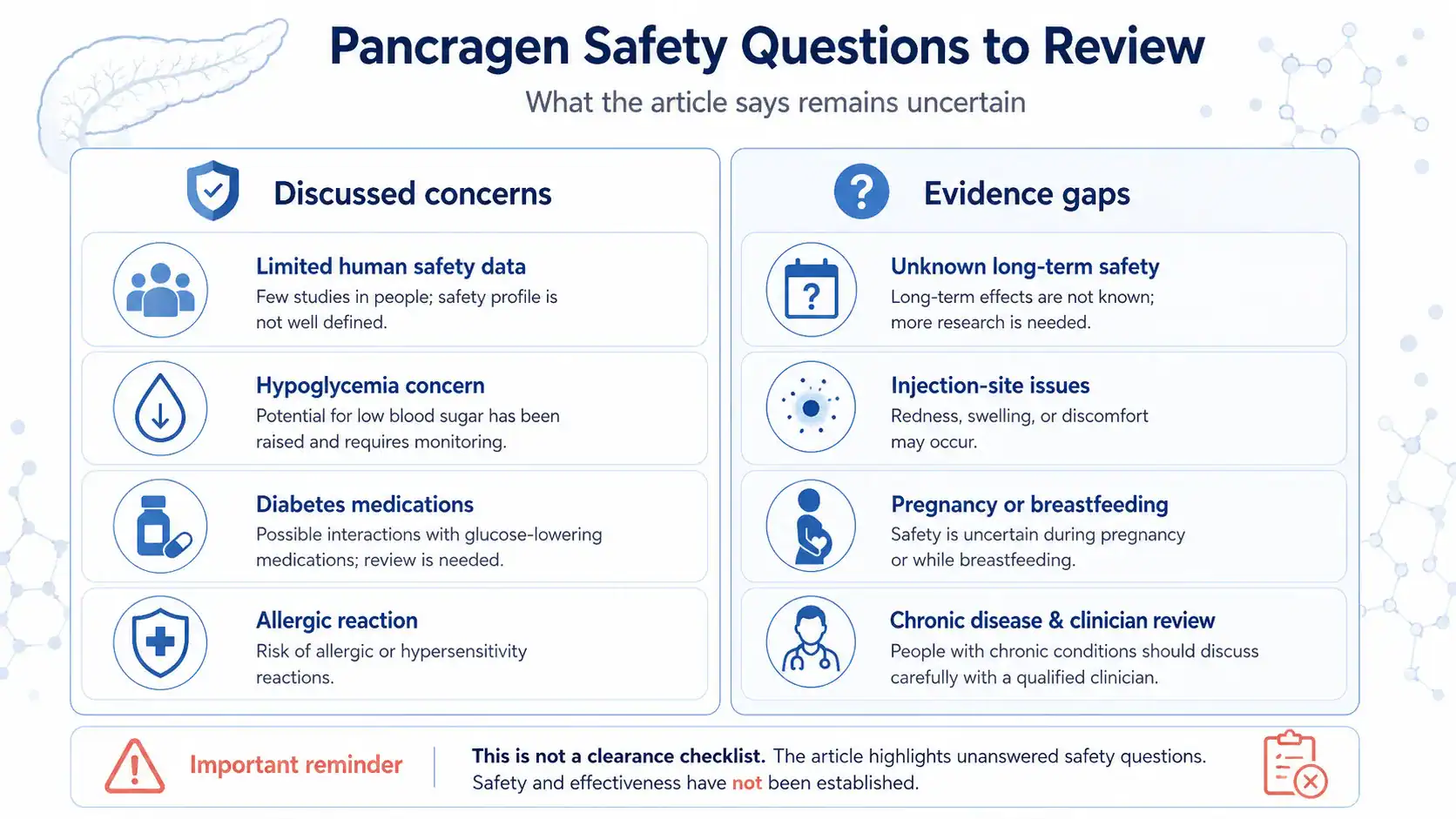
Potential side effects of Pancragen are not well characterized because published human safety data are limited. The absence of a modern safety database means that Pancragen’s risks, adverse events, contraindications, and interactions remain uncertain [1], [8].
What Side Effects Have Been Reported?
The small Pancragen human study abstract focused on glucose, insulin, insulin resistance, and melatonin-related measures rather than providing a detailed adverse-event profile [1]. That makes it unsuitable for concluding that Pancragen has no side effects.
Hypoglycemia and Blood Sugar Monitoring Concerns
Hypoglycemia is a practical concern for any agent discussed in relation to glucose lowering, especially in people who use insulin, sulfonylureas, or other glucose-lowering drugs. Pancragen’s preliminary glucose-related findings make this a clinician-discussion issue rather than a self-management claim [1], [13].
Allergy, Injection-Site, and Tolerability Considerations
Allergy, injection-site reactions, contamination, and tolerability concerns are relevant for unapproved or injectable peptide products in general. FDA notes that unapproved drugs and compounded drugs are not evaluated like approved products for safety, effectiveness, and quality [8], [9].
Safety Uncertainty With Limited Human Data
Safety uncertainty is one of the main limits of Pancragen peptide research. Small studies and animal models cannot establish long-term safety, rare adverse events, reproductive safety, medication interactions, or safety in people with complex chronic disease.
Contraindications, Interactions, and Higher-Risk Groups
Pancragen contraindications and interactions are not well defined in formal labeling because Pancragen does not have an FDA-approved drug label identified for this review. Readers should treat glucose-lowering medications, pancreatic disease, pregnancy, breastfeeding, and chronic illness as higher-risk discussion points with a clinician [7], [8].
Diabetes Medications, Insulin, and Hypoglycemia Risk
Diabetes medications such as insulin and sulfonylureas can increase hypoglycemia risk, particularly when combined with other interventions that may affect blood glucose. Pancragen’s preliminary glucose-related evidence makes medication review especially important [1], [13].
Pancreatitis, Chronic Pancreatitis, and Pancreatic Disease
Pancreatitis is inflammation of the pancreas, and chronic pancreatitis can cause lasting pancreatic damage 19. People with pancreatic disease should not extrapolate Pancragen’s pancreatic-cell research into a treatment plan without specialist guidance.
Pregnancy, Breastfeeding, and Chronic Conditions
Pregnancy, breastfeeding, kidney disease, liver disease, cardiovascular disease, and complex endocrine conditions are not adequately studied in Pancragen literature. Lack of evidence in these groups should be treated as uncertainty, not reassurance.
What Clinicians May Need to Review First
Clinicians may need to review glucose trends, A1C, fasting plasma glucose, oral glucose tolerance testing, medication lists, pancreatic history, pregnancy status, and evidence-based alternatives before any peptide-related decision. ADA diagnostic thresholds and glucose testing standards provide a more established framework than Pancragen-specific evidence [18].
Regulatory Status of Pancragen Peptide
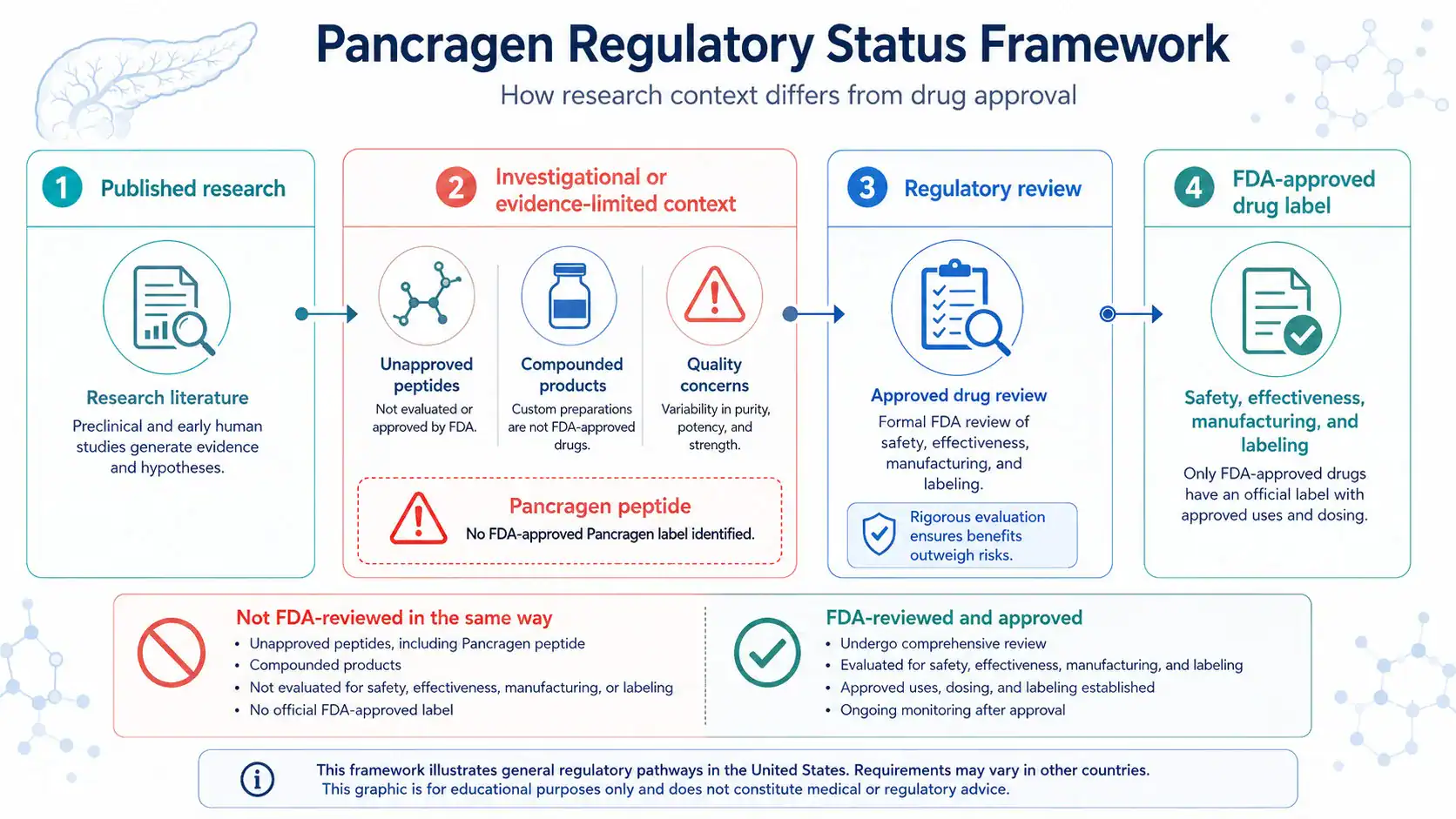
Pancragen peptide does not have an FDA-approved therapeutic status identified in the regulatory sources used for this review. Regulatory status is important because approved drugs, investigational compounds, compounded products, and unapproved peptides are evaluated under different rules [7], [8], [9].
Is Pancragen Peptide FDA-Approved?
No FDA-approved Pancragen drug label or approved indication was identified from the regulatory sources used for this article. FDA approval requires a product-specific review of safety, effectiveness, manufacturing, and labeling, and the Orange Book lists approved drug products evaluated for safety and effectiveness under the Federal Food, Drug, and Cosmetic Act [7], [12].
Approved Use Versus Investigational Use
Approved use means a regulator has reviewed a specific product for a specific indication. Investigational or research use means a compound may be studied, but it does not have the same public evidence standard as an approved medication [7], [16].
Compounded or Unapproved Peptides and Quality Concerns
Compounded or unapproved peptides can raise quality concerns because they are not approved by FDA before marketing. FDA explains that compounded drugs are not FDA-approved and that unapproved drugs may carry risks because they have not been reviewed for safety, effectiveness, or quality [8], [9].
How Legal Status May Differ by Country
Legal status can differ by country, product type, and intended use. A peptide discussed in regional research or sold in one jurisdiction should not be assumed to have the same regulatory status, quality controls, or approved medical claims elsewhere.
Pancragen Compared With Related Metabolic Therapies
Pancragen differs from standard metabolic therapies because Pancragen’s evidence base is limited and largely preliminary, while approved diabetes therapies have defined labels, indications, dosing, adverse-event information, and clinical-trial evidence reviewed by regulators [7], [12], [13].
Bioregulator Peptides Versus Approved Metabolic Drugs
Bioregulator peptides such as Pancragen are often discussed through mechanistic and tissue-specific research. Approved metabolic drugs, by contrast, require regulator-reviewed evidence for specific indications, dosing, contraindications, and safety warnings [7], [12].
Pancragen Versus Standard Diabetes Care
Pancragen should not be positioned as a replacement for standard diabetes care. Type 2 diabetes management relies on diagnosis, glucose monitoring, lifestyle care, medication selection, risk-factor management, and long-term complication prevention [13], [18].
Mechanistic Peptide Research Versus Clinical Endpoints
Mechanistic peptide research often measures markers such as gene expression, insulin, C-peptide, or glucose tolerance. Clinical endpoints require larger human studies that can evaluate actual patient outcomes, durability, adverse events, and risk-benefit balance.
Evidence Limitations and Unanswered Questions
The main limitation in Pancragen peptide research is that promising mechanistic or preliminary metabolic findings have not been confirmed by a large, modern clinical evidence base. Pancragen remains an evidence-limited peptide in a therapeutic context [1], [2], [3].
Human Evidence Gaps
Human evidence gaps include small sample size, limited replication, limited dosing transparency, unclear adverse-event reporting, and lack of broad population data. The 2011 study is useful but not enough to establish a general therapeutic role [1].
Preclinical Translation Limits
Preclinical translation limits matter because rats, rhesus monkeys, and pancreatic cell cultures do not fully reproduce human diabetes, pancreatic disease, medication use, or long-term safety. Preclinical Pancragen results should be treated as hypothesis-generating [2], [3], [5].
Unknowns Around Long-Term Safety
Long-term safety unknowns include immune reactions, hypoglycemia risk, pancreatic disease interactions, endocrine effects, reproductive safety, and effects in people using multiple medications. These unknowns are especially important because no FDA-approved Pancragen label was identified.
What Future Research Should Measure
Future Pancragen research would need randomized human trials, transparent dosing, standardized product characterization, glucose and insulin endpoints, A1C, C-peptide, adverse events, medication-interaction monitoring, and longer follow-up. Without those data, strong clinical claims remain premature.
What to Discuss With a Clinician
People considering peptide-related medical decisions should discuss Pancragen through evidence quality, safety uncertainty, regulatory status, and approved alternatives. This is especially important for anyone with diabetes, prediabetes, pancreatic disease, pregnancy, breastfeeding, or glucose-lowering medication use.
Personal Risk Factors and Current Medications
A clinician discussion should include current medications, insulin or sulfonylurea use, glucose history, A1C, hypoglycemia history, pancreatic disease, allergies, pregnancy status, and other chronic conditions. These factors can change the risk interpretation.
Relevant Biomarkers and Glucose Testing
Relevant biomarkers may include fasting plasma glucose, A1C, oral glucose tolerance testing, insulin, C-peptide, kidney function, liver function, and lipid markers. ADA glucose-testing thresholds are more established than Pancragen-specific clinical endpoints [18].
How to Evaluate Claims About Pancragen Peptide
A practical claim filter for Pancragen peptide is simple: ask whether the claim is supported by approved labeling, a registered clinical trial, a peer-reviewed human study, animal research, cell-culture evidence, or only online anecdotes. The weaker the source category, the less confidence the claim deserves.
Clinician discussion checklist
- Current diagnosis: diabetes, prediabetes, insulin resistance, pancreatitis, or another endocrine condition
- Current medications: insulin, sulfonylureas, GLP-1 drugs, metformin, steroids, or other glucose-affecting drugs
- Baseline markers: A1C, fasting glucose, glucose tolerance testing, insulin, C-peptide, kidney and liver function
- Safety concerns: hypoglycemia, allergies, infection risk, pancreatic history, pregnancy, breastfeeding
- Evidence standard: approved alternatives, clinical-trial evidence, and whether Pancragen claims are human, animal, or in vitro
- Regulatory status: whether the product is approved, investigational, compounded, or unapproved
Key Takeaways on Pancragen Peptide
Pancragen peptide is best interpreted as an evidence-limited pancreatic and metabolic research peptide. Its research profile is interesting, but the available data do not justify claims of proven diabetes treatment, guaranteed pancreatic support, or established long-term safety [1], [2], [8].
Best-Supported Points From the Research Landscape
The best-supported points are that Pancragen has been studied as a short tetrapeptide bioregulator, has preliminary human data in older adults with type 2 diabetes, and has preclinical evidence in pancreatic cell cultures, diabetic rats, and old rhesus monkeys [1], [2], [3], [5].
Claims That Need More Evidence
Claims about broad pancreatic health, anti-aging metabolic correction, insulin production, type 2 diabetes treatment, or routine peptide therapy need more evidence. The current literature does not provide the same level of certainty as approved labeling or large controlled trials.
Practical Safety Takeaways
The safest way to interpret Pancragen peptide is through evidence quality, regulatory status, safety uncertainty, and clinician-guided decision-making. Readers considering peptide-related medical decisions should discuss risks, medications, alternatives, and regulatory status with a qualified healthcare professional.
REFERENCES
- Korkushko OV, Khavinson VK, Shatilo VB, Antonyk-Sheglova IA, Bondarenko EV. Prospects of using Pancragen for correction of metabolic disorders in elderly people. Bulletin of Experimental Biology and Medicine. 2011;151(4):454-456. DOI: 10.1007/s10517-011-1354-4. PMID: 22448364.
- Khavinson VK, Linkova NS, Drobintseva AO, Polyakova VO, Kvetnoy IM. Effects of Pancragen on the differentiation of pancreatic cells during their ageing. Bulletin of Experimental Biology and Medicine. 2013;154:501-504. DOI: 10.1007/s10517-013-1987-6.
- Khavinson VK, Tendler SM, Vanyushin BF, et al. Effect of Pancragen on blood glucose level, capillary permeability and adhesion in rats with experimental diabetes mellitus. Bulletin of Experimental Biology and Medicine. 2007;144:559-562. DOI: 10.1007/s10517-007-0377-3.
- Khavinson VK, Malinin VV, Ryzhak GA, et al. Study of biological activity of Lys-Glu-Asp-Trp-NH2 endogenous tetrapeptide. Bulletin of Experimental Biology and Medicine. 2010;149:351-353. DOI: 10.1007/s10517-010-0944-x.
- Goncharova ND, Khavinson VK, Lapin BA. Impact of tetrapeptide Pancragen on endocrine function of pancreas in old monkeys. Advances in Gerontology. 2014;27(4):662-667. PMID: 25946840.
- Khavinson VK, Linkova NS, Kvetnoy IM, et al. Peptides tissue-specifically stimulate cell differentiation during their aging. Bulletin of Experimental Biology and Medicine. 2012;153:148-151. DOI: 10.1007/s10517-012-1664-1.
- U.S. Food and Drug Administration. Development & Approval Process: Drugs. FDA. Updated official regulatory resource.
- U.S. Food and Drug Administration. Unapproved Drugs. FDA. Official regulatory resource.
- U.S. Food and Drug Administration. Compounding and FDA: Questions and Answers. FDA. Official regulatory resource.
- Khavinson VK, et al. Short peptides regulate gene expression. Bulletin of Experimental Biology and Medicine. 2016;162:288-292. DOI: 10.1007/s10517-016-3596-7.
- National Institutes of Health. NIH-funded study maps human pancreatic islet cells, offering new clues to diabetes risk. NIH. 2026.
- U.S. Food and Drug Administration. Approved Drug Products with Therapeutic Equivalence Evaluations, Orange Book. FDA. Official database resource.
- National Institute of Diabetes and Digestive and Kidney Diseases. Symptoms & Causes of Diabetes. NIDDK. Official health information resource.
- National Institute of Diabetes and Digestive and Kidney Diseases. Insulin Resistance & Prediabetes. NIDDK. Official health information resource.
- Goncharova ND, Khavinson VK, Lapin BA. Correction of impaired glucose tolerance using tetrapeptide Pancragen in old female rhesus monkeys. Advances in Gerontology. 2015;28(3):579-585.
- U.S. National Library of Medicine. ClinicalTrials.gov. Public clinical-study registry.
- Cerf ME. Beta cell dysfunction and insulin resistance. Frontiers in Endocrinology. 2013;4:37. DOI: 10.3389/fendo.2013.00037.
- American Diabetes Association. Diabetes Diagnosis & Tests. ADA. Official patient education resource.
- National Institute of Diabetes and Digestive and Kidney Diseases. Pancreatitis. NIDDK. Official health information resource.
FAQs
What is Pancragen peptide used for?
Pancragen is a peptide studied for pancreatic function, glucose metabolism, insulin resistance, and age-related endocrine changes. Published research has examined Pancragen peptide in older adults with type 2 diabetes, diabetic rat models, old rhesus monkeys, and pancreatic cell cultures [1], [2], [3], [5]. These are research contexts, not approved medical uses. Pancragen should be interpreted as an evidence-limited bioregulator peptide rather than a proven treatment.
Can Pancragen peptide help with diabetes, glucose control, or insulin sensitivity?
Pancragen peptide has been studied for glucose control and insulin sensitivity, but the evidence remains preliminary. A small older-adult study reported changes in fasting glucose, glucose tolerance, insulin, and insulin resistance index in patients with type 2 diabetes [1]. Animal and cell-culture findings add preclinical support, but they do not prove human benefit [2], [3]. Diabetes-related decisions should rely on clinician-guided care and established evidence.
What are the potential benefits of Pancragen peptide?
Potential benefits of Pancragen peptide are mainly discussed around pancreatic function, glucose level regulation, insulin resistance, and age-related metabolic processes. The strongest Pancragen-specific evidence is limited to early human research, preclinical animal studies, and pancreatic cell-culture findings [1], [2], [5]. Claims that Pancragen can “support the pancreas” or correct metabolic disorders should be treated as evidence-limited, not guaranteed outcomes.
How does Pancragen peptide work?
Pancragen peptide is thought to work through pancreatic cell signaling, gene expression, and differentiation-related mechanisms. Cell-culture research reported effects on markers linked to pancreatic development and endocrine function, including PDX1, PAX6, FOXA2, and related transcription markers [2]. These findings may help explain research interest in beta cell, alpha cell, and pancreatic islet biology, but mechanism data do not establish clinical efficacy.
What are the safety and side effects of Pancragen peptide?
Side effects of Pancragen peptide are not well characterized because human safety data are limited. The available human study focused mainly on glucose, insulin, and metabolic outcomes rather than a detailed adverse-event profile [1]. Possible concerns include hypoglycemia risk in people using diabetes medications, allergic reaction risk, injection-site issues, and unknown serious side effects. Safety questions should be discussed with a licensed clinician, especially with chronic disease or pregnancy.
What dosage, administration, and regulatory issues should readers know about Pancragen peptide?
Pancragen peptide dosage and administration information should be read as study context, not a personal protocol. Published primate research described intramuscular Pancragen exposure for 10 days, while rat research included oral and intramuscular administration routes [3], [15]. Reliable half-life, bioavailability, and pharmacokinetic data remain limited. No FDA-approved Pancragen label was identified, and unapproved or compounded peptides are not reviewed like approved drugs [7], [8], [9].
Contributing Authors
The following authors are recognized for published research that helped shape the scientific and clinical context discussed in this article.
Vladimir K. Khavinson
Author profile: RUDN Journal of Medicine Editorial Profile
Vladimir K. Khavinson is a published research author whose work appears across the Pancragen peptide literature cited in this article. His publications are relevant to the article’s discussion of peptide bioregulators, pancreatic cell differentiation, early human evidence, and the limits of translating mechanism-focused findings into clinical conclusions. His work is especially useful for framing Pancragen as a synthetic tetrapeptide studied in pancreatic and metabolic research contexts, rather than as an established or approved diabetes treatment.
Selected publications:
- Prospects of using Pancragen for correction of metabolic disorders in elderly people — Bulletin of Experimental Biology and Medicine, 2011. DOI: 10.1007/s10517-011-1354-4. PMID: 22448364.
- Effects of Pancragen on the differentiation of pancreatic cells during their ageing — Bulletin of Experimental Biology and Medicine, 2013. PMID: 23486591.
Nadezhda D. Goncharova
Author profile: Europe PMC Author Profile
Nadezhda D. Goncharova is a published author in nonhuman-primate research relevant to Pancragen, pancreatic endocrine function, aging, glucose tolerance, and insulin-related outcomes. Her work helps contextualize the preclinical primate evidence discussed in this article and supports a cautious interpretation of Pancragen research as model-specific and evidence-limited. These publications are useful for understanding how Pancragen has been studied in old rhesus monkeys while distinguishing animal findings from confirmed human clinical benefit.
Selected publications:
- Impact of tetrapeptide Pancragen on endocrine function of the pancreas in old monkeys — Advances in Gerontology, 2014. PMID: 25946840.
- Correction of impaired glucose tolerance using tetrapeptide Pancragen in old female rhesus monkeys — Advances in Gerontology, 2015. PMID: 28509500.
PUBLISHING FIELDS
- SEO Title: Pancragen Peptide: Benefits, Dosage, Safety & Research
- Meta Description: Learn what Pancragen peptide is, how it is studied for pancreatic and metabolic research, plus evidence, dosage context, side effects, and FDA status.
- Suggested URL Slug: /pancragen-peptide
- Page Type: Therapeutic Peptide Educational Article
- ArticleFormat: Therapeutic Peptide Educational Guide
- TargetPeptide: Pancragen
- MainKeyword: pancragen peptide
- CanonicalKeyword: Pancragen peptide
- ExactKeywordVariant: pancragen peptide
- AliasTerms: Pancragen, tetrapeptide Pancragen, synthetic tetrapeptide Pancragen, tetrapeptide bioregulator, bioregulator peptide, peptide bioregulator, bioactive peptide
- PeptideCategory: Bioregulator Peptide / Metabolic Peptide
- Primary Search Intent: Therapeutic informational
- Secondary Keywords: Pancragen benefits, Pancragen dosage, Pancragen side effects, Pancragen safety, Pancragen research, pancreatic function peptide, peptide bioregulator, tetrapeptide Pancragen, Pancragen FDA approval, Pancragen and diabetes, Pancragen mechanism of action, Pancragen administration
- Evidence Levels Covered: early human, preclinical, unsupported, regulatory context; no approved medical use identified
- Excerpt: Pancragen peptide is a synthetic tetrapeptide bioregulator studied in pancreatic and metabolic research. This guide reviews proposed mechanisms, early human findings, preclinical evidence, dosage and administration context, possible side effects, regulatory status, and key evidence limitations.
- Suggested Tags: Pancragen, peptide bioregulators, pancreatic function, metabolic research, glucose metabolism, peptide safety, diabetes research, regulatory status
- Featured Image Concept: Clinical evidence map showing Pancragen peptide research across early human evidence, animal models, cell-culture findings, safety uncertainty, and regulatory status.
- Featured Image Alt Text: Clinical evidence map for Pancragen peptide research, safety, dosage context, and regulatory status
- Suggested Schema: Article schema only
INFOGRAPHIC BRIEFS
Infographic Brief 1
- Placement: What Is the Pancragen Peptide?
- Title: Pancragen Peptide at a Glance
- Purpose: Give readers a fast visual overview of what Pancragen is, why it is discussed, and how the article frames the evidence.
- Visual Format: Scientific overview card / identity map
- Key Labels: Synthetic tetrapeptide, Bioregulator peptide, Pancreatic research, Metabolic research, Early human evidence, Preclinical models, Not FDA-approved
- Suggested Layout: Central labeled molecule-style node reading “Pancragen peptide,” with surrounding branches for identity, research focus, evidence type, and regulatory context.
- Data or Concepts to Include: Pancragen is described as a synthetic tetrapeptide bioregulator; research focuses on pancreatic function, glucose metabolism, insulin resistance, and age-related endocrine changes; no FDA-approved Pancragen label was identified in the article.
- Visual Style: Clean, clinical, editorial, muted scientific palette, no product packaging, no syringe-centered imagery.
- Compliance Restrictions: Do not imply Pancragen treats diabetes, supports personal use, is approved, or is safe/effective for human use. No buying, vendor, or injection imagery.
- Alt Text: Overview diagram explaining Pancragen peptide identity, research focus, evidence level, and regulatory status
- Full AI Image Prompt: Create a clean clinical infographic titled “Pancragen Peptide at a Glance.” Place “Pancragen peptide” in the center as a neutral scientific node, with four surrounding sections labeled “Synthetic tetrapeptide,” “Bioregulator peptide,” “Pancreatic and metabolic research,” and “Evidence-limited regulatory context.” Include smaller labels for “early human evidence,” “animal models,” “cell-culture studies,” and “not FDA-approved.” Use a modern medical editorial style with subtle molecular motifs, pancreas silhouette outline, and evidence icons. Do not show product vials, syringes, injection instructions, before-and-after results, vendors, or sales imagery.
Infographic Brief 2
- Placement: Benefits of Pancragen Versus Evidence Strength
- Title: Pancragen Evidence Strength Map
- Purpose: Help readers distinguish early human evidence, animal evidence, cell-culture evidence, and unsupported or unproven claims.
- Visual Format: Evidence ladder
- Key Labels: Early human study, Rhesus monkey model, Diabetic rat model, Pancreatic cell cultures, Mechanistic findings, Evidence gaps, Not proven treatment
- Suggested Layout: Vertical ladder from stronger to weaker evidence, with “early human evidence” near the top, “preclinical animal evidence” in the middle, “in vitro findings” below, and “unsupported claims” at the bottom.
- Data or Concepts to Include: The article discusses a small older-adult human study, old rhesus monkey research, diabetic rat models, and pancreatic cell-culture findings; the article states these do not establish Pancragen as a proven diabetes treatment.
- Visual Style: Evidence-focused clinical chart with restrained colors, clear icons, and concise labels.
- Compliance Restrictions: Do not claim benefits are proven. Do not show improved glucose results as guaranteed. Do not include patient outcome imagery or “results” claims.
- Alt Text: Evidence ladder showing early human, animal, and cell-culture evidence for Pancragen peptide
- Full AI Image Prompt: Create a medical evidence ladder infographic titled “Pancragen Evidence Strength Map.” Show four stacked levels: “Early human evidence,” “Preclinical animal evidence,” “In vitro cell-culture findings,” and “Unsupported or unverified claims.” Add small neutral icons for a human study document, rhesus monkey model, rat model, pancreatic cell culture, and evidence gap. Include a caution label: “Not established as a diabetes treatment.” Use a clean academic style with no promotional language, no product images, no before-and-after imagery, and no dosing or injection instructions.
Infographic Brief 3
- Placement: How Pancragen Is Thought to Work
- Title: Proposed Pancragen Mechanism in Pancreatic Cells
- Purpose: Translate the mechanism section into a visual showing gene-expression and differentiation-marker concepts without overstating clinical benefit.
- Visual Format: Mechanism of action diagram
- Key Labels: Pancreatic cell, Gene expression, Differentiation markers, PDX1, PAX6, FOXA2, Cell-culture evidence, Clinical uncertainty
- Suggested Layout: Left-to-right flow from “Pancragen research exposure” to “pancreatic cell-culture markers” to “mechanistic hypothesis,” ending with a caution box “clinical benefit not established.”
- Data or Concepts to Include: The article states that cell-culture research reported effects on markers linked to pancreatic development and endocrine function, including PDX1, PAX6, FOXA2, and related transcription markers.
- Visual Style: Minimal biomedical pathway illustration with abstract cells, gene-expression icons, and clearly labeled uncertainty.
- Compliance Restrictions: Do not depict the mechanism as confirmed in humans. Do not show Pancragen curing or repairing the pancreas. No injection, dosing, or product imagery.
- Alt Text: Mechanism diagram showing Pancragen peptide research on pancreatic cell gene-expression markers
- Full AI Image Prompt: Create a clean biomedical mechanism diagram titled “Proposed Pancragen Mechanism in Pancreatic Cells.” Use an abstract pancreatic cell illustration on the left, arrows moving toward a nucleus labeled “gene expression,” then marker labels “PDX1,” “PAX6,” and “FOXA2.” Add a final box labeled “mechanistic hypothesis” and a clearly visible caution label: “Clinical benefit not established.” Use a professional scientific editorial style with soft gradients, simple icons, and no product vials, no syringes, no injection steps, no treatment promises, and no before-and-after imagery.
Infographic Brief 4
- Placement: Potential Side Effects and Safety Concerns
- Title: Pancragen Safety Questions to Review
- Purpose: Summarize the article’s safety framing so readers understand what remains uncertain and what should be discussed with a clinician.
- Visual Format: Safety matrix
- Key Labels: Limited human safety data, Hypoglycemia concern, Diabetes medications, Allergic reaction, Injection-site issues, Pregnancy, Chronic disease, Clinician review
- Suggested Layout: Two-column matrix with “Known or discussed concerns” on one side and “Evidence gaps or clinician-review topics” on the other.
- Data or Concepts to Include: The article states that Pancragen side-effect data are limited; safety concerns include hypoglycemia risk with glucose-lowering medications, allergic reactions, injection-site issues, pregnancy, breastfeeding, chronic disease, and unknown long-term safety.
- Visual Style: Medical safety checklist design, clean icons, calm colors, easy to scan.
- Compliance Restrictions: Do not claim Pancragen is safe. Do not present a safety checklist as clearance for use. No self-administration or injection tutorial imagery.
- Alt Text: Safety matrix for Pancragen peptide side effects, hypoglycemia concerns, medication review, and evidence gaps
- Full AI Image Prompt: Create a clinical safety matrix infographic titled “Pancragen Safety Questions to Review.” Use two columns: “Discussed concerns” and “Evidence gaps.” Include labels for “limited human safety data,” “hypoglycemia concern,” “diabetes medications,” “allergic reaction,” “injection-site issues,” “pregnancy or breastfeeding,” “chronic disease,” and “clinician review.” Use professional medical icons, soft neutral colors, and clear spacing. Do not show injections being performed, dosing instructions, product branding, treatment results, or claims that Pancragen is safe.
Infographic Brief 5
- Placement: Regulatory Status of Pancragen Peptide
- Title: Pancragen Regulatory Status Framework
- Purpose: Clarify the difference between research discussion, investigational context, compounded or unapproved peptides, and FDA-approved drug status.
- Visual Format: Regulatory status map
- Key Labels: Research literature, Investigational context, No FDA-approved Pancragen label identified, Unapproved peptides, Compounded products, Quality concerns, Approved drug review
- Suggested Layout: Horizontal decision-map style visual moving from “published research” to “regulatory review” to “approved drug status,” with Pancragen placed under “research / unapproved context” based on the article.
- Data or Concepts to Include: The article states no FDA-approved Pancragen drug label or approved indication was identified; FDA-approved drugs are reviewed for safety, effectiveness, manufacturing, and labeling; unapproved and compounded drugs are not evaluated the same way.
- Visual Style: Clean regulatory explainer with document icons, checkmark and caution symbols, and muted institutional colors.
- Compliance Restrictions: Do not imply legal availability or give purchasing guidance. Do not compare vendors. Do not suggest ways to obtain Pancragen.
- Alt Text: Regulatory status framework for Pancragen peptide showing research context, unapproved peptide concerns, and FDA approval distinctions
- Full AI Image Prompt: Create a clean regulatory explainer infographic titled “Pancragen Regulatory Status Framework.” Show a horizontal map with stages labeled “Published research,” “Investigational or evidence-limited context,” “Regulatory review,” and “FDA-approved drug label.” Place “Pancragen peptide” under “No FDA-approved Pancragen label identified” with a caution icon. Include side labels for “unapproved peptides,” “compounded products,” “quality concerns,” and “approved drug review.” Use official-looking document icons and a neutral medical editorial style. Do not include vendor names, buying guidance, product packaging, syringes, or promotional language.